The Weight of Pages
Uses the speech voice supplied by your browser or device.

The spine cracked this morning. Not a dramatic, theatrical snap, but the soft, almost apologetic tick of glue surrendering to humidity, the sound a small animal might make dying quietly in a wall. I was trying to open my hardcover copy of Jhuri Kuri Galpa by Sanjib Chattopadhyay, which I had bought two years ago from a College Street vendor who wrapped it in newspaper and charged me forty rupees more than the price stamped on the flyleaf because he could see the hunger in my eyes. The pages had swollen. The glue had turned to something resembling overcooked rice. The book sighed open at page thirty-one, which was as far as I had ever gotten, and I stared at a paragraph about a man arguing with his neighbor over a mango tree, and I could not remember whether the argument ended in reconciliation or festering resentment. I could not remember the names of the characters. I could not remember, with any precision, why I had bought the book in the first place, though I suspect it had something to do with a conversation I overheard on a bus, two men discussing Chattopadhyay’s ear for the petty absurdities of middle-class Bengali life, a conversation that had made me feel, for a moment, that I was missing something essential about my own city, my own class, my own capacity to notice the small humiliations that constitute daily existence.
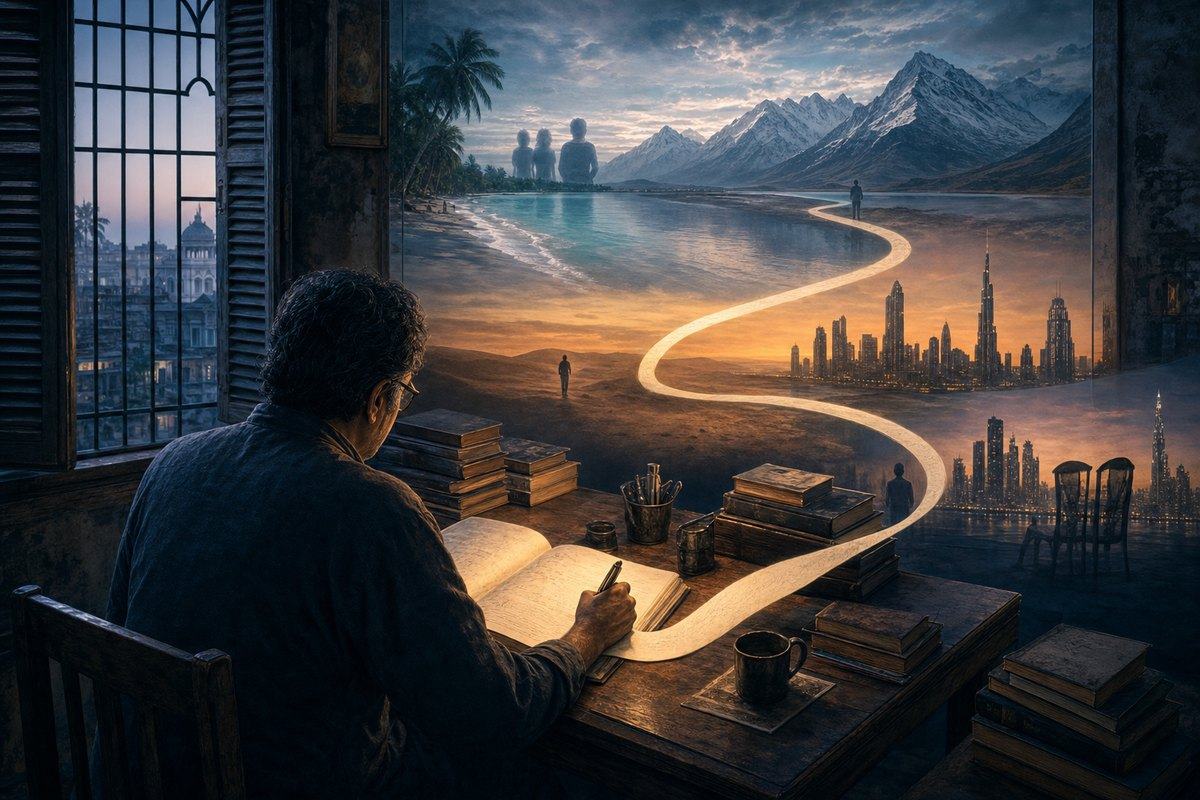
This is the shape of my life. I live in Calcutta, in a flat on a street where the municipal water supply arrives with the reliability of a politician’s promise, which is to say it arrives when it arrives and one learns not to ask questions. The city outside my window is doing what it always does: the auto-rickshaws are coughing blue smoke into air already thick enough to spread on bread, the paan-wallah across the lane is arranging his betel leaves with the solemnity of a priest preparing communion, and somewhere in the distance a loudspeaker is announcing something—political, religious, commercial, it hardly matters anymore—which will be ignored by everyone except the dogs, who will howl in response. The temperature today is thirty-six degrees Celsius with humidity at eighty-four percent, which means that walking to the market feels like swimming through warm soup, and my books, all two hundred and thirty-seven of them, are slowly becoming one with the atmosphere. The paper absorbs moisture. The ink bleeds. The spines warp into question marks. And still I buy them.
I bought three more last week. One was a remaindered hardcover on the history of the East India Company’s botanical gardens, purchased for ninety rupees from a pavement vendor near the New Market who looked at me with the knowing pity of a man who has seen this particular sickness before. The second was a Bengali translation of a Japanese novel about a man who works in a convenience store, which I found in a secondhand shop on College Street where the owner, an ancient gentleman with cataracts like milk-glass, charged me full price because he could tell I wanted it too much. The third I ordered online, from a website that offered free shipping if you spent above five hundred rupees, so of course I spent seven hundred and twelve, because the arithmetic of my desire has never been rational. It was a book about artificial intelligence and the future of consciousness, written by a professor at Stanford whose name I recognized from a podcast I listened to while cooking dinner three months ago. I remember the podcast. I do not remember the argument. The book sits on my shelf, still in its plastic wrap, which I have not removed because removing it would constitute an admission that I intend to read it, and I am no longer certain that I do.
This is not a story about a love of literature. That would be too clean, too noble, too easily resolved by a montage of rainy afternoons and steaming cups of tea. This is a story about compulsion, about the gap between wanting and having, about the peculiar modern condition of accumulating objects that represent a self you wish to become but cannot quite inhabit. The books are not friends. They are not even acquaintances. They are evidence. They are the material residue of intention, the archaeological record of a mind that keeps announcing its plans and then wandering off to do something else.
I read, when I read, with the distracted urgency of a man checking his phone at a traffic light. My eyes move across the page, the words register somewhere in the pre-conscious machinery of my brain, and then they evaporate. I finish chapters and cannot summarize them. I complete novels and retain only the vaguest emotional afterimage, a sense that something happened to someone, somewhere, and that it may or may not have been sad. I have read Moby-Dick twice and could not tell you the name of the narrator. I have read One Hundred Years of Solitude and remember only the ants and the little gold fishes, and even those I might be confusing with something else. My memory, which was never particularly reliable, has become a sieve through which narrative passes like water, leaving behind only the grit of incidental detail: a description of a staircase, a character’s habit of biting his nails, the color of a dress.
The neuroscientists have a name for this, or several names. They call it the “forgetting curve,” first described by Hermann Ebbinghaus in 1885, a German psychologist who memorized nonsense syllables and then charted his own decay, producing a graph that looks like the slope of a gentle hill leading down to a sea of oblivion. The curve is steep at first—within twenty-four hours we lose roughly seventy percent of what we have learned—and then it flattens, but it never flattens entirely. The forgetting continues, asymptotically, forever. Ebbinghaus was trying to understand memory, but what he really mapped was the architecture of futility. We are all of us, always, in the process of becoming ignorant again.
And yet. And yet I continue to buy books, to stack them on the shelf that is already bowing under the weight of my aspirations, to run my fingers along their spines in the morning as if touching them might transmit their contents through osmosis. There is something here that is not merely about reading. There is something about the physical object, the rectangular solidity of it, the smell of paper and glue and ink, the way a book occupies space in a room and thereby occupies space in a life. When I look at my shelves, I see not stories but possibilities. I see the person I might have been if I had read all of these books carefully, if I had remembered them, if I had allowed them to change me in the ways they promised to change me. The books are a museum of my unlived lives.
This morning, while the Glass Bead Game was disintegrating in my hands, I read a news article on my phone about the latest developments in artificial intelligence. The White House, apparently, has asked OpenAI to delay the rollout of its GPT-5.6 models, and Anthropic has had to take its most advanced systems offline after running afoul of the Trump administration, though no one can say exactly what the company did wrong. The article was full of phrases like “predictive analytics” and “algorithmic governance” and “the messy inside story of one region’s experiment.” I read it with the same glazed attention I bring to everything now, and when I finished, I could not have told you whether the tone was alarmed or optimistic. But I remember thinking, with the clarity that sometimes arrives unbidden, that my books are a kind of technology too, an older technology, one that requires something the new technologies have made obsolete: sustained attention, the willingness to be bored, the acceptance that understanding takes time and that time is something you must give without guarantee of return.
The books do not offer instant gratification. They do not adapt to my preferences. They do not recommend the next book based on an analysis of my past behavior. They simply sit there, indifferent to my presence, waiting for an engagement that I am increasingly incapable of providing. And this, I think, is part of their appeal. In a world of infinite scroll and algorithmic curation, the book is a stubbornly analog object. It demands a linear progression. It does not care whether I am enjoying it. It will not adjust its difficulty to match my mood. It is, in the most literal sense, indifferent to me, and there is a kind of relief in that indifference, a respite from the endless customization of the digital environment, which always feels like a sales pitch disguised as a service.
I think sometimes about the economics of my habit. I am not a wealthy man. My income, such as it is, comes from work that is irregular and poorly compensated, the kind of work that exists in the interstices of the formal economy, neither fully legal nor fully illegal, just precarious. I have no savings to speak of. I have no insurance. I have, on my kitchen table, a stack of unpaid bills that I move from one drawer to another with the ritualistic hope that displacement might constitute payment. And yet I will spend three hundred rupees on a paperback I do not need, will carry it home through the heat and the dust and the honking traffic, will place it on the shelf with the others, will feel, for a moment, a kind of satisfaction that has nothing to do with reading and everything to do with acquisition.
The psychologists call this “retail therapy,” though that term implies a cure, and I am not convinced there is a cure for what ails me. The acquisition of books is not making me happier. It is not making me smarter. It is not, as far as I can tell, making me anything at all except poorer and more crowded in my living space. But it is also not making me worse, and in the calculus of a life that often feels like a series of small deteriorations, the absence of harm begins to look like a kind of benefit. At least the books are not actively destroying me. At least they are not addictive in the way that other things are addictive, the way that alcohol is addictive or gambling is addictive or the endless refresh of social media is addictive. The books just sit there, patient and inert, asking nothing, judging nothing, accumulating dust and mildew and the slow erosion of time.
There is a particular quality to the light in Calcutta in the late afternoon, when the sun has begun its descent but the heat has not yet broken, when the sky turns the color of a healing bruise and the air itself seems to glow with a kind of exhausted incandescence. I sit sometimes on my small balcony, which overlooks a courtyard where children play cricket with a tennis ball and a cardboard box for wickets, and I watch the light change, and I think about the books I have not read. I think about the East India Company’s botanical gardens, about the man in the convenience store, about the future of consciousness and whether it will be digitized before I have finished understanding it in analog form. I think about Ebbinghaus and his nonsense syllables, about the forgetting curve, about the seventy percent that disappears in the first day and the thirty percent that lingers, distorted and incomplete, like a dream you are trying to recount to someone who was not there.
I have a friend, or had a friend, who used to say that the purpose of reading was not to remember but to be changed, that the books we forget are still doing their work on us at some subterranean level, altering the architecture of our minds in ways we cannot perceive or measure. I would like to believe this. I would like to believe that the hours I have spent with these pages, however fruitless they seem in retrospect, have left some trace, some residue of wisdom or empathy or expanded perspective. But I am not sure I believe it. I think it is more likely that I have simply wasted a great deal of time, that the books have passed through me like water through a pipe, leaving the pipe essentially unchanged, perhaps slightly corroded, but still a pipe, still conducting the same substance in the same direction, still waiting to be replaced when it finally rusts through.
The humidity today is particularly brutal. I can feel it in my lungs when I breathe, a warm weight that makes the air feel like something you could chew. The books on my lower shelves are showing signs of mold, small patches of green and black that I wipe away with a cloth soaked in diluted vinegar, knowing that I am fighting a losing battle, that the climate of this city is fundamentally hostile to paper, that every book I own is slowly returning to the organic matter from which it was made. This is not a metaphor, or not only a metaphor. It is a physical reality. The books are dying. I am buying them in order to watch them die. There is something almost agricultural about it, something cyclical and ancient, the sowing of seeds in soil that will not support them, the tending of crops that will not survive the season.
And yet I do not stop. I cannot stop. Last month I walked past a pavement vendor on Free School Street who had laid out his wares on a tarpaulin on the ground, hundreds of books in the sun, their covers fading, their pages warping, their prices marked in chalk on small squares of cardboard. I told myself I would not stop. I told myself I had no money to spare, that my shelves were full, that I had not finished the books I already owned. I walked past. I walked ten meters. I turned around. I bought a biography of Satyajit Ray, a collection of essays by Nirad C. Chaudhuri, and a paperback edition of The Great Man by Kate Christensen that I had never heard of but that had a blurb on the back comparing it to The Corrections, which I had also bought and not read. I carried them home in a plastic bag that left red marks on my fingers, and I felt, for the first time that day, something approaching contentment.
What is this contentment? It is not the contentment of reading. It is not the contentment of understanding. It is the contentment of possession, of the temporary illusion that by owning a thing I have somehow consumed it, that the potential for knowledge is equivalent to knowledge itself. It is a contentment built on a lie, but it is a lie I have learned to live with, the way one learns to live with a limp or a stutter or any other minor disability. The books are my disability. They are also, in some way I cannot fully articulate, my compensation for that disability. They are the crutch I use to walk through a world that increasingly feels unreadable.
I think sometimes about selling them. About packing them into boxes and carrying them to a secondhand dealer and accepting whatever pittance he offers, about reclaiming the space and the money and the psychic energy that goes into maintaining this collection of unread intentions. But I cannot do it. The thought of parting with them produces a kind of low-grade panic, a sense that I would be amputating something essential, even if that something is only the fiction of my own potential. The books are my hedge against the future. They are my insurance policy against the possibility that I might one day want to read them, that I might one day have the time and the attention and the memory to do so, that I might one day become the person these books imply I could be.
This is, I know, a form of magical thinking. The person these books imply I could be does not exist. He has never existed. He is a composite, a collage, a fantasy assembled from blurbs and reviews and the occasional well-turned sentence that lodged in my mind long enough to create the illusion of significance. The real me is the one who buys the books and does not read them, who reads the books and does not remember them, who remembers fragments and cannot reconstruct the whole. The real me is the one sitting on this balcony in the bruised light of a Calcutta evening, watching the children play cricket with their cardboard wickets, listening to the auto-rickshaws cough and the loudspeakers blare and the dogs howl their responses to sounds I cannot hear.
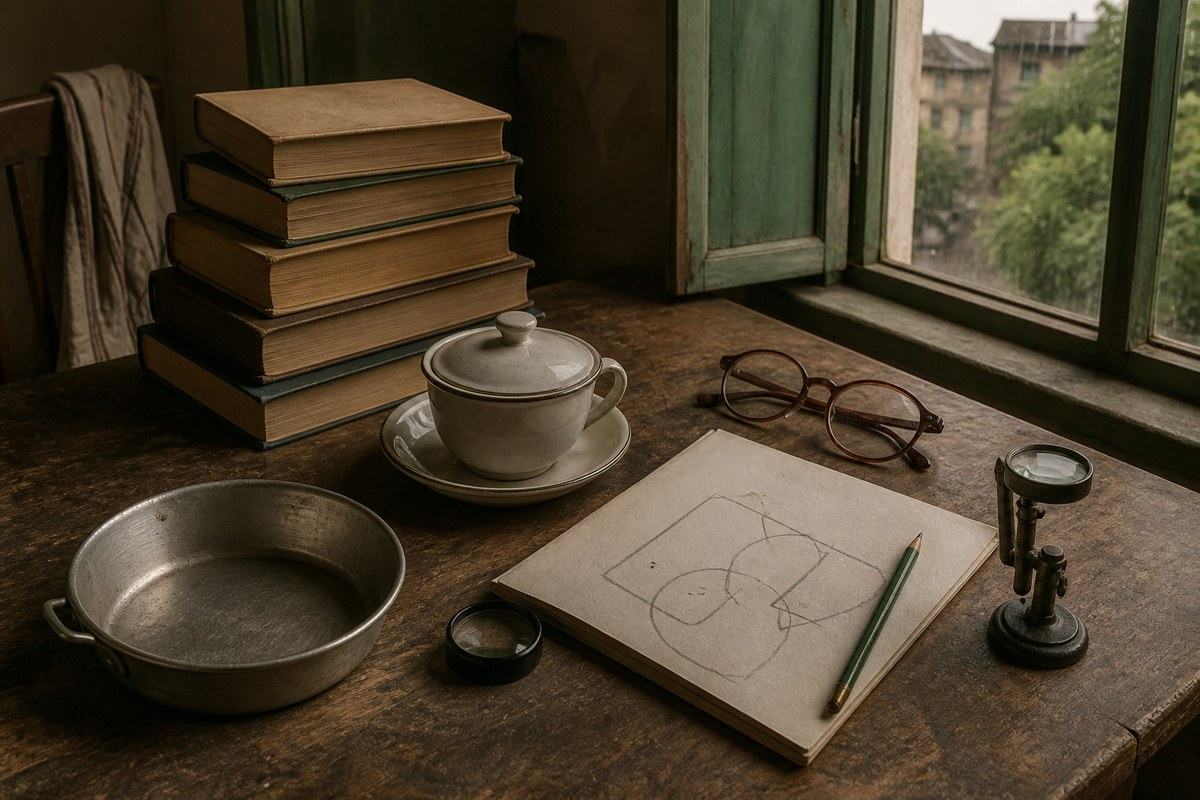
The Glass Bead Game is still open on my desk, at page forty-seven, the underlined sentence staring up at me like an accusation. I do not know what to do with it. I do not know whether to continue reading, knowing that I will forget what I read, or to close it and add it to the shelf of abandoned projects, knowing that it will continue to decay in the humidity, its spine growing more fragile, its pages more swollen, its meaning more inaccessible with each passing season. There is no good answer. There is only the choice, and the choice feels increasingly arbitrary, a coin flip between two forms of futility.
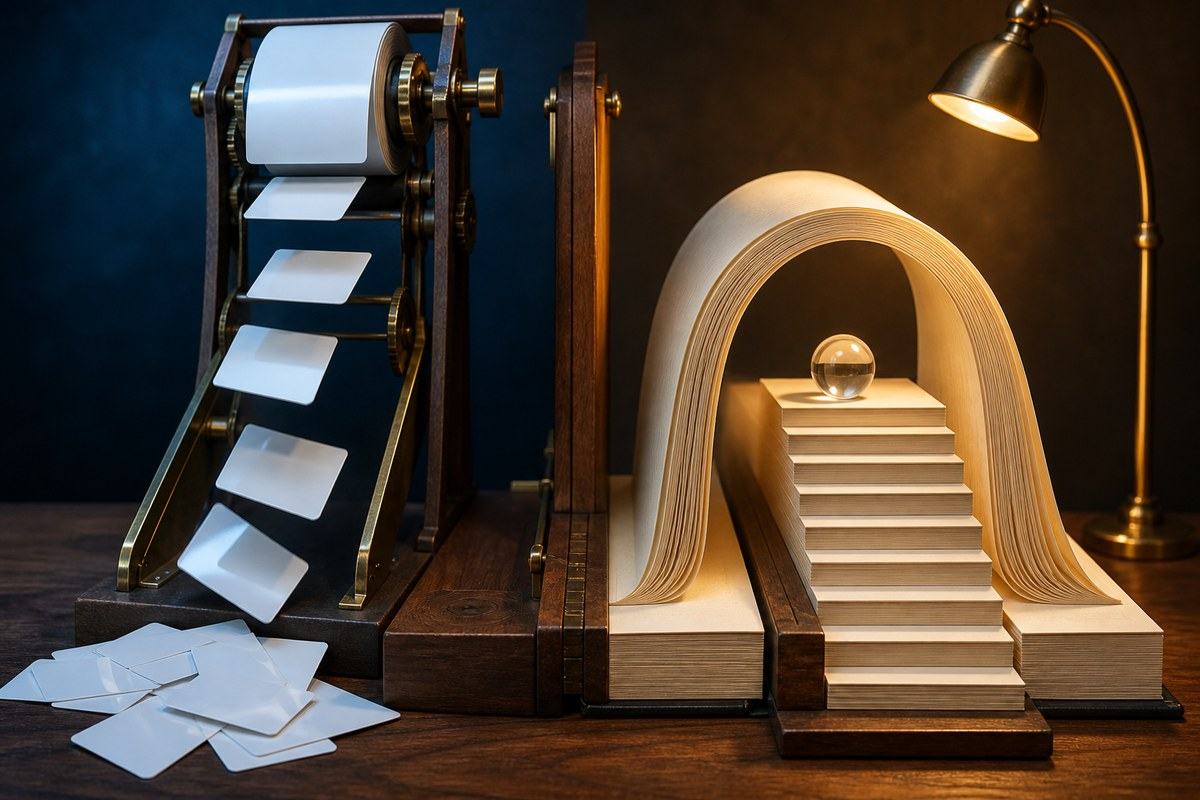
I read somewhere—though I cannot remember where, which is itself a kind of punchline—that the average person owns more books than they will ever read, that the ratio of owned to read is something like four to one, and that this ratio has been increasing steadily since the invention of the printing press. We are, as a species, aspirational hoarders. We collect the map and call it the territory. We buy the cookbook and call it the meal. We acquire the book and call it the knowledge. The gap between having and being has never been wider, and we have never been more skilled at pretending it does not exist.
Tonight I will cook dinner, something simple, rice and dal and perhaps a vegetable if the market had anything worth buying. I will listen to the news on the radio, or the noise that passes for news, which will tell me about earthquakes in Venezuela and heat waves in Europe and the ongoing negotiations between technology companies and governments that will determine the shape of the attention economy for the next decade. I will eat. I will wash the dishes. I will sit on my balcony and watch the sky darken and the bats emerge from wherever bats emerge from, their erratic flight patterns tracing invisible geometries against the fading light. And then, perhaps, I will pick up a book. Or perhaps I will not. The choice will feel less like a decision and more like a habit, a reflex, the automatic continuation of a pattern I established so long ago that I can no longer remember why I established it.
The books are all I have. This is not a boast and it is not a complaint. It is simply a fact, one of the few facts I can state with confidence, along with my name and my address and the approximate number of stairs between my flat and the street. They surround me, these rectangular objects, these compressed trees, these repositories of other people’s thoughts, and they ask nothing in return except the one thing I cannot reliably give: my attention, my sustained, focused, unbroken attention, the kind of attention that was once the default mode of human consciousness and is now, in the year 2026, a kind of endangered species, hunted to the margins by the relentless, algorithmic, infinitely customizable demands of the digital world.
I do not blame the digital world. It is what it is, a tool like any other, capable of use and abuse, of connection and isolation, of enlightenment and obfuscation. I blame myself, or rather I do not blame myself, because blame implies a choice I do not believe I made, a moment of decision when I could have chosen differently. I do not remember such a moment. I do not remember choosing to become the kind of person who buys books he cannot read and cannot stop buying them. I do not remember choosing to live in a city that is slowly digesting my library, turning paper back into pulp, ink back into pigment, meaning back into noise. I do not remember choosing any of this, and yet here I am, surrounded by the evidence of choices I must have made, unable to account for them, unable to undo them, unable to do anything except continue, one day at a time, one book at a time, one unread page at a time.
The children in the courtyard have stopped playing. The auto-rickshaws have thinned out. The loudspeaker has fallen silent, temporarily, though it will resume tomorrow with the same announcements, the same exhortations, the same noise that constitutes the soundtrack of this city. The light has faded to a deep blue, almost purple, and the first stars are visible through the haze. I should go inside. I should close the window. I should do something productive with the remaining hours of the evening. Instead I sit here, holding the Glass Bead Game, feeling the swollen pages between my fingers, trying to remember what it felt like to read with the kind of absorption that made the world disappear, that made time stop, that made the book and the reader into a single, continuous, uninterrupted act of attention.
I cannot remember. Or rather, I can remember that such a feeling existed, but I cannot reproduce it. It is like trying to remember the taste of a food you ate as a child, or the sound of a voice you have not heard in decades. The memory of the memory persists, but the memory itself has eroded, smoothed by the forgetting curve into something generic and unspecific, a placeholder for an experience that can no longer be accessed. I know that I once read with hunger. I know that I once finished books and felt altered by them, enlarged, as if the author’s mind had temporarily colonized my own and left behind some of its furniture. I know this happened. I do not know when it stopped happening, or why, or whether it will ever happen again.
The book in my hands is warm from my touch, and slightly damp, and it smells of mildew and old glue and something else, something that might be the residue of the person I was when I bought it, the person who still believed that reading was a kind of salvation, that the right book at the right time could rewire the brain, could restructure the soul, could make the unbearable bearable. That person is still here, somewhere, buried under the accumulated weight of unread pages and unfulfilled intentions. I can feel him sometimes, a kind of ghost in the machine, stirring when I walk past a bookstore, reaching out when I see a title that promises something—wisdom, escape, transformation, whatever it is we are all looking for when we reach for a book.
I do not know what I am looking for anymore. I am not sure I ever did. The books have become a habit, a compulsion, a way of marking time, of filling space, of creating the illusion of purpose in a life that often feels purposeless. They are not making me better. They are not making me worse. They are simply there, accumulating, decaying, waiting for an engagement that may never come. And I am here, in Calcutta, in the heat and the humidity and the noise, surrounded by the evidence of my own inadequacy, unable to stop, unable to go on, unable to do anything except turn the page and hope, against all evidence, that this time will be different.
The page turns. The sentence is the same as it was. The humidity presses down. The night deepens. Somewhere, a dog howls. I read the words, or I look at them, which is not the same thing, and I feel, for a moment, something that might be peace, or might be resignation, or might simply be the absence of the anxiety that usually accompanies my attempts to read. I do not know what it is. I do not know what anything is anymore. I know only that the book is in my hands, and that my hands are warm, and that the city outside my window continues its endless, indifferent, magnificent churn, and that tomorrow I will probably buy another book, and the day after that another, and that this will continue until I run out of money or space or the will to continue, whichever comes first.
The Glass Bead Game closes with a soft sigh, the spine settling back into its accustomed curve, the pages returning to their state of suspended animation. I place it on the desk, next to the others, in the row of others, in the library of others, and I stand up and walk to the window and look out at the courtyard, where the cardboard wickets have been abandoned for the night, where the tennis ball lies still in a puddle of something that might be water, where the bats are still tracing their erratic geometries against the darkening sky. The light is almost gone now. The stars are brighter. The city is quieter, though never truly quiet, never truly still. There is always something happening, always something moving, always something waiting to be noticed, to be read, to be understood, to be forgotten.
I turn away from the window. I do not pick up another book. I do not turn on the light. I sit in the dark, in the heat, in the silence that is not silence, and I wait for sleep to come, or for morning, or for something else, something I cannot name, something that might be the reason I keep buying these books, the reason I keep trying to read them, the reason I keep forgetting them and starting over, again and again, in this city, in this life, in this body that is slowly, inexorably, becoming part of the same decay that is consuming everything I own.
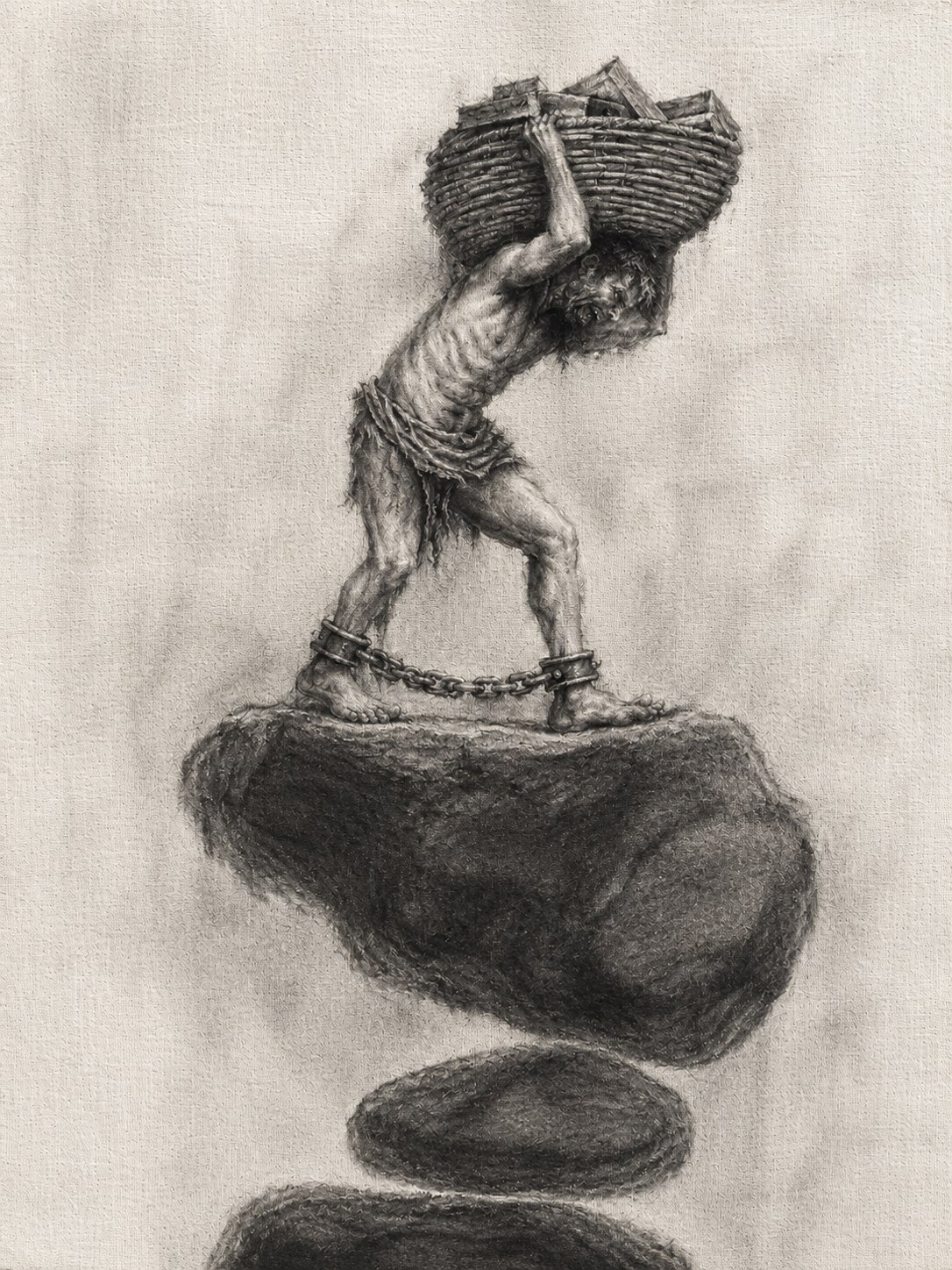
Sleep does not come. Morning will. The books will still be here. I will still be here. The gap between us will remain, unbridgeable, unremarkable, the ordinary tragedy of a man who wants to know more than he can hold, who keeps reaching for water with a broken cup, who cannot stop even though he knows, has always known, that the cup will never be mended and the water will always run through.
P.S. Everything here is either common knowledge, personal observation, or sufficiently mangled by memory to constitute original thought.
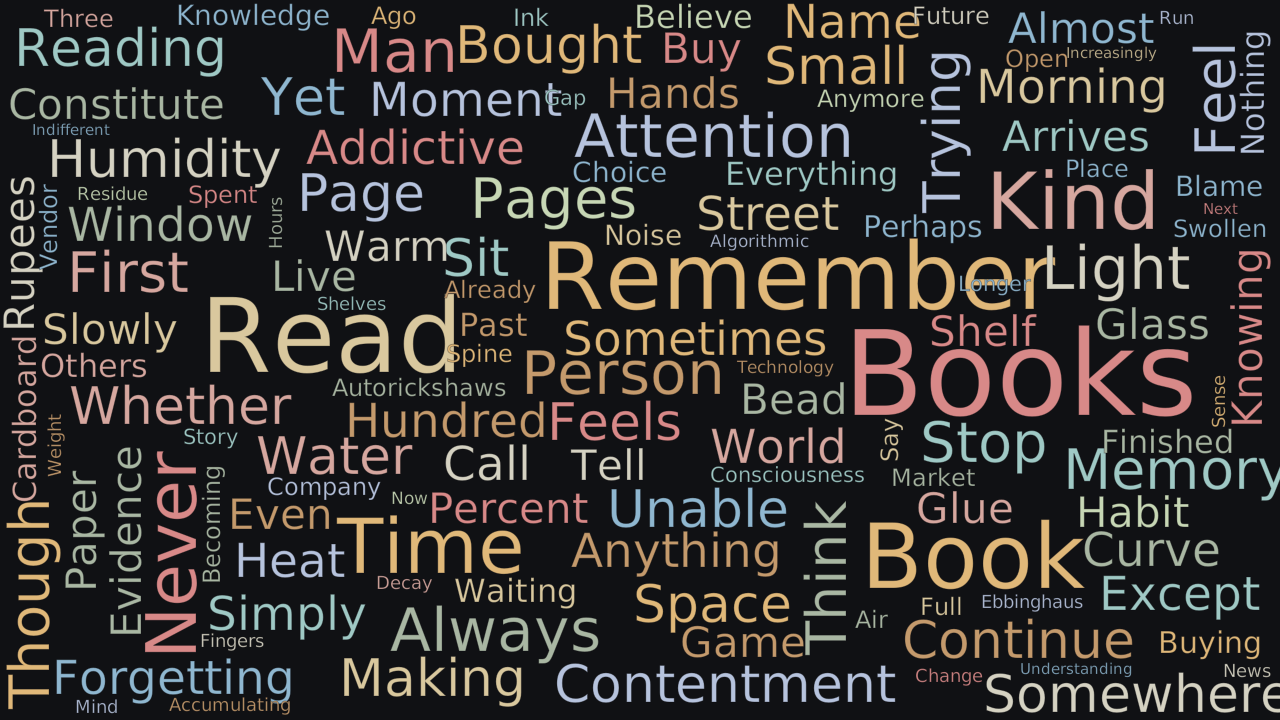
Word Cloud
Related reading
Selected by shared topics and section, with closer publication dates breaking ties.