Why You Still Want to Read a Healthcare IT Blog in the Age of AI.
www.suvroghosh.in/blog/healthcare-it/why-read-a-healthcare-it-blog-in-the-age-of-ai
AI can summarize healthcare technology, but practitioner-written analysis remains valuable because real clinical systems are shaped by local workflows, legacy constraints, governance, failure modes, and consequences that generic answers often flatten.

Filed under
- Bodyshopping Moat
- Linear Algebra
- Adversarial Attacks
- AI-driven Healthcare
- Model Drift
- Healthcare
- AI
- Systems
- Genetic
- Clinical
Quick Answer
AI can summarize healthcare technology, but practitioner-written analysis remains valuable because real clinical systems are shaped by local workflows, legacy constraints, governance, failure modes, and consequences that generic answers often flatten.
Six terms in the record
- 01Healthcare IT
- 02Clinical Data Systems
- 03AI in Healthcare
- 04Model Drift
- 05Interoperability
- 06Data Governance
Listen / canonical article only
Uses the speech voice supplied by your browser or device.
Questions before the machinery
- 01 Why read a healthcare IT blog when AI can answer questions?
A practitioner can connect standards and product claims to implementation history, local workflows, organizational incentives, and failure modes. Those details determine whether a technically plausible answer will work in a real clinical system.
- 02 Can AI replace practitioner analysis in healthcare IT?
AI can summarize documentation and generate useful starting points, but it does not automatically know which source is authoritative, how a particular organization actually operates, or where a polished generic recommendation will fail.
- 03 What makes healthcare IT commentary trustworthy?
Trustworthy commentary distinguishes standards from governance, marketing from deployed capability, and model performance from clinical usefulness while remaining explicit about uncertainty, maintenance, and patient consequences.
The Uncomfortable Premise
You don’t know what you don’t know. That statement, which sounds like something a motivational poster would say before asking you to buy a seminar, is actually the entire reason you might still want to read a blog—this blog, or any blog written by someone who has spent actual years inside the machinery of healthcare information technology, watching the gears turn, watching them grind, watching them occasionally spit out something that was supposed to be a diagnosis but turned out to be a hallucination.
The age of artificial intelligence has arrived, and it has arrived with all the subtlety of a carnival barker. Every product is now “AI-powered.” Every startup is “leveraging machine learning.” Every hospital administrator who once struggled to explain what an EMR actually does is now fluent in the language of neural networks, or at least fluent enough to sound convincing in a board meeting. The word “AI” has morphed into a marketing moniker, a way of talking about something to make it sound fancy, a garnish of suave jargon laid atop systems that may or may not actually contain anything resembling intelligence.
In healthcare, you cannot afford this. You cannot afford the garnish. You cannot afford the conceit. Because at the end of every healthcare IT system—at the end of every algorithm, every dashboard, every predictive model—there are lives. There are bodies. There are people who will live or die, thrive or suffer, based on whether the technology actually works, whether it was built with care, whether it was deployed with skepticism, and whether it is being maintained by people who understand that “artificial intelligence” is not a synonym for “artificial wisdom.”

This blog exists in that gap. The gap between what is promised and what is delivered. The gap between what is marketed and what is true. The gap between the utopian visions of AI-driven healthcare and the dystopian realities that emerge when the steering is wrong, when the people chosen to ask the questions are the wrong people, when subservience is valued over critical thinking and when the filters we use to vet expertise are designed for an industrial age that no longer exists.
Who Is Involved?
The cast of characters in this drama is larger and more varied than you might expect, and it extends far beyond the stereotypical image of the Silicon Valley engineer in a hoodie or the white-coated clinician peering at a tablet.
There are, of course, the healthcare IT specialists—the people who actually build, maintain, and troubleshoot the systems that keep modern medicine functioning. These are the database administrators who know where the patient records live, the network engineers who ensure that a rural clinic can securely transmit a CT scan to a specialist three hundred miles away, the interface engineers who spend their days trying to make one proprietary system talk to another proprietary system in a language that vaguely resembles human communication. They are the unsung infrastructure workers of modern medicine, and they are often the first to know when something is going wrong, even if they are rarely the first to be asked.

Then there are the clinicians—the doctors, nurses, pharmacists, and therapists who use these systems every day, often with a mixture of gratitude and exasperation. They are the ones who notice when the AI-powered decision support system recommends a drug that would kill their patient, or when the predictive algorithm flags a patient as “high risk” based on data that is three years out of date. They are the frontline reality check, the human sensor array that catches what the machines miss, and their relationship with technology is complex, ambivalent, and absolutely essential.
There are the data scientists and machine learning engineers, the people who actually build the AI systems that everyone is talking about. Some of them are brilliant, meticulous, and deeply aware of the limitations of their craft. Others are less so. Some have never seen a patient. Some have never set foot in a hospital. Some are building models trained on data from one population and deploying them on another, seemingly unaware—or perhaps unconcerned—that this is a recipe for harm. The variation in quality, ethics, and domain knowledge among this group is staggering, and it matters enormously.
There are the hospital administrators and health system executives, the people who make the purchasing decisions, who sign the contracts, who decide which AI vendor gets the multi-million-dollar deal. Some of them are genuinely trying to improve patient care. Others are trying to improve their quarterly reports. The incentives are not always aligned, and the gap between what looks good on a spreadsheet and what actually helps a patient is often wider than anyone wants to admit.
There are the regulators and policymakers, struggling to keep up with a technology that evolves faster than the legislative process can possibly accommodate. They are trying to write rules for systems they do not fully understand, in a domain where the stakes are literally life and death, and where the lobbyists are numerous and well-funded.
There are the patients, of course—the ultimate stakeholders, the ones whose data fuels these systems, whose lives are affected by their outputs, and who are often the least informed about what is actually happening to their information, their diagnoses, and their treatment recommendations.
And then there are the bad actors—the people who will corrupt datasets, launch adversarial attacks, exploit vulnerabilities in AI systems for profit or malice. Healthcare data is valuable. Healthcare systems are vulnerable. The intersection of AI and healthcare crime is not a future problem; it is an emerging present, and it requires people who are paying attention.
This blog is written from within this ecosystem, I have worked on the FIND diabetes study at the University of Texas Health Science Center at San Antonio, and struggled with family data and genetic data, I have run companies and hired people, I have watched the back-office bodyshopping moat crumble and wondered what comes next. It is not written from a position of omniscience. It is written from a position of informed curiosity, of having spent enough time in the trenches to know that the map is not the territory, and that the territory is changing faster than anyone’s map can keep up.
What Is This, Exactly?
This is a blog about healthcare information technology in the age of artificial intelligence. But that description, while accurate, is also insufficient. It is like describing a human being as “a bipedal carbon-based life form”—technically true, but missing everything that matters.
More precisely, this is a blog about the friction between promise and reality. It is about what happens when technologies that sound miraculous in a TED Talk meet the messy, complicated, often irrational world of human bodies and human institutions. It is about the statistical concepts that underpin AI systems and the ways those concepts can be misunderstood, misapplied, or weaponized. It is about model drift—the phenomenon where an AI system, trained on data from one moment in time, gradually becomes less accurate as the world changes around it, like a map of a river that no longer follows the riverbed. It is about the dangers of applying a model trained on one population to a different population, a practice that is not merely statistically unsound but ethically hazardous, particularly in a country like India where the diversity of genetic, environmental, and socioeconomic factors makes such transplantations especially perilous.

It is also a blog about curiosity without borders. I approach topics like an old Victorian polymath, refusing to limit myself to scheduled compartments, allowing my curiosity to spill into intersections. In a world where education—particularly in India—often trains students to study by syllabus and solve problems at the end of a chapter, this blog insists that real life does not come attached with chapters. Real problems do not announce which rules apply. They require investigation, wide-ranging curiosity, and the willingness to look foolish in pursuit of understanding.
It is a blog about the corruption of language. About how “AI” has become a term so diluted by marketing that it is often impossible to tell whether someone is talking about a genuine technological advance or a repackaged if-then statement. About how this linguistic corruption is not merely annoying but dangerous in healthcare, where the difference between actual intelligence and algorithmic pattern-matching can be the difference between a correct diagnosis and a fatal error.
It is a blog about the future of work in healthcare IT, about the new job roles that will emerge as AI becomes more deeply embedded in clinical workflows, about the distribution of human and AI responsibilities in a domain where “the engineering and repair of our bodies” demands a level of care, judgment, and ethical sensitivity that no current AI system possesses.
And it is, occasionally, a blog about ideas that could become products. About medical applications that someone with investment could take to market. About toy examples that illustrate larger principles. About YouTube videos on linear algebra in healthcare, and book discussions, and lists of publicly available resources that might connect a subject matter expert—or a novice—to something they have not yet encountered.
When Did This Become Significant?
The significance of this moment is not located in a single date or a single breakthrough. It is located in a convergence, a piling up of factors that have created a unique and precarious inflection point.
A long arrival
- 1960sComputational diagnosis enters medical research.
- MYCINRule-based expertise shows both promise and limits.
- WintersHype, disappointment, and funding retreat repeat.
- NowUsable systems reach practice faster than evaluation.
Artificial intelligence in healthcare is not new. Researchers have been exploring the application of computational methods to medical diagnosis since the 1960s, when early expert systems like MYCIN attempted to diagnose bacterial infections and recommend antibiotics. The field has gone through multiple cycles of hype and disappointment, the so-called “AI winters,” where progress stalled and funding dried up.
What is different now—what makes this moment significant—is the usable AI revolution. The emergence of large language models, of transformer architectures, of systems that can generate plausible-sounding text, analyze medical images with superhuman accuracy in specific domains, and process vast quantities of unstructured data has created a qualitative shift. These tools are not merely research curiosities. They are being deployed. They are being marketed. They are being integrated into electronic health records, radiology workflows, and clinical decision support systems at a pace that far exceeds our ability to evaluate them properly.

This usable AI is new. Certainly, it is very new in healthcare. And newness in healthcare is not an unalloyed good. Newness means that questions have not yet been asked, let alone answered. It means that the skeptical minds have not yet had time to do their work. It means that the regulatory frameworks are lagging, the clinical validation is incomplete, and the long-term effects are unknown.
In India, this moment is particularly fraught. The country does not have the same capacity for rapid pivoting into public basic science that nations with deeper research infrastructures possess. The temptation, therefore, is to adopt technologies developed elsewhere—to import models trained on American or European populations, to deploy systems designed for different healthcare contexts, to skip the hard work of building indigenous capability in favor of the quick fix. This is where exposing technological conceit and deceit becomes not merely intellectually satisfying but socially necessary. Because when you cello-tape over the problems, when you muffle the questions, you are not solving anything. You are digging your own grave. And in healthcare, that grave is literal.
The blog’s topics are growing every week, but this accretion is not blind. It is driven by contemporary issues in the field—issues that no one has had time to write about because the technology is moving faster than the commentary can keep up. Each post is a beginning, an attempt to fill a gap, to start a conversation that should have started yesterday.
Where Does This Apply?
The obvious answer is “healthcare.” But the obvious answer, as is so often the case, is incomplete.
This applies in hospitals, where AI systems are being deployed to predict sepsis, to triage emergency department patients, to assist in surgical planning, and to manage hospital operations. It applies in clinics, where natural language processing tools are being used to transcribe doctor-patient conversations, where diagnostic algorithms are being integrated into primary care workflows, and where the gap between what the AI recommends and what the clinician knows about their patient is often where the real medicine happens.

It applies in public health, where AI is being used to model disease spread, to optimize vaccine distribution, and to identify at-risk populations. It applies in genetics, where machine learning is being deployed to analyze family data, to identify disease-associated variants, and to personalize treatment recommendations based on genetic profiles. My work on the FIND diabetes study, struggling with family data and genetic data in an era before the current AI boom, provides a personal anchor for this interest—a sense of how much has changed and how much remains to be done.
It applies in the back office, where the bodyshopping moat—the practice of outsourcing routine IT work to low-cost labor markets—is crumbling under the weight of automation. India, in particular, faces a moment of reckoning. The old model of healthcare IT outsourcing, built on armies of workers performing repetitive tasks, is being disrupted by AI systems that can perform those tasks faster, cheaper, and often more accurately. The question is not whether this disruption will happen, but whether India will pivot toward genuine expertise and innovation or simply find new ways to lie shamelessly about capabilities and stay complacent.
It applies in the regulatory space, where frameworks for AI in healthcare are being written in real-time, often by people who do not fully understand or care about the dangers inherent in the technology they are attempting to govern. It applies in the security space, where adversarial attacks on AI systems, corruption of datasets, and misuse of protected health information (PHI) represent emerging threats that require new forms of vigilance.

And it applies in the space between disciplines—the intersections that are so often neglected by specialists who stay within their lanes. The intersection of healthcare and linear algebra. Of clinical medicine and hiring practices. Of technology and Maslow’s hierarchy of needs. Of genetics and ethics. Of engineering and philosophy. This blog insists that these intersections matter, that the siloed thinking that dominates so much of modern professional life is inadequate to the challenges we face.
Why Does This Matter?
It matters because healthcare is not like other industries. You can deploy a flawed recommendation algorithm on a shopping website and the worst that happens is someone buys a product they don’t need. You can deploy a flawed AI system in a hospital and the worst that happens is someone dies.
It matters because the current trajectory of AI adoption in healthcare is driven by forces that do not always have patient welfare as their primary concern. Vendors want to sell products. Investors want returns. Administrators want cost savings. Clinicians want tools that actually help them. Patients want to live. These interests are not always aligned, and the blog exists to scrutinize the alignments and misalignments with the kind of blunt honesty that is too often absent from industry discourse.
Alignment ledger
| Position | Primary pressure |
|---|---|
| Vendors / investors | Products and returns |
| Administrators | Cost and operation |
| Clinicians | Tools that help |
| Patients | To live |
It matters because you don’t know what you don’t know. The Dunning-Kruger effect—the cognitive bias whereby people with limited knowledge in a domain overestimate their competence—is not merely a psychological curiosity. It is an operational hazard in healthcare IT. A person who does not understand the statistical foundations of machine learning may confidently deploy a model that is subtly but dangerously wrong. A person who does not understand the concept of model drift may continue to trust a system long after it has become unreliable. A person who does not understand population-specific biases may apply a model across demographic boundaries with catastrophic results. This blog is one attempt to combat that ignorance, to provide the kind of foundational knowledge that enables better questions and better decisions.

It matters because the hiring practices that shape who gets to build and deploy these systems are broken. The tech industry, including healthcare IT, has developed a grammar of hiring—a set of practices, filters, and questionnaires—that may be a hand-me-down from an industrial age that doesn’t fit Industry 4.0. Shallow, high-input examinations are used to vet learning and application, when in reality anything that can be learned or memorized in a stressed, short duration can also be amenable to picking up on the job. What matters is not whether someone can solve a leetcode problem under time pressure, but whether they possess the curiosity, the ethical grounding, and the Maslow’s hierarchy fit with a position that will allow them to grow into someone who can ask the hard questions. I write, as someone who has run companies and hired people, from direct experience of this complacency and its costs.
It matters because corruption and skullduggery do not disappear when you add AI. In fact, they may become harder to detect. A doctor who is bribed by pharmaceutical companies to prescribe expensive drugs instead of recommending diet, lifestyle changes, or cheaper effective alternatives is not a problem that AI will solve. In many cases, AI may make the problem worse—by optimizing for the wrong metrics, by embedding existing biases in training data, by creating systems that are opaque enough to hide manipulation behind a veneer of algorithmic objectivity. The AI does not understand human corruption. It does not understand why a system that looks perfect on paper produces dystopian outcomes in practice. These are not robotics questions. They are general AI healthcare questions, and they require human intelligence—skeptical, informed, ethically grounded human intelligence—to address.
It matters because the security and privacy implications of AI in healthcare are profound and underappreciated. Adversarial attacks—deliberate manipulations of input data designed to fool AI systems—are not theoretical concerns. They are active areas of research with direct clinical relevance. The corruption of datasets, the misuse of PHI, the emergence of AI-driven healthcare crime—these are not science fiction. They are the near future, and they require people who are paying attention, people who are writing about them, people who are building defenses before the attacks become widespread.
Four ways the record bends
- 01Adversarial inputManipulate what enters.
- 02Dataset corruptionAlter what the model learns.
- 03PHI misuseExploit what the system knows.
- 04Healthcare crimeTurn opacity into human harm.

How Does This Work?
The mechanics of this blog are deceptively simple: I sit down with my experience in healthcare IT, genetics, entrepreneurship, and the messy reality of clinical data, and write about what I have observed, what I have learned, what I suspect, and what I do not know.
But the method is more interesting than the mechanics.
The method is concentric. Most pertinent posts begin with the big picture—the broad context, the human stakes, the why—and then zooms inward into increasingly detailed concepts. A post about AI in diabetes research might begin with the global burden of the disease, move through the history of computational approaches to diabetes management, delve into the specifics of genetic data analysis, and end with the statistical nuances of model validation in multi-ethnic populations. The reader is carried along, gradually acquiring the vocabulary and conceptual framework needed to understand the deepest layers. It is not formulaic, however, not same for every post, some are more personal and anecdotal.
Concentric method
- 01Human stakes
- 02System context
- 03Domain detail
- 04Validation and limits
The method is interdisciplinary. A post about hiring practices in healthcare IT might draw on organizational psychology, economics, and my direct experience running companies. A post about linear algebra in healthcare might connect matrix operations to the geometry of genetic variation. A post about a book like Dan Bader’s Python Tricks might explore how programming craftsmanship intersects with clinical software reliability. The boundaries between disciplines are treated as permeable, because in reality they are. And personal and very very human in my case.

The method is skeptical but not cynical. There is a difference. Cynicism is the lazy assumption that everything is corrupt and nothing can be improved. Skepticism is the rigorous demand for evidence, the willingness to ask uncomfortable questions, and the humility to say “I don’t know” when that is the honest answer. I claim no more knowledge than I possess, and I treat the ability to entertain blunt answers like “I don’t know” as a strength, not a weakness. It is exactly because I can admit ignorance that I have the thirst to go out and look for what I don’t know, to fill the gap with a beginning.
The method is narrative-driven. Technical concepts are not presented as dry abstractions but as stories—stories of discovery, of failure, of unexpected connections, of human beings trying to make sense of complex systems. The history of AI in healthcare is told not as a timeline of publications but as a series of intellectual adventures, dead ends, and moments of surprising insight.
And the method is committed to clarity over cleverness. While the writing may employ dry wit, sharp observations, and occasional aphoristic one-liners, these are always in service of understanding, not distraction. The goal is not to impress the reader with erudition but to gradually make them care about topics they may have initially found uninteresting.
Which Technologies, Systems, Methods, and Discoveries Make This Possible?
The blog exists at the intersection of multiple technological and intellectual lineages, each of which deserves its own attention.
Machine Learning and Deep Learning: The foundation of the current AI revolution. From the early perceptrons of the 1950s to the convolutional neural networks that now analyze medical images, to the transformer architectures that power large language models, the evolution of machine learning has been marked by cycles of optimism, disappointment, and breakthrough. The blog engages with these technologies not as magic but as tools—extraordinarily powerful tools with specific capabilities, specific limitations, and specific failure modes.
Electronic Health Records (EHRs) and Health Information Exchanges: The infrastructure upon which modern healthcare IT is built. The blog examines how these systems store, transmit, and transform patient data; how they enable and constrain clinical workflows; and how they are being integrated with AI systems in ways that are sometimes beneficial and sometimes hazardous.
Genomics and Bioinformatics: My particular area of ancillary interest, stemming from work on the FIND diabetes study. The blog explores how AI is being applied to genetic data, to family history analysis, to the identification of disease-associated variants, and to the personalization of treatment. It examines the statistical challenges of working with genetic data—population stratification, linkage disequilibrium, the multiple testing problem—and the ways that AI can help or hinder these analyses.
Natural Language Processing (NLP): The technology that allows computers to extract meaning from unstructured clinical text—doctor’s notes, discharge summaries, radiology reports. The blog examines how NLP is being used to automate coding, to identify patients for clinical trials, to flag potential adverse events, and to create conversational interfaces for patients and clinicians.
Computer Vision and Medical Imaging: The domain where AI has perhaps achieved its most impressive results to date. The blog explores how deep learning systems are being trained to detect diabetic retinopathy, to classify skin lesions, to identify fractures, and to assist in surgical planning—while also examining the dangers of over-reliance, the problem of dataset bias, and the challenge of integrating these tools into clinical workflows.
Statistical Methods and Mathematical Foundations: The bedrock upon which all of these technologies rest. The blog dedicates significant attention to the statistical and mathematical concepts that underpin AI in healthcare—concepts like sensitivity and specificity, positive and negative predictive value, calibration, discrimination, model drift, and the bias-variance tradeoff. These are not presented as abstract formalisms but as practical tools for evaluating whether an AI system is actually doing what it claims to do.
Security and Privacy Technologies: The encryption methods, access controls, anonymization techniques, and adversarial defenses that protect healthcare data and AI systems. The blog examines how these technologies work, where they fail, and what new approaches are needed in an era of AI-driven healthcare crime.
And, crucially, the technology of human thought: The critical thinking skills, the intellectual humility, the interdisciplinary curiosity that no AI system possesses and that no amount of computational power can replace. This is, in many ways, the most important technology of all, and it is the one that this blog is most committed to cultivating.
The Bigger Picture
We are not there yet. This is the refrain that echoes through every honest discussion of AI in healthcare, and it is worth repeating until it becomes impossible to ignore. We are not there yet when it comes to safe AI adoption in healthcare. We are not there yet when it comes to understanding the long-term effects of algorithmic decision-making on clinical practice. We are not there yet when it comes to building regulatory frameworks that can keep pace with technological change. We are not there yet when it comes to addressing the societal questions that must be answered before robot butlers become commonplace—questions about work, about equity, about what it means to be cared for by a machine.
The progress is always on a continuum. There is no arrival point, no moment when we can declare that the work is done and the problems are solved. Each solution generates new problems. Each advance reveals new gaps in our understanding. Each tool that we build changes the world in ways that we cannot fully predict, and those changes in turn require new tools, new questions, new forms of vigilance.
What this blog offers is not certainty but engagement. Not answers but better questions. Not a map of the territory but a willingness to walk through it with eyes open, to notice what others might miss, to point out the conceit and the deceit that so often accompany technological change, particularly in a domain where the stakes could not be higher.
The back-office bodyshopping moat is gone. The old models of healthcare IT outsourcing, built on cheap labor and repetitive tasks, are crumbling. India, and every nation that has relied on similar models, faces a choice: pivot toward genuine expertise and innovation, or find new ways to lie unabashedly and stay complacent. Some of the posts on this blog have the exact intent to focus attention back to where it is important—to the hard work of building real capability, of asking real questions, of creating systems that actually serve the people they are supposed to help.
Most of these topics are not my own. Many are not projects I have worked on directly. Some are related to my experience, tangentially or deeply, but I do not claim exclusive ownership of the problems I examine here. I claim only the willingness to look, to think, to write, and to share what I find.
And it matters what kind of utopia is promised, because the delivery can be dystopian if the steering is wrong. It matters who is chosen to ask the questions. It matters whether subservience or critical thinking is attractive to hiring. It matters whether we evaluate learning through shallow filters or through the deeper, harder-to-measure qualities of curiosity, ethics, and fit.
In the end, this blog is an act of faith. Faith that there are still people who want to read something written by a human being who has spent time in the world being described. Faith that skepticism is not negativity. Faith that curiosity, widely and wildly pursued, is still the best tool we have for navigating complexity. Faith that in healthcare, above all domains, we cannot afford to let the garnish replace the meal, the jargon replace the understanding, or the algorithm replace the judgment.
The AI does not understand this. It cannot. That is why you still want to read a blog.
P.S. If you have real, authentic questions raised by a post, or if you notice an error, you can email the author. Feedback is welcome. Corrections are welcomed even more warmly. This is a beginning, and beginnings need company.
References:
- Bader, D. (2017). Python Tricks: The Book. Dan Bader.
- Various ongoing posts on healthcare IT, AI, genetics, linear algebra in healthcare, and related topics. See blog archives for specific citations and further reading lists.

Healthcare IT consulting
Working through a difficult clinical data or interoperability problem?
I advise on HIE and EHR architecture, HL7/FHIR interoperability, clinical data migration, terminology, analytics, and AI data readiness.
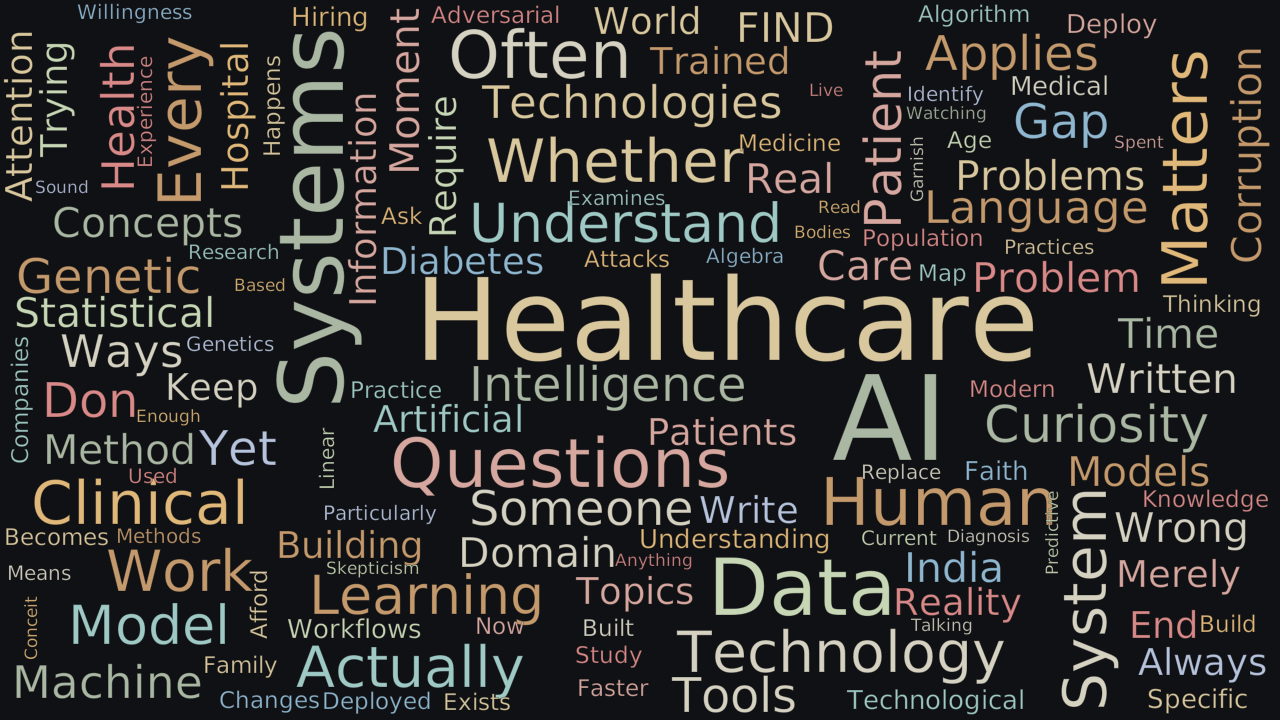
Word Cloud
Keep the record open
The prose remains ordinary Markdown beneath this one-off folio. Print it, revisit it, follow the adjacent record, or send a correction.
Adjacent records
Related reading
 01 Healthcare IT The Shadow Architecture of Healthcare Data Systems · Clinical
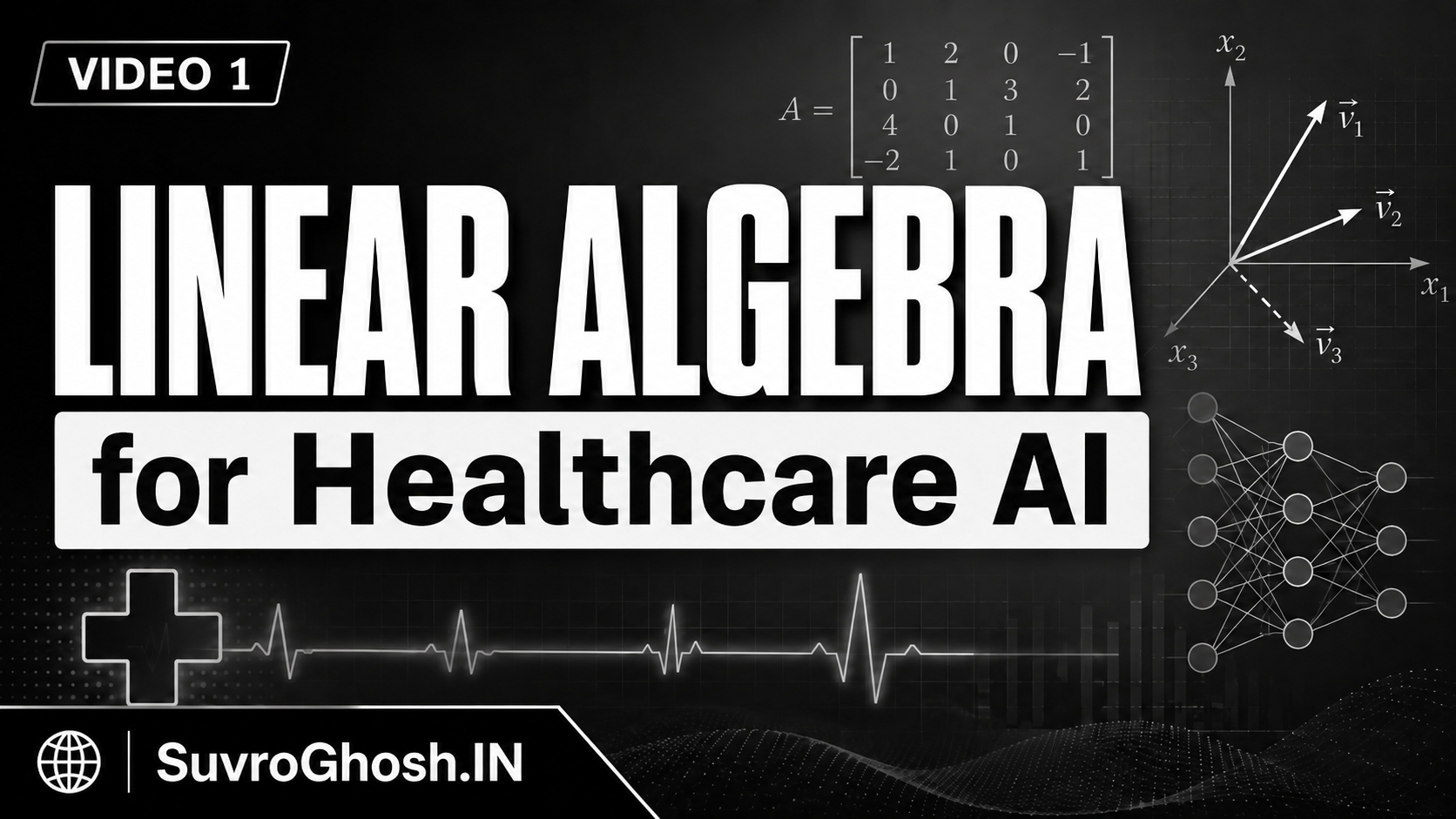 02 Healthcare IT The Linear Algebra Blind Spot in Healthcare AI Linear Algebra · Healthcare
 03 Artificial Intelligence The Mental Health System Will Meet the AI Wave at Its Weakest Joint Systems · Clinical
 04 Healthcare Systems Homeopathy Systems · Clinical