These things did not work out. What, if anything, survived?
Demonstration collection — fictional projects and evidence
The Museum
of Almost.
These things did not work out.
What, if anything, survived?
4 fictional cases
1 tested reuse
1 untested possibility
2 records without demonstrated reuse
An object’s purpose is a promise. Its record asks how much of the story we can support.
The cabinet opens as you approach.
Checking article narration…
A drawer is not a redemption story
A small box promises a lamp that anyone can assemble. A pocket recorder promises to catch a thought before it disappears. A planter promises a tidy desk. A page promises to explain an offer well enough that someone will buy it.
The cabinet keeps their intentions beside their records. It asks a narrower question than whether the maker eventually succeeded: what can this particular record support?
This is a demonstration collection — fictional projects and evidence. These are not my projects, customers, findings or later successes. The synthetic records are invented teaching material, not real citations. No participant counts, trial rates or exact costs have been supplied, and none has been invented to make the cabinet feel more substantial.
Open any drawer. The five-step visit offers an order; curiosity can choose another one.
The lamp: a specific idea that travelled
Flat-pack reading lamp, Prototype 03. The purpose was a lamp people could assemble from a small box. In a synthetic assembly exercise, people connected two similar-looking parts incorrectly.
That is the observation. The possibility that the connectors failed to communicate orientation clearly is an interpretation. It is useful enough to suggest a revision without becoming a universal explanation for assembly mistakes.
The decision was to make a keyed connector: an offset shape that fits one way. That exact connector idea appears in a later fictional reading lamp. A synthetic follow-up assembly record supports this particular revision. It does not establish a universal usability benefit, a real safety result or the success of an entire product.
In the cabinet, the comparison follows the shape from the original connection to the keyed version. Its status remains fictional throughout. This is the collection’s one tested reuse.
The recorder: a proposal with work still to do
Pocket recorder, Prototype 01. The purpose was to capture a spoken thought without looking closely at a screen. A synthetic handling exercise found the miniature controls difficult to operate in the intended circumstances.
Their size and arrangement may have contributed. The exercise did not isolate those influences from each other or from the circumstances of use. The recorded decision was to sketch larger, separated controls.
The paper sketch survives. Its stamp says Untested. There is no supported later successful product to put at the other end of an arrow. A promising proposal can remain a proposal until something happens to change its status.
The planter: a record that can close
Desk planter, Prototype 04. The purpose was a tidy, self-contained object for a desk. The fictional water-retention record shows a leak at a seam.
The recorded repair estimate exceeded the remaining demonstration-project budget. The decision was to stop. Neither amount is available. Time, money and material costs remain Unknown; a comparison between two missing amounts does not authorise us to invent either of them.
Nothing is recorded as reused. The cabinet does not add an inspirational afterlife to compensate. Closing a project can be a defensible decision about the resources that remain.
The page: uncertainty that stays uncertain
Subscription-box landing page, Version 02. The purpose was to explain an offer clearly enough for interested visitors to subscribe. The fictional trial record contains visits but no subscriptions.
Visitor intent, the offer, price and purchase friction could each matter. They were not isolated. The number and origin of visits, trial duration and price have not been supplied.
It would be easy to turn the absent subscriptions into a confident story about an expensive price, a poor design or an uninterested market. The record cannot choose between those stories. The decision was to archive the trial as inconclusive. There is no supported lesson or reuse claim.
Keep the fields separate
An observation says what the record describes. An interpretation proposes what might explain it. An unknown names what has not been established. A later test can support a revision without proving that every earlier interpretation was correct.
The cabinet keeps these fields apart because a smooth story can erase their differences. The lamp’s onward link matters more when the other drawers are allowed to retain their own endings.
Reuse is only one possible outcome. Sometimes a proposal deserves another test. Sometimes stopping protects the work still worth doing. Sometimes the most honest thing to keep is an unresolved record.
Keep what you can support. Leave the rest unresolved.
Continue through the collection
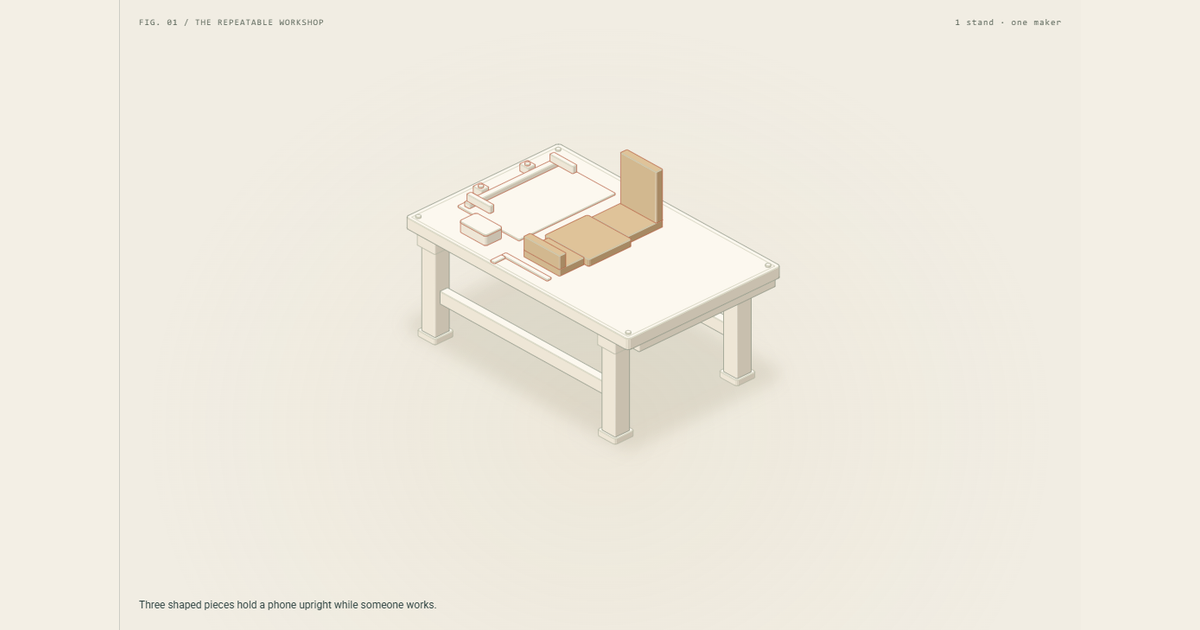
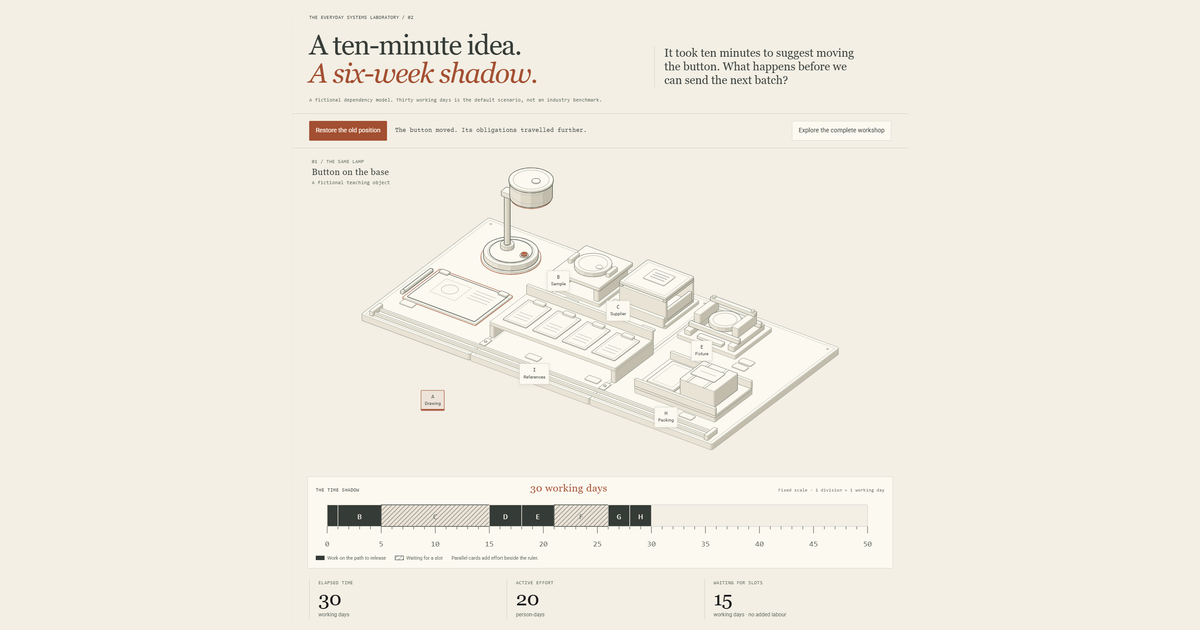
An object also carries obligations before it reaches an archive. In Build One. Now Build a Thousand., a familiar phone stand becomes a promise to many people. In The Six-Week Shadow of a Ten-Minute Idea, moving a lamp’s button reveals the work and waiting around a small change.
Quick reference and FAQ
An unsuccessful project does not automatically become a useful lesson. Four fictional specimens show the difference between a tested revision, an untested possibility, a sensible stop and an unresolved result.
Key Terms
- Observation
- Interpretation
- Unknown
- Tested reuse
Frequently asked questions
Are these Suvro Ghosh’s projects?
No. This is a demonstration collection of fictional projects and evidence. No autobiographical collection was supplied. None of the observations, customers, costs or later outcomes represents Suvro’s personal history.
Does every failure leave a useful lesson?
The collection makes no such claim. Only the lamp has a specific tested reuse. The recorder is an untested proposal, the planter closes without recorded reuse, and the landing-page trial remains unresolved.
Why are the costs marked Unknown?
No exact time, money or material costs were supplied. Even the planter’s relative over-budget decision does not establish an exact amount. Unknown is not zero.
Word Cloud
Related reading
Selected by shared topics and section, with closer publication dates breaking ties.