The Polished Ghost of Banamali Lane
Uses the speech voice supplied by your browser or device.

THIS IS A WORK OF FICTION
By eight in the evening, Banamali Lane had become one of those Calcutta streets that looked as if it had been soaked in tea and badly dried.
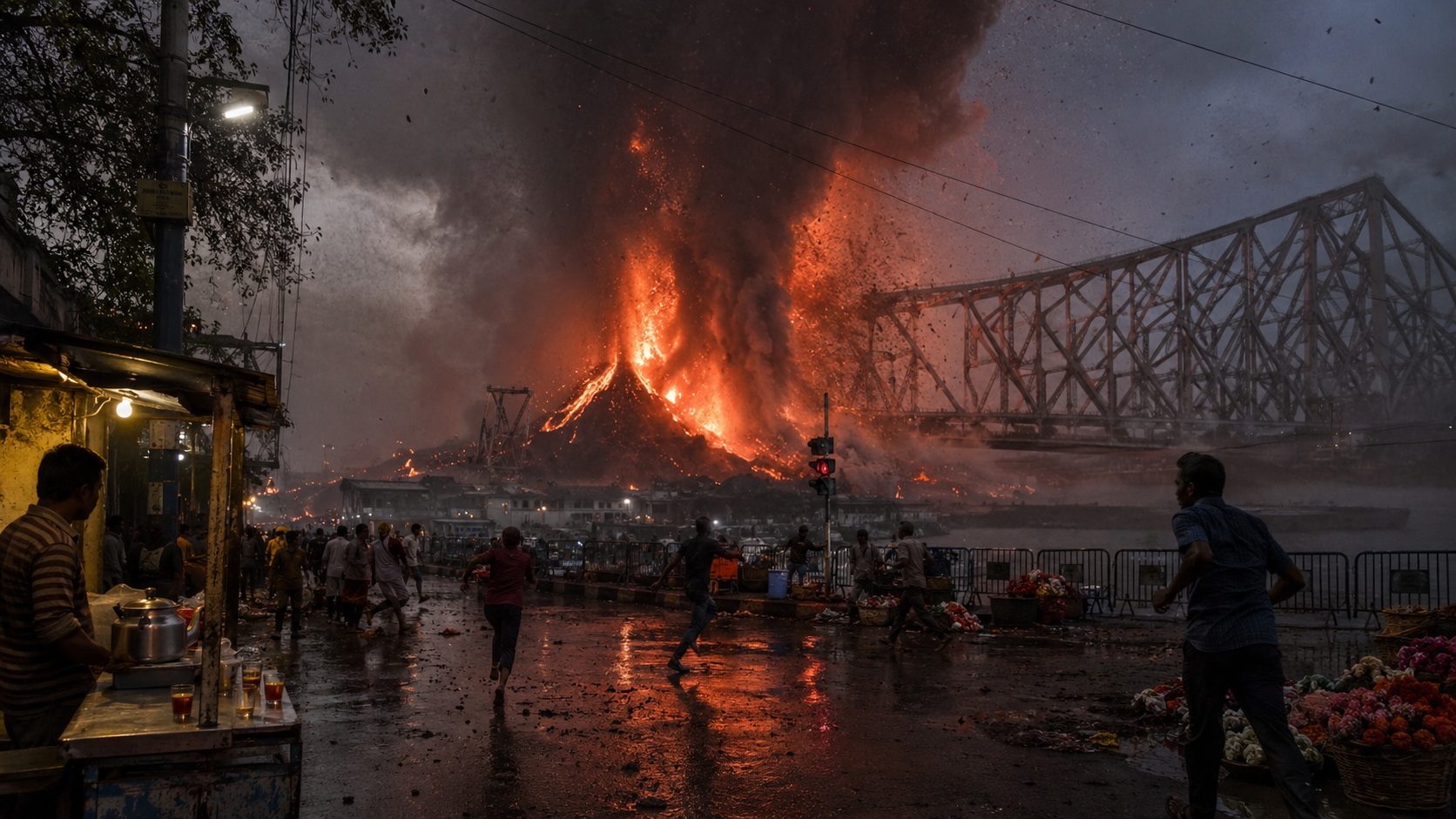
Rainwater stood in the potholes like little suspicious mirrors. The tram wires above Rashbehari hummed though no tram had come this way in years, which was very Calcutta: even absence remained employed. A delivery boy in a plastic raincoat argued with a security guard outside a gated tower called Silver Habitat, which had been built on the bones of a cinema hall where people once whistled at Uttam Kumar. Two boys from a coaching center shared one cigarette under a political poster peeling away from a wall. The poster showed a smiling councillor with his palms joined, asking for trust in a city where trust was usually given in exact change.
At Jiten-da’s tea stall, beside the open drain and the paan spit constellation, everyone was watching the same video on different phones.
Riddhi Basu watched it too, though he pretended not to care.
The clip had been taken from a CCTV camera inside the lift lobby of an apartment building in Ballygunge. There was no sound. The light flickered. A man in a dark suit entered the frame from the left.
No, not a man.
That was the trouble.
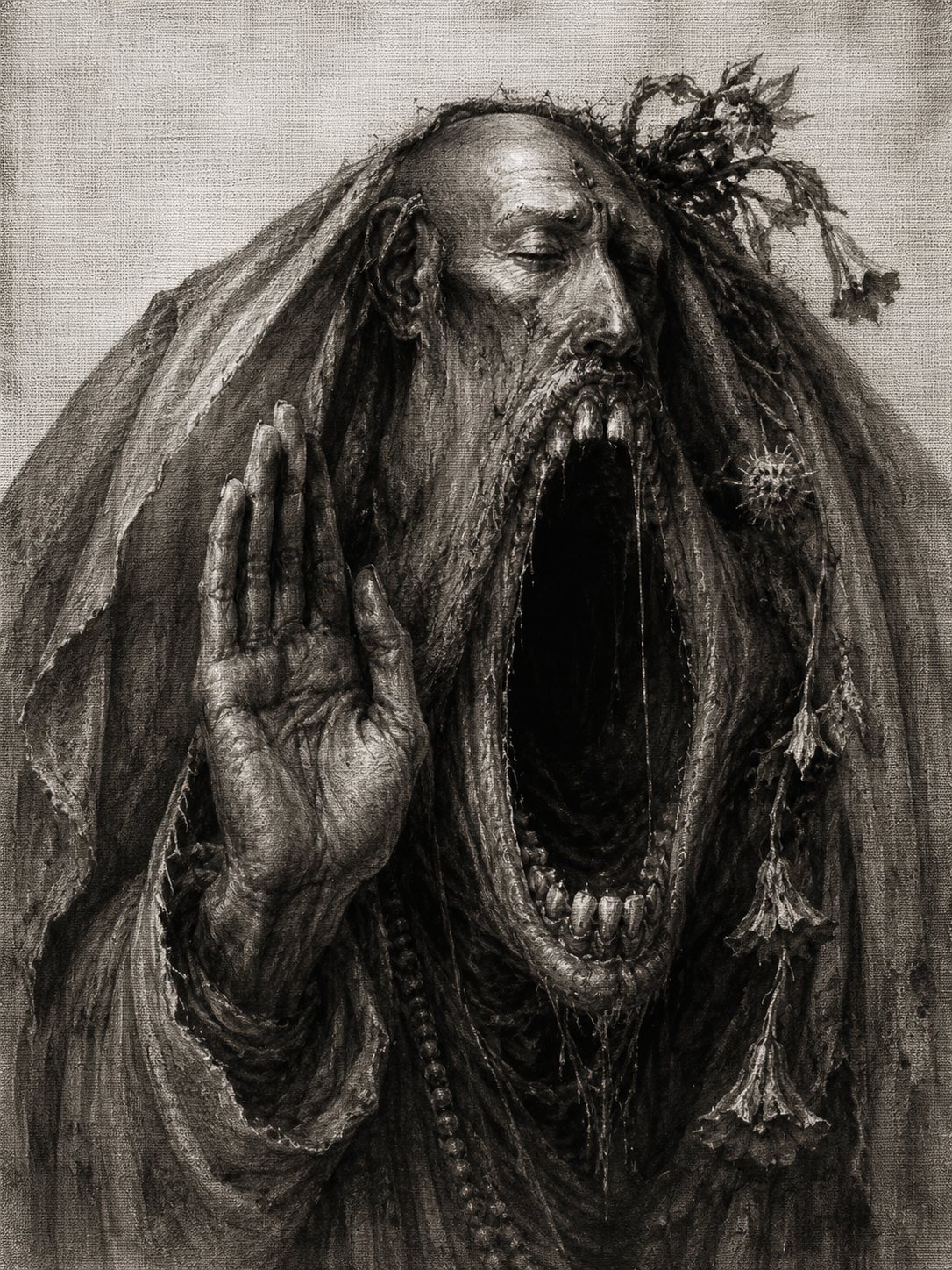
He wore polished black shoes, a dark coat, a white shirt, a narrow red tie, and an old-fashioned bowler hat, the kind one saw in English cartoons, insurance advertisements, or nightmares after indigestion. But where his head should have been there was only empty air under the hat. Not darkness. Not mist. Nothing. The collar stood open around absence.
The hat remained perfectly in place.
The suited figure walked to Flat 7B, where Prabir Sanyal lived, owner of the Subarnarekha Savings Scheme, which had made twenty-seven thousand small investors poorer and three lawyers wealthier. The faceless visitor raised one gloved hand and knocked.
The video ended there.
“Fake,” said a college boy with wet hair and heroic certainty.
“Then why did Sanyal write a confession?” said Jiten-da, pouring tea into thick glasses. “Why did he return three crores before hanging himself from his imported fan?”
“Three crores only?” said an old man. “Cheap ghost.”
There was laughter, because Bengal could laugh at a funeral if the tea was strong enough.
By the next morning, the visitor had a name.
The Polished Ghost.
By the third night, he had a following.
He visited a promoter in Behala who had built five extra floors over a two-floor permit. The promoter survived, but at dawn he walked barefoot to the police station, carrying land papers in a plastic packet and weeping into a microphone. He named two engineers, one ward officer, and an inspector who had accepted an air conditioner as a puja gift.
The city approved.
Then the ghost visited a former student leader now famous for education contracts. The man was found in his study, alive, speaking in the voice of a frightened child. He resigned from three committees and returned eleven appointment letters. The news channels played the footage until even the advertisements looked ashamed.
Calcutta, usually so tired that it treated scandal as weather, became alert. At tea stalls, in metro compartments, inside app cabs smelling of synthetic lemon, people spoke of the Polished Ghost with the relieved vulgarity of patients discovering that the doctor had cancer too.
“Let him visit Writers’ Building next,” someone said.
“Let him visit Delhi,” someone else said.
“Let him visit my landlord,” said a woman in a bus, and the bus applauded.
Riddhi did not applaud.
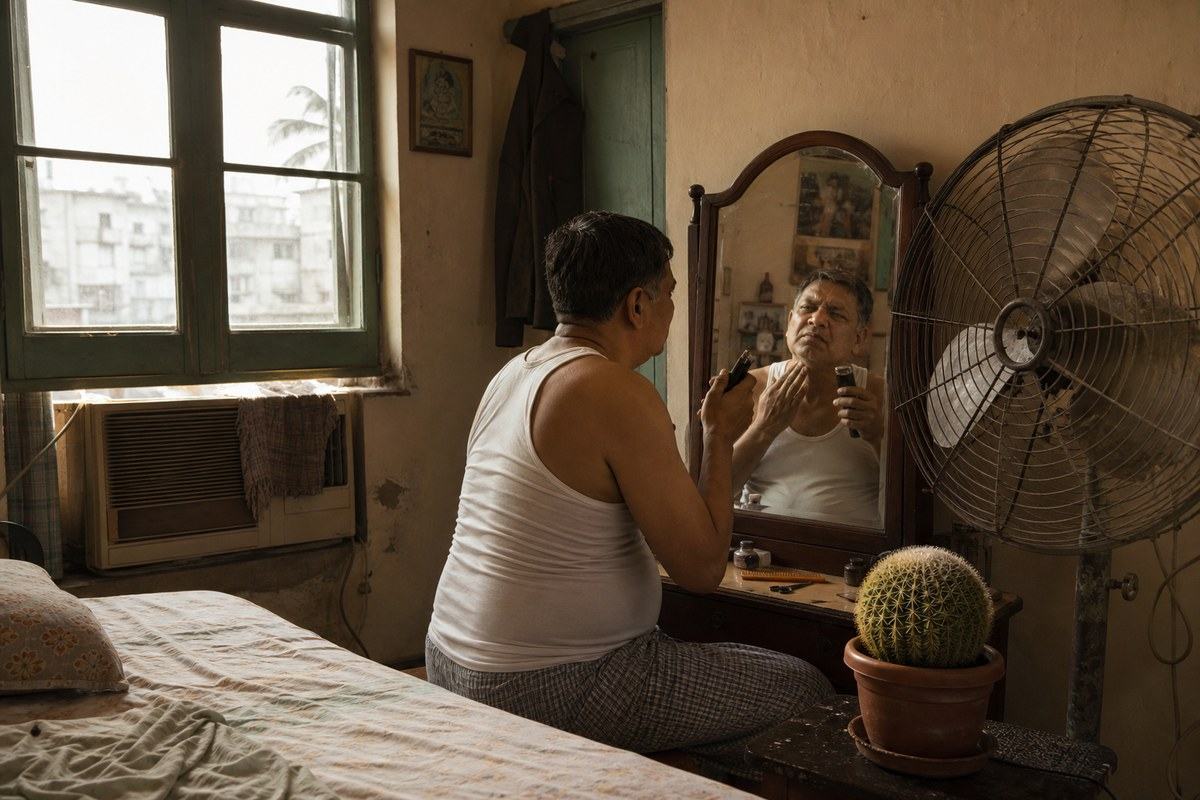
He lived on the third floor of a cracked old house off Banamali Lane, in a room that contained two plastic chairs, a writing desk, one damp almirah, and a framed photograph of his father wearing an expression of clerical disappointment. Riddhi was forty-two, unmarried, balding in a thoughtful pattern, and employed in the softest area of dishonesty: language.
He had written speeches, denials, condolence statements, press notes, apology drafts without apology, resignation letters without guilt, and public messages expressing “deep concern” on behalf of men who had never been deeply concerned in their lives. Once, before elections, he had written twenty-seven fake letters from ordinary citizens praising a flyover that was not yet built. Once he had composed a statement for a nursing home after a patient died during an oxygen shortage: “Every possible protocol was followed.”
That sentence had paid his mother’s hospital bill.
It had also followed him around for seven years, like a dog that had died but not stopped walking.
On the fourth night, Piya called.
He had not spoken to her in months. Piya Mitra had been a reporter once, then a data editor, then briefly his lover, and finally the sort of friend who knew too much to remain comfortable. She still sent him articles about municipal fraud with no greeting, as if tossing stones through his window.
“Are you watching this ghost business?” she asked.
“Everyone is watching it.”
“You wrote one of the confessions.”
Riddhi looked at the ceiling fan. It was rotating with the moral enthusiasm of an underpaid clerk.
“What nonsense.”
“The Behala promoter’s confession. The line about ‘procedural irregularities mistaken for ambition.’ That is yours.”
“Many people can write bad English.”
“No,” Piya said. “Only you write bad English with a tie.”
He almost smiled.
“Piya, I have not written for any of these people in two years.”
“That makes it stranger.”
Outside, a power cut rolled over the lane. The fan stopped. The city grew immediately louder: generator coughs, pressure cooker whistles, a child crying, rain beginning again with soft bureaucratic persistence.
Piya lowered her voice.
“Riddhi, did you ever work for Mahim Ghosh?”
He did not answer quickly enough.
“Come on,” she said. “I know you did.”
Mahim Ghosh had been a councillor, then an MLA hopeful, then a man who discovered that real estate made ideology unnecessary. He owned three apartments in other people’s names and one charitable trust in his wife’s name. Seven years earlier, after the Banamali Lane Night Shelter fire, he had hired Riddhi to “handle wording.”
Forty-two migrant workers had slept there behind a locked gate. Sixteen died. The youngest was fourteen. A wire had sparked near an illegal kitchen. The municipal inspection file had noted fire risk twice. The file vanished for nine days and returned thinner.
Riddhi wrote the statement.
He remembered Mahim’s office: split air conditioner, glass-topped table, a brass Ganesha, a framed photograph of Mahim feeding poor children during Durga Puja. He remembered the envelope of cash. He remembered Piya waiting outside, then still a young reporter, asking him what he was doing there.
“Consulting,” he had said.
Such a clean word. Consulting. It could cover anything from helping a hospital improve records to helping a murderer improve grammar.
“I did one draft,” Riddhi said now.
“One draft can bury sixteen people.”
“They had already been buried.”
Piya was silent. Then she said, “Mahim is on tonight’s list.”
“What list?”
“There’s always a list. The city only pretends ghosts are spontaneous.”
At 1:17 a.m., Riddhi’s phone rang.
Unknown number.
He let it ring until it stopped. It began again. On the third round he answered.
At first he heard only breathing. Then Mahim Ghosh said, “Basu?”
Riddhi sat up.
“Sir?”
“He is outside.”
“Who?”
“Don’t be clever. You were always too clever with words. Come here.”
“Where are you?”
“Office. Old office. Creek Row.”
“Call police.”
Mahim laughed, but the laugh broke in the middle. “Police are downstairs. They ran.”
Then he whispered, “He has no face, Basu. But he knows mine.”
The line went dead.
Riddhi should not have gone. A sensible man would have stayed home, locked the door, and developed a fever. But guilt is a kind of curiosity with teeth. He put on yesterday’s shirt, took an umbrella with two broken ribs, and booked a cab he could not afford.
The driver had the radio on. Every station was discussing the Polished Ghost. One caller declared that divine justice had arrived in Western dress because Indian dress had become compromised. Another suggested installing CCTV in all ministers’ bedrooms. The host laughed too loudly.
Creek Row at two in the morning had the abandoned look of a stage set after the actors had been eaten. Mahim’s old office stood above a diagnostic center and a closed momo shop. The signboard still promised DEVELOPMENT WITH DIGNITY, though half the bulbs had gone.
Riddhi climbed the stairs.
On the landing, two policemen stood pressed against the wall. One was crying quietly. Neither tried to stop him.
Inside, the office lights were on. The air conditioner was off. Sweat shone on the framed photographs, on Mahim’s awards, on the glass table where Riddhi had once accepted his envelope.
Mahim sat in his chair.
Across from him stood the Polished Ghost.
The first thing Riddhi noticed was not the absence of a head. It was the neatness. The suit looked freshly brushed. The shoes reflected the tube light. The red tie hung straight. The bowler hat floated above the empty collar with an elegance so absurd that, for one dazed second, Riddhi thought of old British comedies his father had watched on Doordarshan.
Then the ghost turned.
Not toward him. There was no face to turn. But the emptiness addressed him.
Riddhi smelled wet wool, old paper, and smoke.
Mahim began to speak.
“I, Mahim Kumar Ghosh, knowingly permitted the use of the Banamali Lane Night Shelter despite receiving written notice of fire violations on three separate occasions.”
His voice was flat. Dictated.
“I accepted payment from the contractor. I ordered the side gate locked to prevent night movement. I instructed staff to describe all residents as temporary encroachers. I paid journalist S. Dutta to change the death count from sixteen to nine in the first report. I paid Riddhi Basu to prepare a public statement falsely claiming that every possible protocol was followed.”
Riddhi felt the room narrow.
Mahim looked at him then, and in his eyes there was not hatred, but relief. This was worse. Hatred would have made them separate men.
The ghost lifted one gloved hand and placed a sheet of paper on the table.
Mahim signed it.
His resignation. His confession. His little exit ticket from the theatre of respectability.
Then he leaned back and died.
No drama. No scream. His mouth opened slightly, as if he had remembered an appointment.
The ghost remained.
Riddhi wanted to run but found that his legs had become deeply patriotic and would not leave the soil.
The empty space above the collar tilted toward him.
On the table, beside Mahim’s dead hand, lay another sheet.
RIDDHI BASU, it said.
He did run then.
By dawn, the city knew everything except the part that mattered.
Mahim Ghosh’s confession was everywhere. People read it on buses, at breakfast tables, outside hospital billing counters, in queues for LPG cylinders, in office lifts where nobody met anyone’s eyes. The Banamali Lane fire returned from the dead like a debtor.
Riddhi’s name had been removed from the viral copies.
That frightened him most.
Someone had protected him.
Or reserved him.
Piya came to his room at noon, carrying muri in a paper packet and anger in both hands.
“You were there,” she said.
“Yes.”
“You saw him?”
“Yes.”
“And?”
Riddhi poured water into two glasses. His hand shook so badly that water ran across the table.
“He left my name.”
Piya’s face changed. She was not frightened for him exactly. She was frightened because facts had become intimate.
“Show me.”
He gave her the paper.
She read it once. Then again.
“This handwriting,” she said.
“It was printed.”
“The signature line. Look at the underline.”
Riddhi looked.
The line under his name had a tiny upward hook at the end.
His father used to underline like that.
Absurd thought. Insulting thought. His father, Shibnath Basu, had been a municipal accounts clerk who wore full-sleeved shirts even in May and polished his shoes every Sunday until they looked better than his future. He had died fifteen years ago after refusing to alter a contractor payment record. Not heroically. Heroes got statues. Shibnath Basu got transferred to a records basement in Howrah, developed asthma, retired early, and spent his last months calculating pension arrears that never arrived.
He had owned one dark suit and a hat bought from New Market in 1983 for a cousin’s wedding. Riddhi had sold both after his mother’s first stroke.
Piya was watching him.
“What?”
“Nothing.”
“You look like you swallowed a key.”
He told her.
She did not laugh. Good journalists rarely laughed at the useful parts.
“Where did you sell them?”
“A costume shop near Chitpur.”
That evening they went there.
The shop occupied the ground floor of a collapsing mansion where plaster lions guarded a balcony full of drying underwear. Inside hung police uniforms, mythological crowns, fake beards, school play swords, British officer coats, demon masks, and three versions of Rabindranath Tagore in different budgets.
The owner, a thin man named Nirmal, remembered the suit.
“Good cloth,” he said. “Old but good. Gentleman size.”
“Who bought it?” Piya asked.
“Nobody.”
“It’s gone.”
Nirmal scratched his chin. “After that fire, many things went. Smoke damage upstairs. Rats. Rain. Who knows?”
“What fire?”
He looked surprised.
“You don’t know? The old warehouse behind us burned seven years ago. Same week as that night shelter. One man died here also. Some extra worker. Came to sleep in the costume room. Door jammed.”
“What was his name?”
Nirmal shrugged. “People like that have names only when police need signatures.”
Piya stepped closer. “Try.”
“Nagen? Nabin? No. Nirmalya? Something.”
Riddhi already knew.
Nilu.
The fourteen-year-old from the Banamali Lane shelter had not died there, not at first. He had escaped through a bathroom window, burned on one side, and run through lanes until someone found him near Chitpur. No hospital admitted him without papers. By morning he was dead in a costume room among other people’s faces.
Riddhi had seen the note in the file.
Minor male, unidentified, probable vagrant.
He had deleted it from the draft because Mahim’s assistant said, “Why complicate?”
Why complicate. The national motto of comfortable crime.
Outside the shop, evening had gathered over Chitpur Road. The air smelled of rain, frying oil, incense, and old wood surrendering to termites. Somewhere a conch blew. Somewhere a man shouted into a phone about plywood. Above them, on a cracked wall, someone had already painted the Polished Ghost: black suit, floating hat, blank collar. Under it, in red letters:
DADA, VISIT EVERYONE.
Piya stood before the slogan.
“That’s the problem,” she said softly.
“What?”
“Everyone means no one. People love justice when it travels away from their own door.”
That night Riddhi did not sleep.
At 3:03 a.m., the power went out again.
The city fell into its second darkness, the private one under the public one. Generators started in rich buildings. In poorer rooms, people turned on phone torches and continued being mortal.
A knock came at Riddhi’s door.
Three polite taps.
He sat on the bed.
The knock came again.
He thought of not opening it. Then he thought of the sixteen men behind the locked gate. He thought of Nilu in the costume room, surrounded by masks with painted eyes. He thought of his father polishing shoes for a job that punished honesty like a clerical error. He thought, too, of the envelope of cash, and how light it had felt in his hand.
He opened the door.
The Polished Ghost stood in the corridor.
Up close, the emptiness was not empty. It contained motion, like heat above a road. Riddhi saw, or believed he saw, fragments within it: a boy’s burned cheek, his father’s tired eyes, Mahim’s open mouth, Piya’s accusing silence, his own face reflected and unreflected, appearing only when he wanted to look away.
The ghost held out a sheet of paper.
Riddhi took it.
It was blank.
“I don’t understand,” he said.
The ghost waited.
From below came the sounds of Banamali Lane: a dog barking, a scooter coughing, someone laughing at a video, a pressure pump starting. Ordinary life, that great accomplice, continued.
“You want my confession.”
The hat did not move.
Riddhi went to his desk. His phone torch made a small white island on the page. He picked up a pen.
He wrote his name.
Then stopped.
What was the correct language for guilt? He knew the incorrect language very well. It began with regret and ended with circumstances. It placed responsibility in passive voice and sent sympathy in bulk.
He crossed out his name.
He began again.
I, Riddhi Basu, sold words to men who had already bought everything else.
Too literary. Too clean.
He tore the page.
The ghost stood by the door, patient as a government file.
At last Riddhi wrote the facts. The money. The sentence. The deleted line about Nilu. The way he had told himself his mother’s medicine mattered more than a dead boy’s name. The way that was partly true and therefore more terrible than a lie.
When he finished, the room felt colder.
The ghost took the paper.
Then, with one gloved hand, it removed the bowler hat.
Riddhi looked into the place where a head should have been.
He did not see Nilu.
He did not see his father.
He saw Calcutta.
Not the postcard city, not the intellectual city, not the brave city people praised after leaving it, but the city as it saw itself at 3:30 a.m. when no slogans were awake: landlords taking cash deposits without receipts, sons waiting for parents to die and free rooms, doctors recommending tests for commission, teachers selling exam questions, residents bribing inspectors for illegal balconies, journalists trimming truth to fit ownership, citizens cursing corruption while keeping one folded note ready for the traffic sergeant.
He saw himself among them, not worse, not better, merely better dressed in explanation.
The ghost had no face because no single face would do.
In the morning, Riddhi’s confession appeared online.
Piya published it.
For one hour there was silence, or the internet’s version of silence, which is disbelief refreshing itself. Then the comments began.
Brave.
At least he confessed.
Small fish.
What about the big people?
Polished Ghost zindabad.
By afternoon, a sweet shop near Lake Market was selling black-and-white sandesh called Bhoot Babu. By evening, students had made a protest song. By night, three politicians demanded a judicial inquiry into supernatural interference. Calcutta, having been offered a mirror, decorated the frame.
Piya came to Banamali Lane two days later.
Riddhi’s room was open. His desk was clean. The framed photograph of his father was gone. On the chair lay a dark suit, freshly brushed, though she was certain he had owned no suit. Beside it rested a bowler hat.
She called his name.
No answer.
Downstairs, Jiten-da said he had seen Riddhi leave before dawn.
“Looking smart,” he said. “Like office days.”
“Was he alone?”
Jiten-da hesitated.
Rain had begun again, fine and silver, softening the lane’s dirt without removing it.
“No,” he said. “Or yes. Hard to say.”
That night, a minister in Alipore woke to three polite knocks.
The CCTV later showed a man in a dark suit entering the lift lobby. His shoes were polished. His tie was straight. His hat sat perfectly above his collar.
For a moment, as he turned toward the camera, the empty space where his face should have been flickered.
There was almost a face there.
Almost Riddhi’s.
Then the light failed, and the city, grateful and frightened and not yet changed, leaned closer to watch.
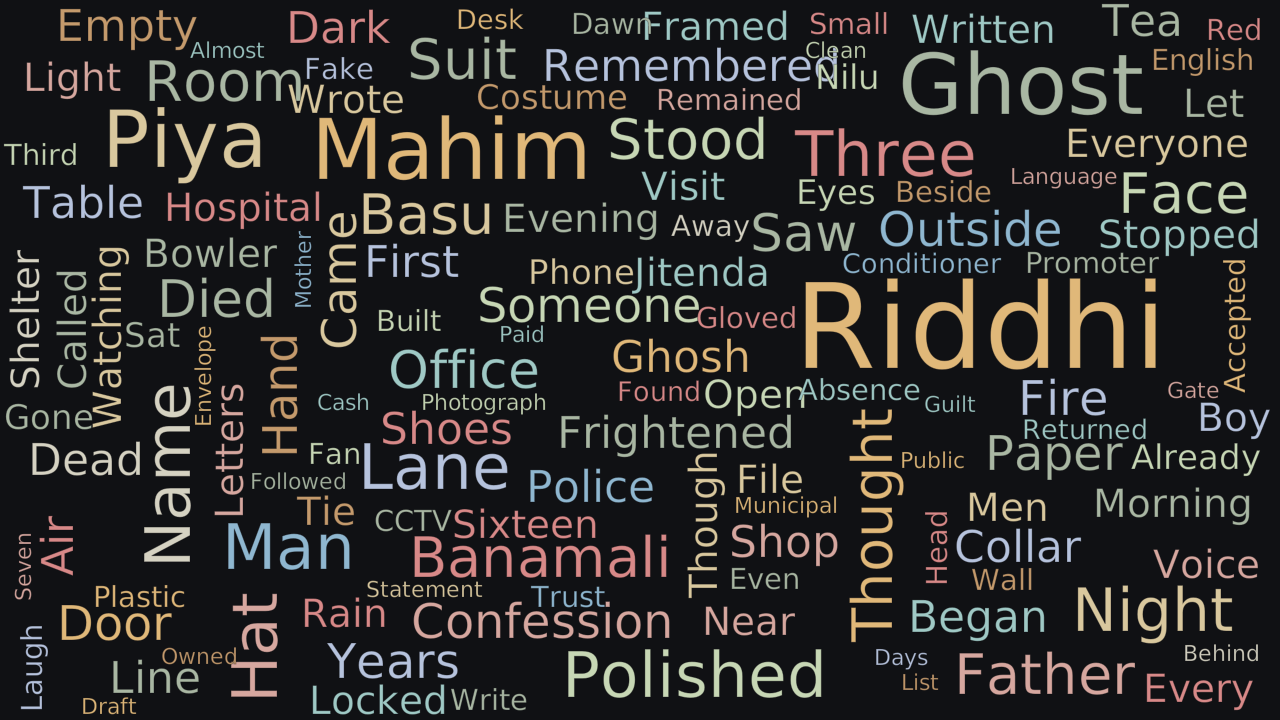
Word Cloud
Related reading
Selected by shared topics and section, with closer publication dates breaking ties.