ghost on a budget
Uses the speech voice supplied by your browser or device.

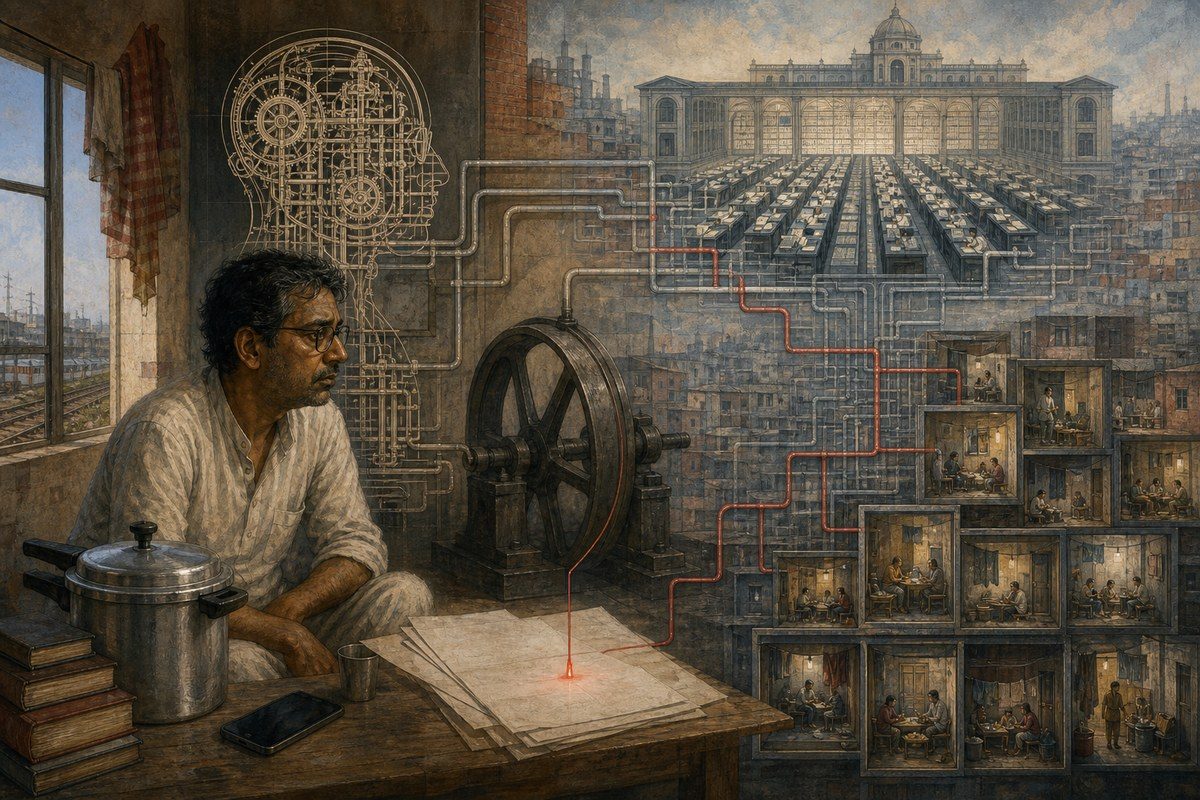
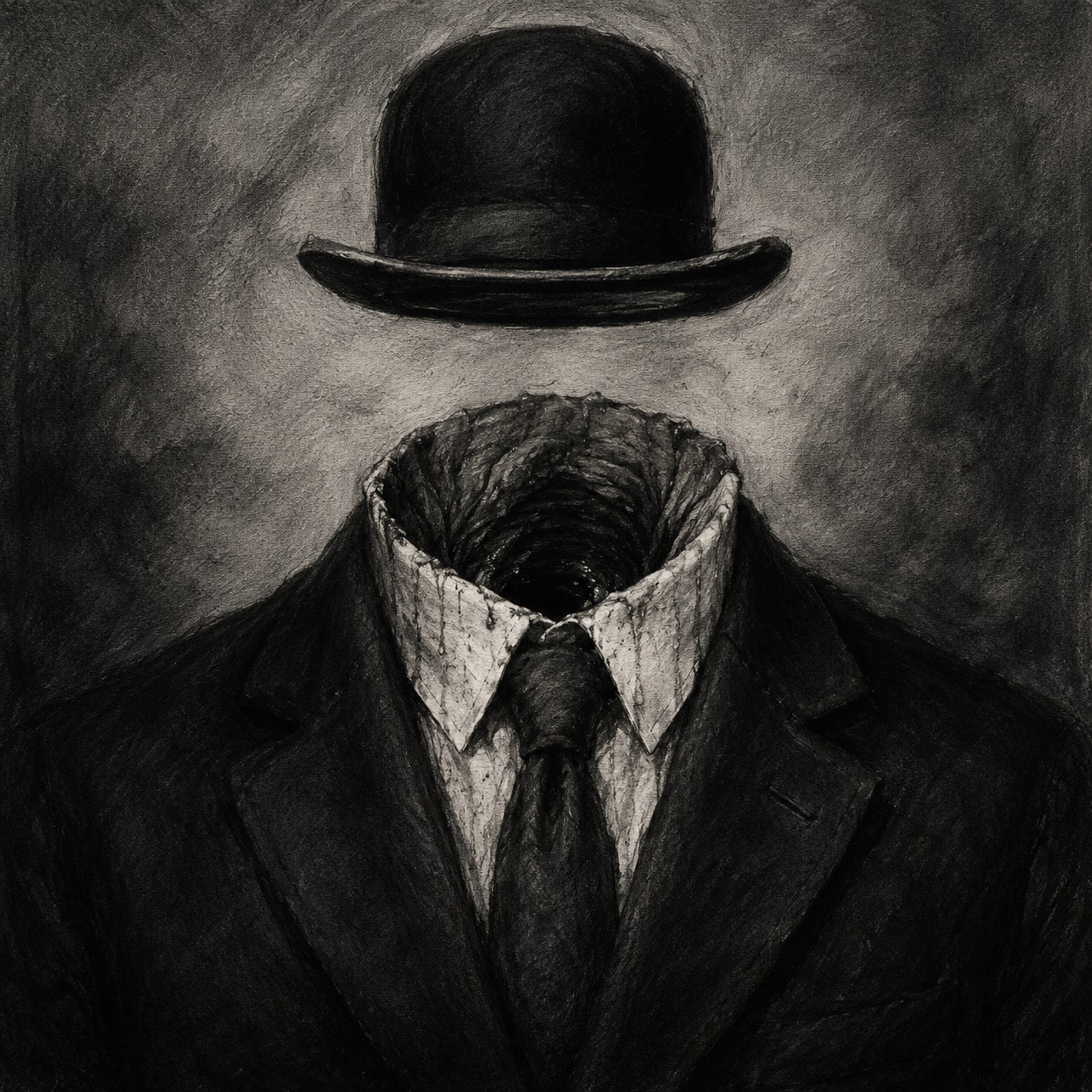
I have not left my room in a duration I refuse to measure because clocks are for people who matter, and I have discovered something marvelous: the poor do not die, we simply evaporate, leaving behind a faint odor of unpaid rent and broken promises. I am the invisible man, but without the cool bandages and the dramatic reveal; I am the Calcuttan ghost who haunts a ten-by-ten cubicle, rattling my chains of empty tea cups, moaning at the electricity bill that arrives with the regularity of a curse. My social life is a void so perfect, so absolute, that physicists should study it as a new kind of vacuum, an event horizon of human connection where signals go out and nothing comes back. When you are poor in this city, you do not merely lose purchasing power; you lose coordinates in the social Cartesian plane. You become the asymptote that approaches humanity but never, ever touches it.
The mathematics of my disappearance is elegant in its cruelty. Let us define the Social Visibility Function as the product of wealth and utility , divided by the square of the embarrassment you cause to your acquaintances, .
As approaches zero, obediently approaches zero with it, assuming the remaining variables have not already fled the equation out of embarrassment. Increase , and things become even uglier. This is the only branch of mathematics in which I have achieved experimental reproducibility. My visibility collapses like a soufflé in a thunderstorm, like my will to live on a Monday morning when the neighbor’s radio sings of prosperity and I count the last grains of sugar like a miserly dragon guarding diminished treasure. I am the statistical error, the outlier discarded with a sniff, the ghost in the machine of Calcutta’s bustling economy. Poverty is not merely the absence of currency; it develops its own social repulsion field, a miserable entanglement of shame, inconvenience, fear, embarrassment, and indifference that keeps me locked in this room while the world outside performs its pantomime of concern.
My existence has become a cheap socioeconomic parody of Schrödinger’s cat experiment, where the box is my bedroom, the cat is my dignity, and the poison is the knowledge that no one, absolutely no one, is checking whether I am alive or dead until the smell becomes a civic nuisance. In Schrödinger’s original thought experiment, radioactive decay determines whether poison is released; in mine the mechanism is simpler and considerably less prestigious: the landlord knocks. Until then I am simultaneously socially present and socially absent, alive and merely undead, until somebody opens the door to collect the rent and collapses my wave function into a stuttering apology and a promise that tomorrow, surely tomorrow, the money will materialize like manna from a heaven that has clearly misplaced my address. A private uncertainty principle governs the whole arrangement—not Heisenberg’s, before some physicist sends me an angry email—the more precisely you know my financial status, the less inclined you become to know me at all.
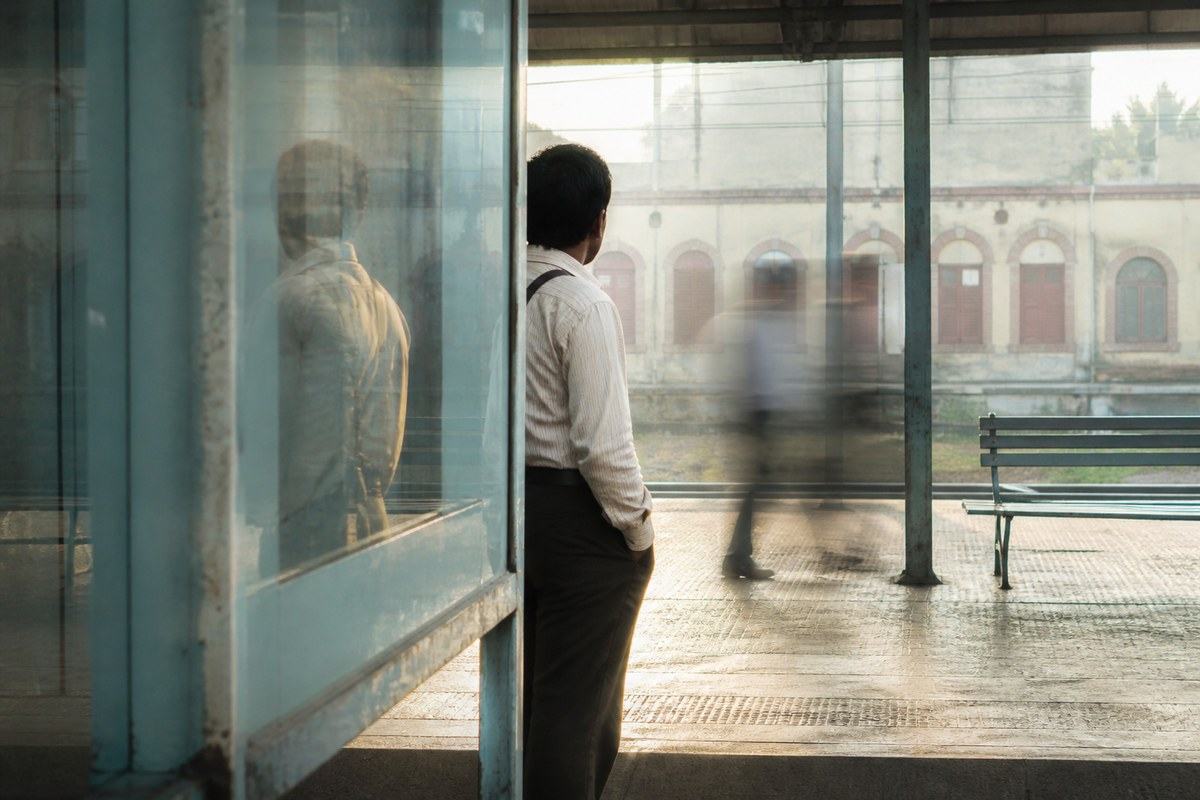
I have become the negative space in the photograph of Calcutta life, the silhouette that defines the shapes of the prosperous by my absence. I have begun to think a poor man is like a shadow: visible when the lighting is convenient, missing the moment somebody enters the dark rooms of actual trouble. I am that shadow, but inverted; I am the darkness that makes their neon lights seem brighter, the silence that makes their laughter sound louder, the ghost that makes their flesh feel warmer. To be poor is to be a perpetual guest at a party that ended years ago, standing in the corner with a warm soda, pretending to read the wallpaper patterns as though they were sacred texts, waiting for a host who has forgotten you were ever invited, or born, or breathed.
Even the word has an insult folded into its ancestry. English “poverty” came through Old French poverte or povreté, from Latin paupertas, from pauper, “poor.” The older root behind pauper has traditionally been reconstructed from elements connected with “few” or “little” and “producing” or “procuring”—roughly, one who produces or gets little. I produce little; I procure less; after two thousand years the Indo-Europeans have finally found their target demographic. But Calcutta has improved upon mere etymology. Here poverty can become a caste of the spirit, a leprosy of the social soul—not a literal caste, not a literal disease, but something with the same talent for marking a person before he opens his mouth. I am not merely broke; I am broken in the specific way that makes taxi drivers accelerate past, former friends develop sudden scholarly interest in their shoelaces, and respectable people discover urgent appointments elsewhere when desperation enters the conversation. I am a leper of the marketplace without the bacterium, ringing my bell while healthy commerce flows around me like water around a stone that has learned, finally, to be still.
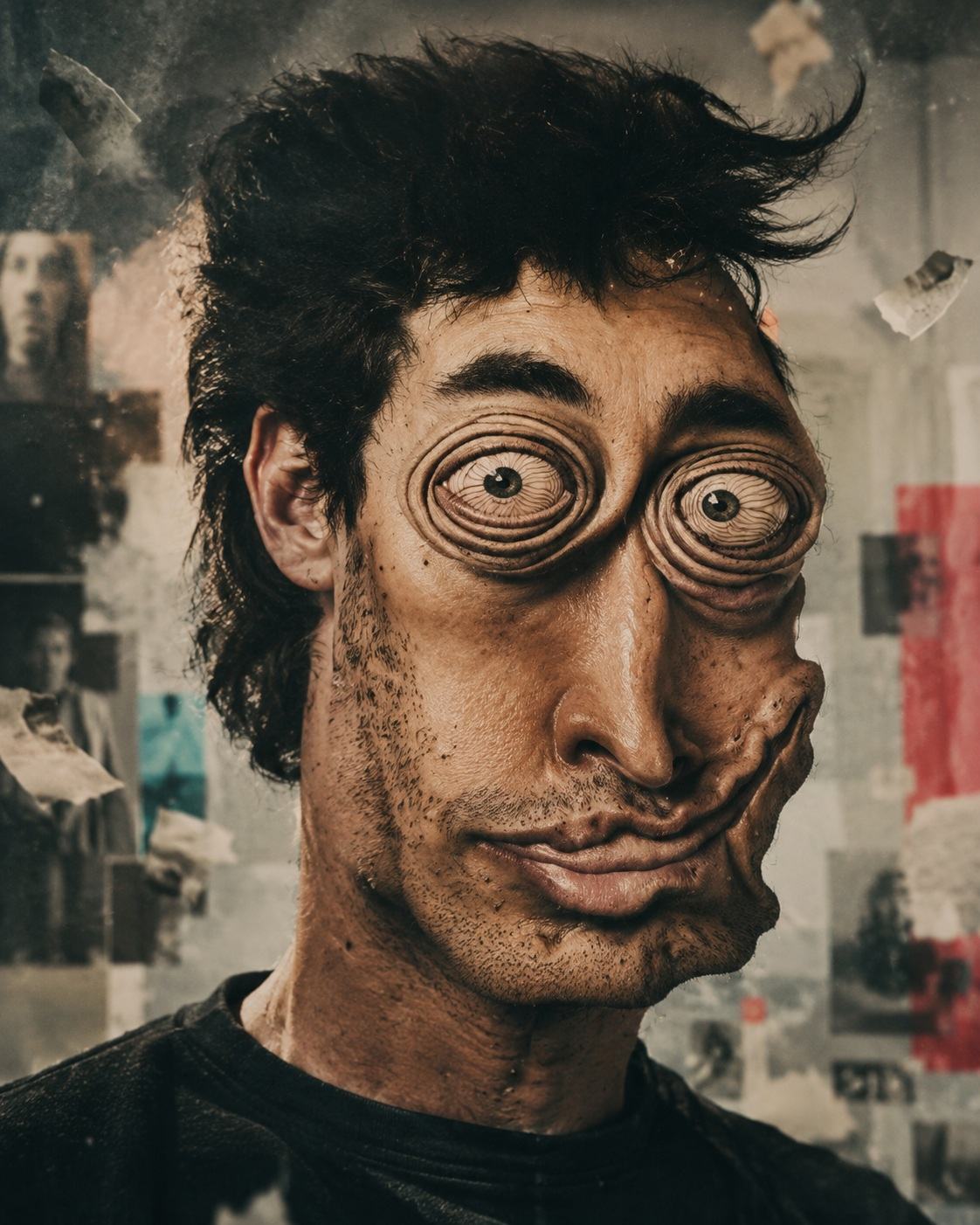
They call me a loony cartoon, a circus freak, and I accept the diagnosis with the grace of a man who has nothing left to lose but his subscription to reality. I have become the jester in the court of my own isolation, performing tricks for an audience of cockroaches and dust motes, laughing at jokes that no one else hears, dancing to the rhythm of my own diminishing returns. The bipolarity supplies its own lighting department, of course—sometimes I am the king of infinite space, bounding with manic electricity to reorganize my nothing, and sometimes I am the melancholy Dane, minus the castle, plus the humidity, pondering whether to be or not to be while the fan rotates with the lazy indifference of a bureaucrat who knows his pension is secure. But mostly I am the ghost, the revenant, the unquiet spirit who rattles not chains but empty wallets.
I do not blame them, these friends who have forgotten me, these acquaintances whose amnesia has the precision of a surgeon’s scalpel. Why would they remember? I have nothing to offer but my absence, which is the only gift I can afford to give consistently. I am the social equivalent of a software error message, popping up to remind them that the system has failure states they would rather not inspect. To acknowledge me is to acknowledge the fragility of their own prosperity, the thin ice upon which respectability skates while pretending it is granite. I am the memento mori at their carnival of consumption, the skull beneath the skin of the dinner party, the reminder that in Calcutta’s grand casino some of us are not players but chips, pushed across the felt by hands we never see, discarded when the game changes, swept under the table with peanut shells, cigarette ash, and the other debris of somebody else’s good evening.
And so I remain here, in this room that smells of old books and older regrets, this laboratory where I conduct experiments in human invisibility, this monastery of the socially dead. I have mastered the art of the silent phone, the unknocked door, the birthday that passes like a ship in the night, sounding its horn for other harbors while I watch from my desert island of one. I have acquired what John Keats called “Negative Capability”: the capacity to remain amid uncertainties, mysteries, and doubts without desperately reaching after fact and reason. Keats meant it as a quality of the great imaginative mind. I have turned it into a household economy. I remain magnificently capable of existing amid uncertainties, mysteries, doubts, unpaid bills, unreturned calls, vanished money, and unanswered questions without any irritable reaching after fact or reason—or friends, or employment, or the basic dignity of being asked, “How are you?” by somebody who actually waits for the answer.
The truth is, I have become so poor that I cannot even afford to be a memory. I am the ghost who haunts his own life, watching the reels of what might have been, eating the phantom popcorn of regret, sitting in the empty theater of my own potential while the projector rattles behind me and shows the same old film. I do not leave my room because the room has become the only place where my existence is acknowledged, even if only by the walls closing in like slow, patient relatives who know perfectly well they will inherit the nothing I possess. I am the invisible man, and I have made my invisibility into a science, an art, a religion in which I am both deity and sole worshipper, praying to myself in a mirror that shows a face growing fainter with each day, each hour, each rupee.
But here is the secret, the dirty little secret that keeps me sane inside the absurdity: the poor are not ghosts because we are dead. We are ghosts because the social world has learned to look through us. Poverty strips away the cushioning upholstery with which respectable life covers its machinery. From down here you see the gears. You hear the bearings grind. You notice how friendship, mobility, generosity, leisure, medical care, dignity, even the harmless act of meeting somebody for tea, all quietly acquire admission prices. Money does not purchase everything, as people with money are forever fond of explaining, but its absence has an astonishing talent for putting a tollbooth in front of almost everything.
And in this room, in this poverty, in this magnificent, terrible isolation, I have found something that resembles freedom, although I would happily exchange it for solvency: the freedom of the ghost who no longer has to pretend to be solid, the freedom of the man whose remaining possessions include the dangerous ability to see certain things without their upholstery, and to laugh, bitterly, uproariously, at the cosmic joke of being told that money cannot buy happiness by people who have never had to calculate whether happiness fits into this week’s grocery budget.
I am the ghost on a budget, haunting the margins of your prosperity with one eternal, echoing question: if a poor man speaks in Calcutta and no one is around to hear him, does he make a sound?
Of course he does.
The trick is that silence and inaudibility are not the same thing.
And the hot, humid wind outside my room has never given a damn either way.
P.S. References: the etymology of “poverty” and Latin pauper; Erwin Schrödinger’s 1935 cat thought experiment; John Keats on “Negative Capability”; Thomas Merton on solitude, the outsider, and life at the margins. Quantum-mechanical language throughout is used metaphorically, not as a physical theory of poverty.
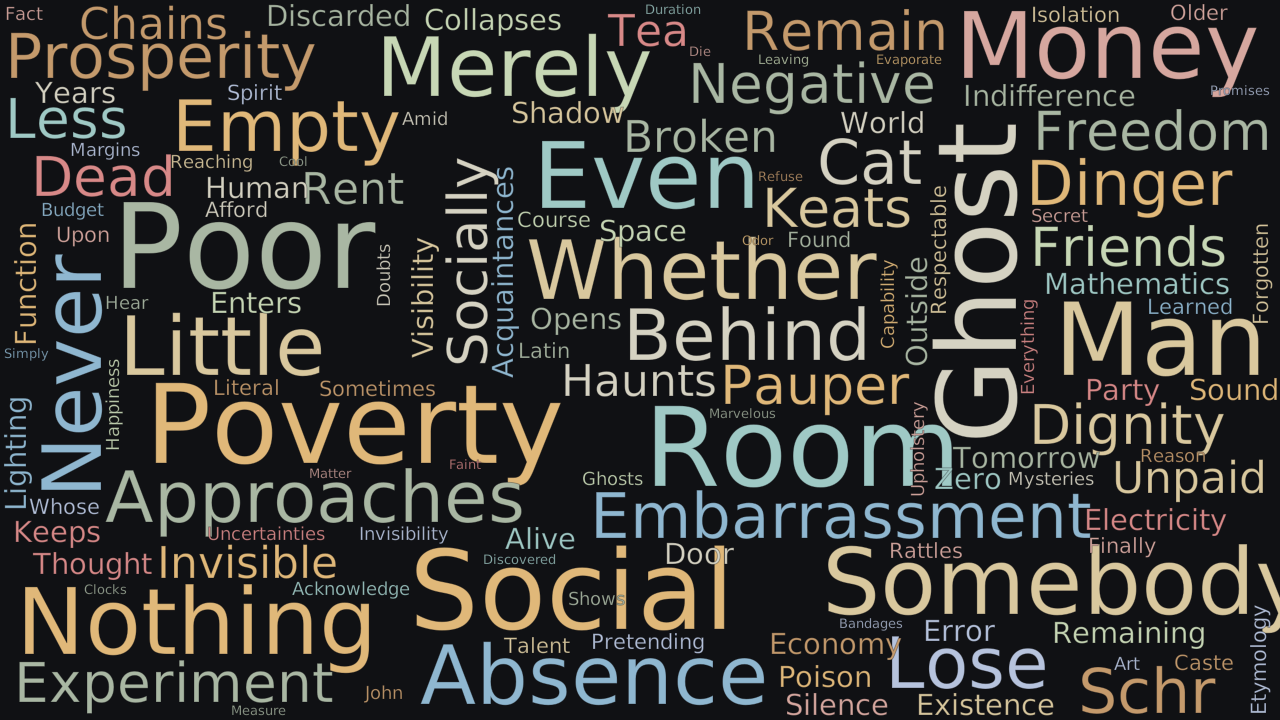
Word Cloud
Related reading
Selected by shared topics and section, with closer publication dates breaking ties.