The Small Republic of No One
Uses the speech voice supplied by your browser or device.

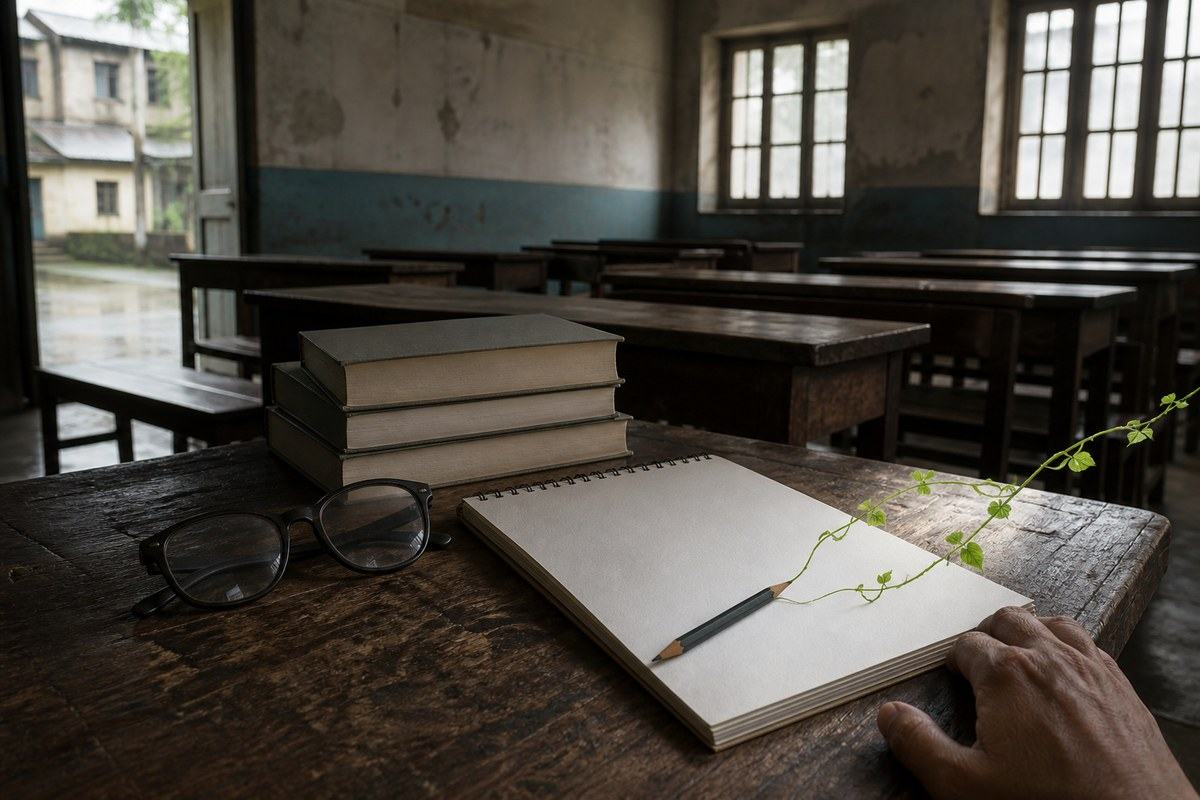
When I was a child, I was absolutely certain I would become someone. I did not know who this someone was, but he was definitely not going to be a tired man in a rented Calcutta room wondering whether making tea was worth the administrative burden.
Children are dangerous economists. They do not understand money, timing, illness, office politics, bad luck, or the way life sometimes drops a coconut on your head and then sends you the medical bill. They take two compliments, one good exam result, a teacher’s pleased eyebrow, and a mother’s proud silence, and from this they construct a future large enough to house an airport.
I did that.
I grew up thinking I would amount to something. Not necessarily a film-star something. Not a man in sunglasses stepping out of a white car while people opened doors in a small panic. I was not that foolish. My ambitions had spectacles. They carried books. They believed in hard work, serious sentences, difficult ideas, and the clean smell of a new exercise book.
That is how middle-class Bengali dreams often begin. Not with yachts. With exercise books.
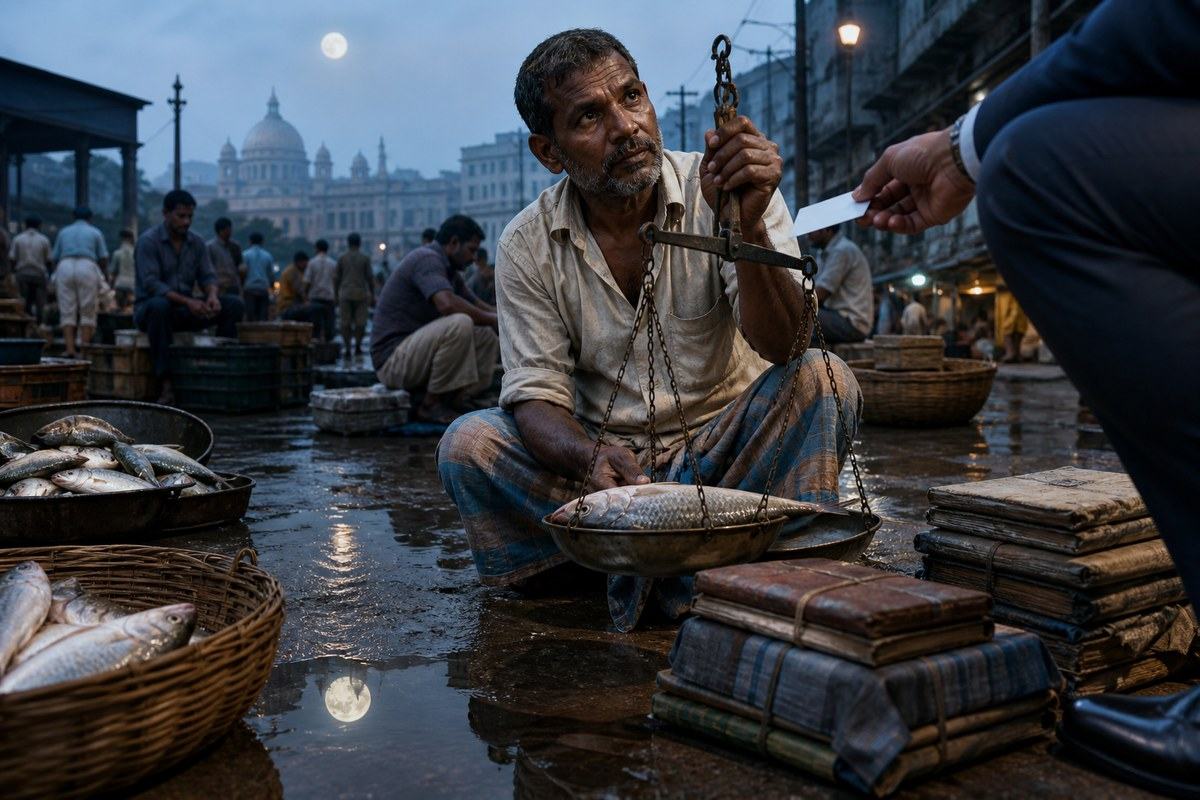
A child in North Calcutta or South Sinthee or Dum Dum does not usually say, “One day I shall own a private island.” He says something stranger and more touching. He says, “One day I shall be respected.”
There. That was the dangerous word.
Respected.
Not loved, not rich, not feared, not famous exactly. Respected. The great Bengali middle-class medal, made of invisible brass and worn under the shirt. Respect means people lower their voices slightly when your name comes up. It means relatives stop explaining your own life to you. It means the para uncle who once asked, “What will become of this boy?” later adjusts his lungi and says, “I always knew.”
I wanted that.
I wanted to become someone whose life had shape. A person with a table, a chair, a purpose, a shelf of books, a few people waiting for his opinion. Perhaps a writer. Perhaps a scientist. Perhaps a professor. Perhaps a builder of systems. Perhaps something in that large respectable territory where intelligence walks around wearing shoes.
For a while, it even looked plausible.
This is the cruel trick. Life does not always reject you at the gate. Sometimes it lets you enter the compound, admire the garden, sit in the waiting room, and then quietly misplaces your file.
I studied. I crossed oceans. I worked in America. I learned serious things from serious people in serious buildings where the air-conditioning behaved like a minor deity. I dealt with data, systems, hospitals, research, software, the whole cold machinery of modern professional life. I was not idle. I was not some fellow who spent forty years leaning against a paan shop and blaming Saturn.
And yet here I am.
Fifty-one.
Single.
Lower middle-class in the outer folds of Calcutta, where the buildings look as if they were designed during a power cut by men having an argument with geometry. A little consulting income comes now and then, like a shy goat entering a courtyard. Depression sits on the bed without invitation. Anxiety keeps checking the lock. The fan turns overhead with the tired loyalty of an old clerk.
And the old childhood sentence has changed.
“I will become someone” has become “I seem to have become no one.”
“I will amount to something” has become “This something appears to have quietly matured into nothing.”
It sounds dramatic when written down. In real life it is less dramatic. That is the insult. If life destroyed you with thunder, at least you could respect the production value. But ordinary failure arrives without music. No one announces it. No one says, “Ladies and gentlemen, the boy’s glittering future will now be replaced by a plastic bucket, a half-charged phone, and lower back pain.”
No. It happens by subtraction.
One friend less.
One opportunity gone cold.
One year wasted in illness.
One email unanswered.
One tooth damaged.
One morning where getting up feels like pushing a tram.
One afternoon where you look at the laptop and the laptop looks back like a small black pond.
Then one day you notice that you have not become tragic. You have become ordinary in the worst way: invisible to the world and over-visible to yourself.
This is a nasty combination. Like having no audience and too much lighting.
The world does not see you. But you see everything. Every delay. Every weakness. Every unfinished thing. Every plan that once stood upright and now lies under the bed gathering philosophical dust.
A younger person thinks failure is a cliff. You walk, you slip, you fall. Middle age teaches you that failure is often a damp wall. It does not attack. It seeps. First one corner darkens. Then the paint bubbles. Then your whole room smells faintly of defeat and old rain.
And still, breakfast must be considered.
This is where all grand theories collapse. You may have suffered the collapse of identity, ambition, career, marriage, money, and morale, but the body, that shameless landlord, still wants tea. The body says, “Interesting essay about despair. Now what about glucose?”
So you stand there in the morning, in a Calcutta heat that feels personally vindictive, deciding whether to boil water. The city outside is doing its usual orchestra: pressure cooker whistles, vendors calling, scooters coughing, somebody drilling into concrete as if hunting for buried treasure. The news is full of leaders, wars, markets, cricket, artificial intelligence, and other large noisy things. Meanwhile your private republic is debating Parle-G.
This is funny until it is not funny.
Then it becomes funny again, but in a slightly cracked way.
I do not want to make myself into a martyr. Martyrdom is also a kind of vanity, and Bengalis are already overstocked with vanity in several attractive flavors. I made mistakes. I withdrew. I became difficult. I trusted brains when I should have built routines. I confused intensity with progress. I let depression eat time in large, unchewed pieces. I let anxiety become a customs officer at every door.
But there is also a larger cruelty that polite society dislikes admitting.
Talent is not enough.
Education is not enough.
Honesty is not enough.
Even hard work is not enough if it arrives in the wrong weather, with the wrong nervous system, inside the wrong economy, without the right scaffolding. People say “merit” as if merit travels alone in a first-class compartment. It does not. Merit needs health, timing, family support, market fit, social polish, luck, and the ability to keep smiling when someone less competent blocks the doorway with great confidence.
Some people are born wrapped in bubble wrap.
Some are posted through life like loose crockery.
When the crockery arrives cracked, everyone praises the bubble wrap fellow for his excellent discipline.
Still, the child was not wrong to hope. That is important. I will not insult him. He did not know about brain chemistry, consultancy invoices, insomnia, loneliness, or the strange middle-aged humiliation of having a good vocabulary and a bad bank balance. He had a few books, a few marksheets, a few adults who believed in him, and that glorious childhood stupidity without which no human being would ever attempt anything.
Hope is often a foolish thing.
But without it, childhood becomes a waiting room.
So no, I do not laugh at that boy. I envy him a little. He still thought the world had a place reserved for him, like a seat in a cinema hall before mobile phones ruined civilization and everyone became a glowing-necked zombie. He did not yet know that many lives have no reserved seat. You stand in the aisle, holding your ticket, while someone says, “Adjustment korun.”
Adjustment. The national philosophy.
Adjust with heat.
Adjust with noise.
Adjust with bad roads.
Adjust with family disappointment.
Adjust with your own mind turning against you.
Adjust until the shape of you changes.
The old dream of becoming someone now looks like a paper boat after rain. Soft, collapsed, brave in a useless way. But I still keep looking at it. Not because it will sail again. Perhaps it will not. Some boats do not return. Some ambitions do not become late-blooming success stories. Some failures do not secretly contain a TED Talk.
That is all right.
I have become suspicious of happy endings that arrive wearing perfume and holding a microphone.
But here is the small, inconvenient truth despair keeps forgetting: no one is not the same as nonexistent.
Nothing is not always empty.
A man may fail in the public sense and still notice the exact color of evening on a damp wall. He may lose status and still produce one clean sentence. He may not become respected, quoted, invited, or financially comfortable, and still retain the strange dignity of seeing things without decoration.
That is not a grand victory. Let us not become silly.
It will not impress the landlord. It will not repair the tooth. It will not make the bank app more affectionate. It will not cause relatives to gather and say, “Ah, what a profound failure, truly first class.”
But it is something.
A small something.
Not the childhood something. Not the shining brass-plate something. Not the something that makes neighbors revise their opinion in public.
More like a match struck in a dark room.
Small flame. Short life. No applause.
Still, for one second, the furniture appears.
And perhaps, at fifty-one, in a Calcutta room where the fan turns, the tea cools, and the future has stopped making large promises, that is not nothing.
Word Cloud
Related reading
Selected by shared topics and section, with closer publication dates breaking ties.