Tea, Depression, and the Probability of a Blog
CESC: Calcutta Electric Supply Corporation, the power utility whose failures can turn a humid evening into a small domestic apocalypse.
Uses the speech voice supplied by your browser or device.

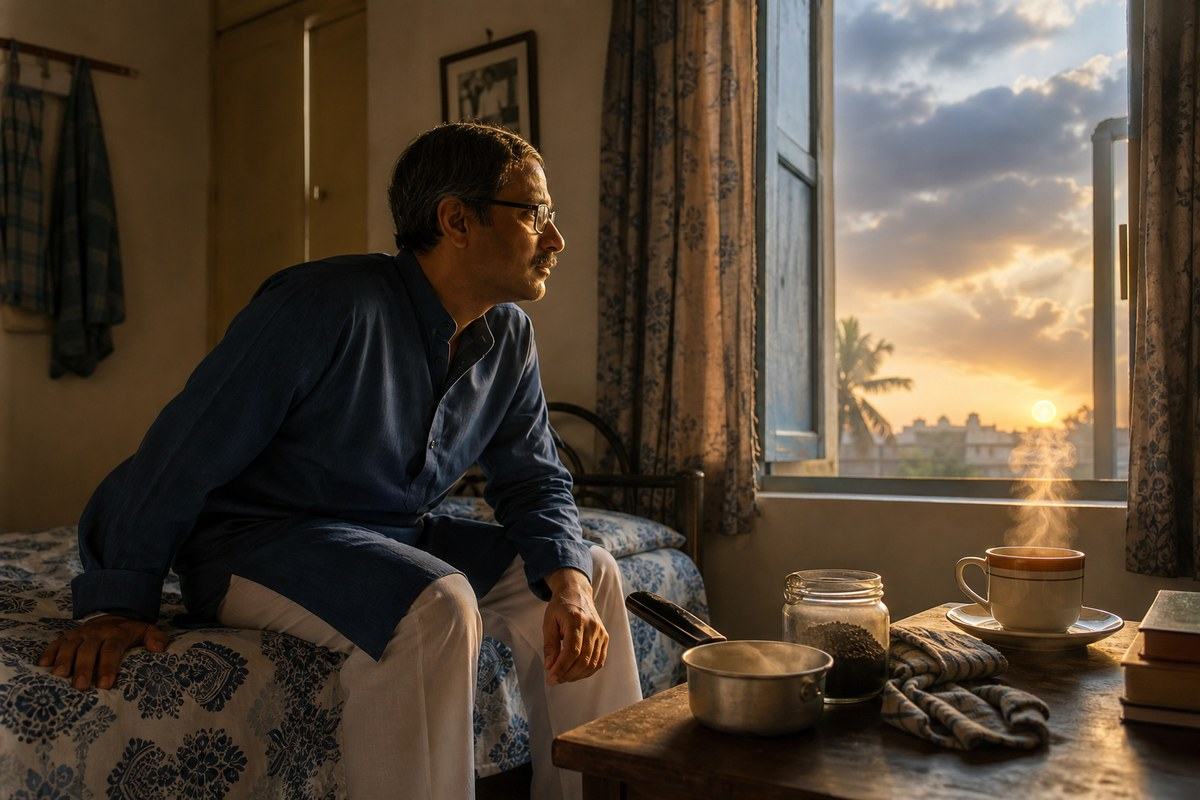
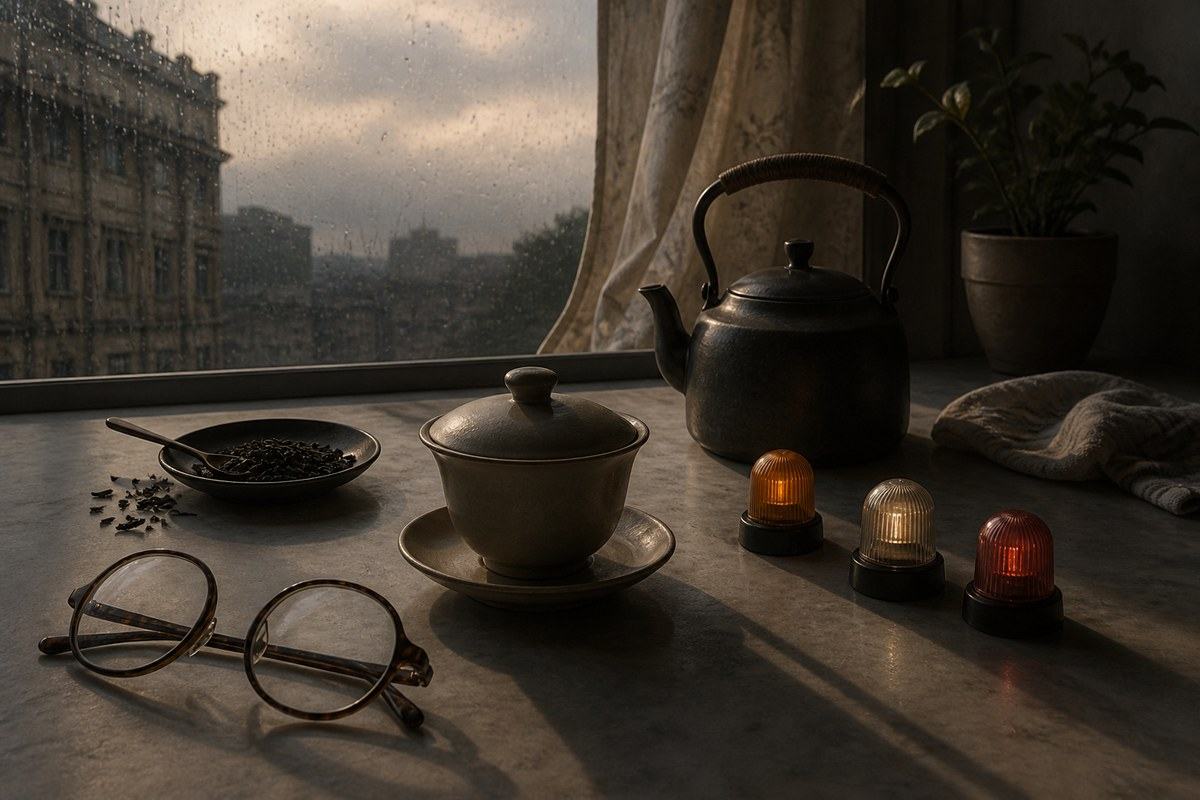
The tea is sitting there, dark, overboiled, and slightly offended, like a small brown magistrate who has found me guilty before the hearing has begun.
I look at it and think: without depression, would I have written any of this?
Not just this sentence.
This whole blog.
This odd little factory of ruin, tea, mathematics, memory, unpaid invoices, Calcutta heat, old American competence, and one middle-aged Bengali man trying to stay mentally assembled with string, caffeine, and grammar.
I doubt it.
A happier version of me would probably be doing normal things. Normal is a dangerous word, of course. It walks into the room wearing clean shoes and pretending not to know how much blood is under history. But let us use it for convenience, like plastic chairs at a wedding.
A normal version of me might have had hobbies.
Photography, perhaps. A terrifying hobby because it allows men with stomachs and opinions to stand near lakes at 5:30 in the morning and say things like “the light is interesting.” He might have bought lenses, compared tripods, joined a Facebook group, and taken solemn pictures of crows as if the crows were hiding Sanskrit secrets.
Or he might have gone walking.
Or cooked.
Or become one of those men who knows the correct pan for fish and speaks of olive oil with the emotional intensity Bengalis normally reserve for property disputes.
He might have had a life.
The difficulty is that a life, when it is going reasonably well, has a habit of filling the whole room. It brings chairs, curtains, phone calls, small desires, WhatsApp obligations, shopping lists, minor lusts, dinner plans, political irritation, and the soft narcotic of feeling that tomorrow is not merely today wearing a fresh shirt.
Depression removes the furniture.
It does not do this politely. It does not arrive like a monk with a lamp. It arrives like CESC on a sweaty evening when the fan stops and the room suddenly reveals its true ideology. The fridge goes silent. The mosquitoes grow ambitious. Your skin becomes a separate political movement. And all the decorative nonsense of daily life stands exposed like cheap plastic flowers after rain.
Then you look.
Not because you are wise.
Because you cannot move.
This is the part nobody puts on those cheerful posters with mountains and sunrise and some criminally smooth sentence about resilience. Introspection often does not begin as wisdom. It begins as mechanical failure. The machine stalls. The wheel will not turn. The body refuses. The mind, which has no decent employment anyway, starts opening old files.
Why did this happen?
Why did I become this?
Where exactly did the curve bend?
Was it 1998, when I left for the US with a bright student’s belief that effort and intelligence could still do something respectable?
Was it 2007, when life had already begun putting small cracks in the plaster?
Was it 2016, when returning to India began to feel less like a chapter and more like falling into municipal wet cement?
Or was there no one moment at all? Only a thousand tiny slopes, each one harmless by itself, until the whole road tilted and the autorickshaw of life began drifting toward the open drain.
Mathematics is comforting here because mathematics is rude in the correct way. It does not say, “You are enough.” It says, “Define enough.” It does not say, “Everything happens for a reason.” It says, “Show me the function.” It does not bring scented candles to a structural collapse. It asks for the load, the crack, the material, the stress.
So let us make the thing vulgar but neat.
Let be the blog.
Let be depression.
Let be mania, or not even full theatrical mania, but that dangerous upward electricity when the fingers begin typing before the household committee of caution has met.
The question is not .
The question is .
What is the probability of this blog, given depression and that occasional manic voltage?
And what is , the probability of this blog under normal life, where is a man with hobbies, sleep, income, social circulation, digestive confidence, and perhaps a shirt he wears without feeling like an apologetic sack of potatoes?
My guess is that is low.
Not zero. Human beings are peculiar. A man may be happy and still start a blog, just as a man may be full after lunch and still look at a samosa with philosophical interest. But low.
Because normal life occupies you. That is its great trick. It gives you exits. It gives you a small balcony of desire. It gives you tea with friends, errands with purpose, money with dates attached, a body that agrees to leave bed, and enough forward motion to prevent excessive inspection of the machinery.
Depression removes exits.
The world narrows.
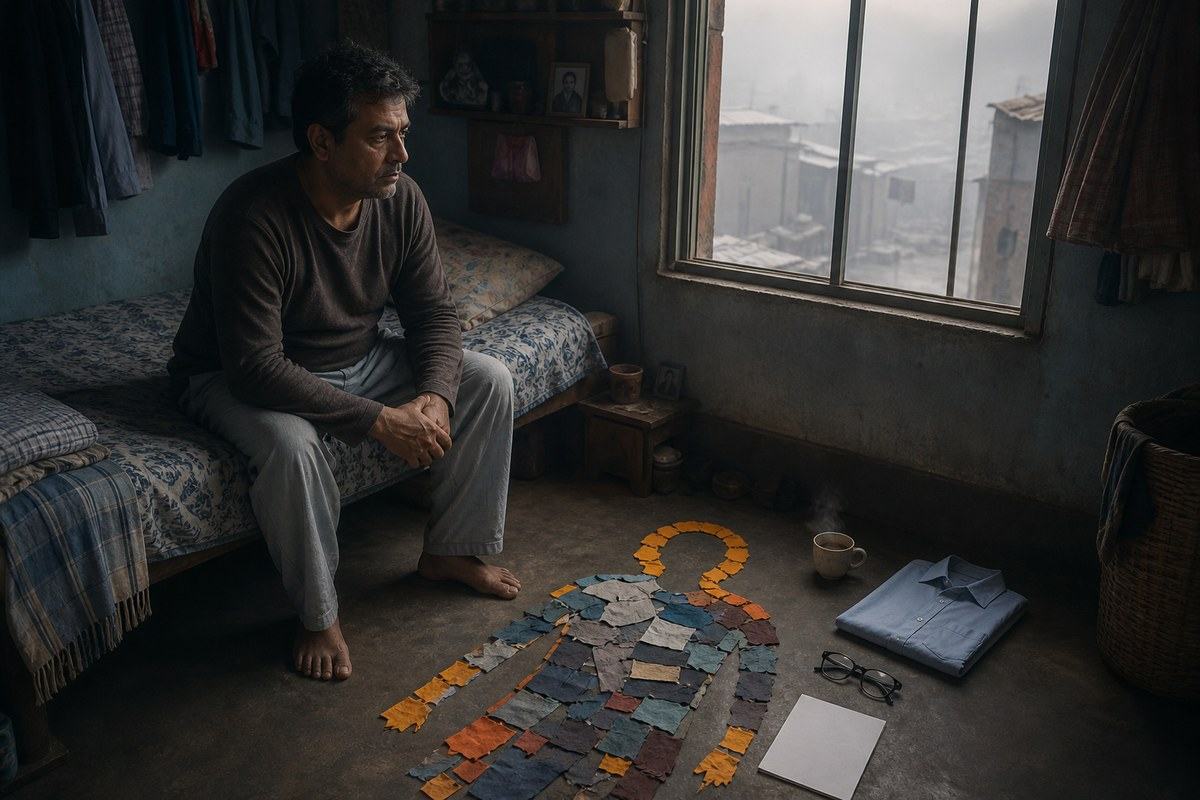
A whole human life, once spread across career, romance, travel, ambition, friendship, health, recognition, and future, shrinks into five or six objects: bed, cup, toilet, laptop, ceiling, wallet, medicine strip, unpaid bill.
And then each object becomes enormous.
The tea is no longer tea. It is a treaty with the nervous system.
The headache is no longer headache. It is a tax notice from caffeine.
The unpaid invoice is no longer an unpaid invoice. It is a courtroom drama in which hope has failed to appear.
The bath is no longer bath. It is border control.
The rice cooker is no longer rice cooker. It is the quietest member of the family.
The body is no longer body. It is an old government building where every department has a broken fan, a missing file, and one clerk who has gone for lunch permanently.
That is what depression does. It makes ordinary things strange by making large things impossible.
A man who can travel does not study the cup so closely. A man who can socialize does not interrogate the bed. A man who has income does not turn an invoice into theology. A man whose future still has usable windows does not keep measuring the dust.
But when the world collapses inward, the smallest things acquire biography.
Here is the irritating catch.
Some writing comes from damage.
Not noble damage. Not romantic damage. Not the sort of damage that looks good in black-and-white author photographs where the writer gazes into the middle distance as if thinking great thoughts instead of worrying about gas, rent, teeth, and whether the bathroom bucket has developed a personality.
Real damage is not poetic. It is practical and ugly. It ruins sleep. It ruins digestion. It makes shaving feel like a foreign exam. It turns a phone notification into a small electric snake. It makes even tea a negotiation.
But it also changes the angle of vision.
That is the dangerous sentence.
Because if you say it carelessly, some motivational entrepreneur will make a video titled “Turn Your Pain Into Power” and stand in front of rented bookshelves telling unfortunate people that suffering is a gift. It is not. Suffering is suffering. A man who loses a leg and becomes an expert in crutches has not received a blessing from orthopedic philosophy. He has been robbed, and then forced to become technically interesting.
Depression did not make me deep.
It made ordinary shallowness unavailable.
Mania did not make me productive.
It sometimes stole the keys from despair and drove the whole rattling vehicle through the wet lanes of the mind before anyone could stop it.
This distinction matters.
A stove burns because someone designed it to burn. A house burns because something has gone wrong. Both produce heat. Only one is useful without tragedy.
My writing, when it works, is often heat from the wrong fire.
The depression digs.
The manic current lights the fuse.
Then something comes loose from the rock: a sentence, a comparison, a paragraph about tea, entropy, laundry, Newton, regret, loneliness, or the extraordinary comedy of a grown man being too depressed to make tea and then getting a caffeine headache as punishment, as if his own body were a small colonial revenue office collecting tax from a bankrupt province.
That is funny.
Not happy funny.
Calcutta funny.
The kind of funny where the tram is delayed, the pavement is broken, the minister is smiling from a hoarding, the fish price has gone up, the air smells of frying oil and drain water, and still someone somewhere is arguing with majestic seriousness about whether Hilsa should be steamed or fried. Civilization survives partly because people keep having strong opinions about lunch.
Even in depression, the world continues to be ridiculous.
This helps.
A little.
The other day I watched a man at a tea stall explain geopolitics with one biscuit in his hand and the confidence of a retired empire. He had no notes, no hesitation, no visible burden of evidence. America this, China that, Pakistan naturally, India obviously, and Bengal tragically. The biscuit moved like a pointer on a map. Then it broke and fell into his tea.
There, I thought, goes the international order.
This is why a blog may exist where a normal diary would not. The world keeps tossing small comic evidence into the path. Depression supplies the darkness. Calcutta supplies the theatre. Education supplies the tools. America supplies the before-and-after contrast. Anxiety supplies the footnotes. Mania supplies the speed.
A strange business.
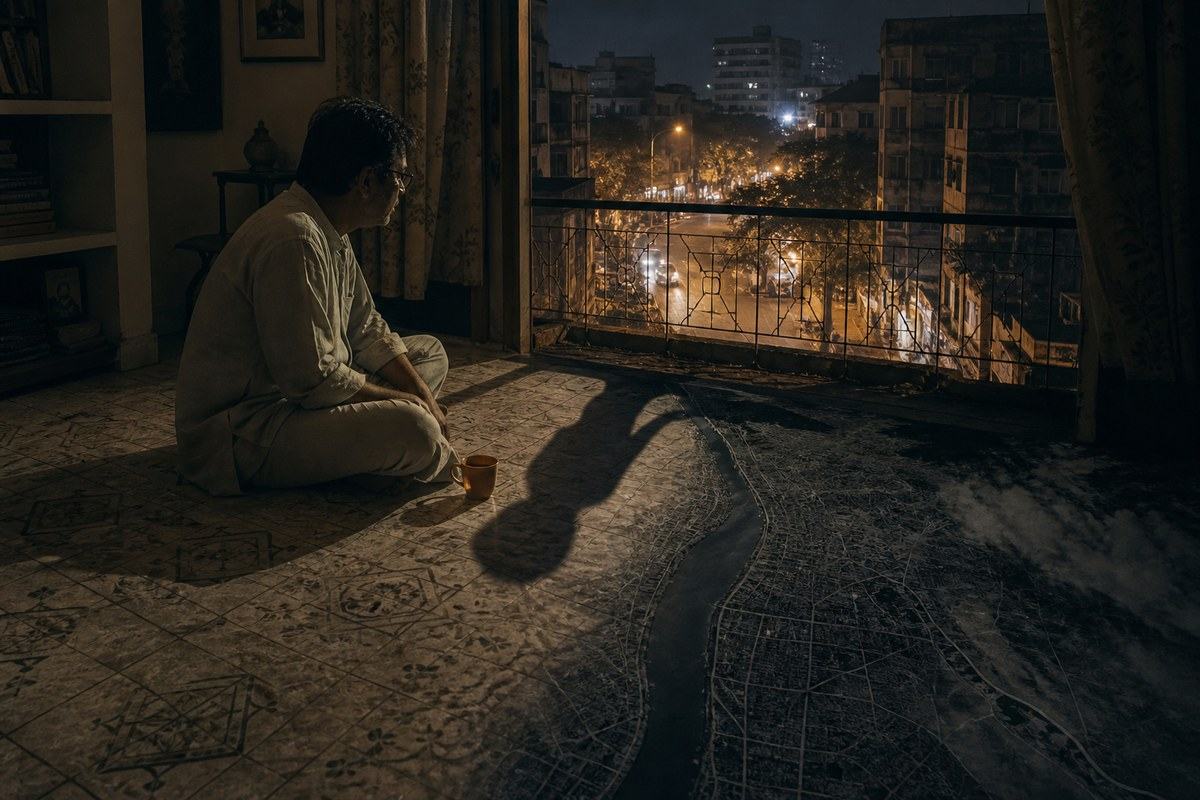
In mathematics there are systems called strange attractors. The phrase sounds like a description of certain relatives, but it belongs to chaos theory. A system loops around a hidden shape. It does not repeat exactly. It does not settle peacefully. It keeps returning, again and again, to the same invisible gravity.
This blog is a strange attractor.
Each post looks separate. Tea. Bed. Toothache. Money. Heat. Memory. Mathematics. Bipolar disorder. Calcutta. The US. The failed self. The stubborn self. The self that wants to disappear and the self that insists on correcting the punctuation first.
But they orbit the same dense center.
What happened to the boy who thought intelligence would save him?
What happens when a man returns from a larger world to a smaller room?
What happens when the brain becomes both witness and accused?
What happens when life does not end, but stops expanding?
The normal reader may think: why inspect all this? Why not go out, meet people, take a walk, do something cheerful, join a class, start a business, become optimistic, purchase one of those terrifying water bottles carried by people who believe in hydration and destiny?
A fair question.
But depression is not laziness wearing a tragic shawl.
It is not sadness with a better vocabulary.
It is a collapse in the machinery of wanting, starting, continuing, and believing. The body may sit in one place, but inside it is not rest. It is a crowded railway platform where every train is delayed and every announcement contradicts the last one.
Anxiety adds the public address system.
Together they make a person look idle from outside and overworked from inside.
This is why the blog exists not as achievement exactly, but as residue.
A mark left by a system under pressure.
A chalk line after the body has been moved.
A little signal above the noise floor.
The aim is not happiness. Happiness left early, saying it had better prospects elsewhere. The remaining aim is smaller and less glamorous: do not disappear completely. Keep one small lamp on. Record the weather. Turn the headache into a sentence. Turn the sentence into a paragraph. Turn the paragraph into proof that, for at least one more morning, the mind has not entirely surrendered to damp.
There is no great moral here.
No “everything happens for the best.”
No shining lesson tied with ribbon.
If depression helped create the blog, it did so the way a flood helps create a waterline on the wall. The mark is real. It may even be useful later. But you would not flood the house for the sake of measurement.
Still, the mark remains.
So yes, without depression, I may not have looked this hard.
Without that occasional dangerous current, I may not have written this fast.
Without Calcutta, I may not have had the drains, the tea, the heat, the power cuts, the fish-market metaphysics, the cracked comic timing of a city that has been tired for a century and still refuses to stop talking.
Without America, I may not have had the cruel comparison: the memory of working systems, salaried competence, clean corridors, long highways, hospital databases, and the belief, now badly dented, that intelligence plus effort produces a life.
Without being fifty-one, I may not have had enough wreckage to inspect.
A younger man mistakes possibility for identity. An older man knows better. Possibility is not identity. Possibility is just a salesman with nice shoes.
What remains is this.
Tea cooling in a cup.
A headache waiting like a clerk.
The fan moving hot air from one side of the room to the other, a heroic but ultimately symbolic act.
A laptop.
A sentence.
A man in the shanty boondocks of Calcutta trying to decide whether this is literature, pathology, survival, or merely the most elaborate way yet invented to avoid taking a bath.
Probably all four.
And tomorrow morning, when the tea again sits there like a small brown judge, I will look at it and ask the same question in a slightly different form.
Did depression create the blog?
Not exactly.
Depression closed the doors.
Mania kicked one window open.
The blog is the sound of a man climbing out, badly, sweating, muttering, carrying his cup of tea, and trying not to spill the only warm thing left.
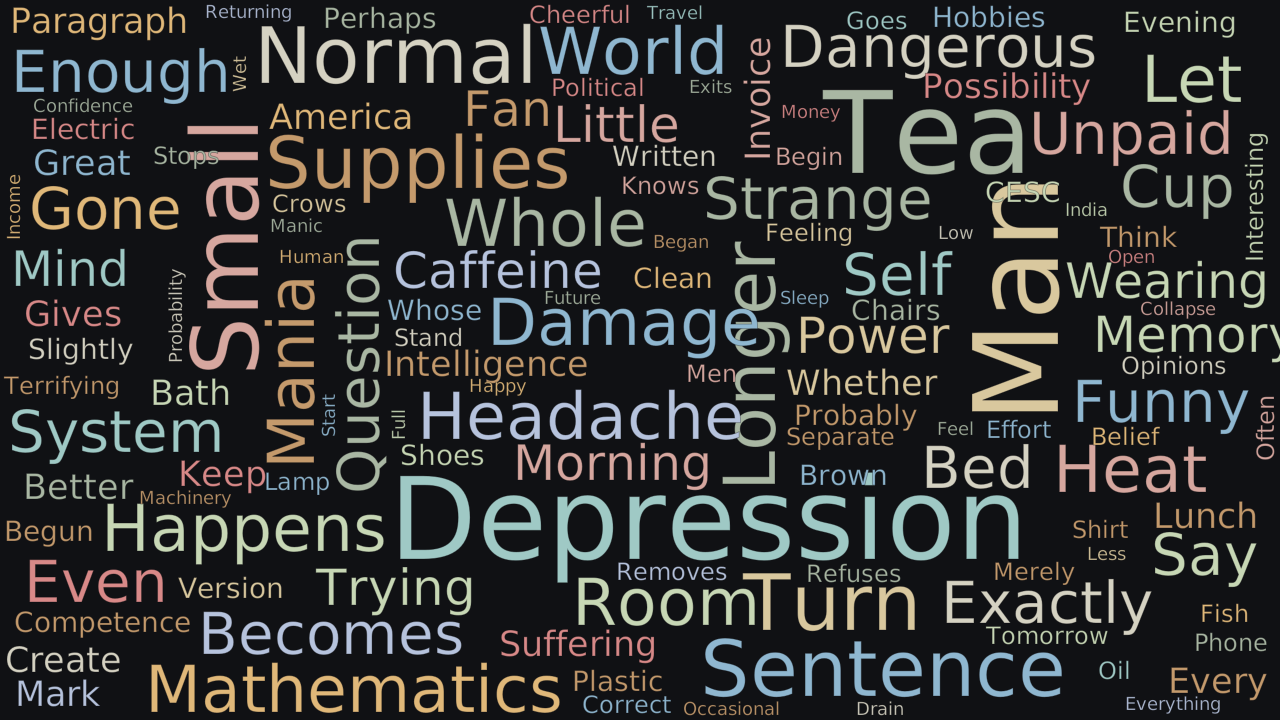
Word Cloud
Related reading
Selected by shared topics and section, with closer publication dates breaking ties.