The Friendless Blister
Acronyms and terms:
BD — Bipolar disorder, a mood disorder where depression may coexist with periods of mania or hypomania, though the depressive side often does the longer, dirtier, less cinematic work.
Anhedonia — the loss of pleasure, when tea tastes like boiled obligation and music becomes furniture.
Akathisia — a state of inner restlessness, often felt in the body, as if the nerves have been given marching orders but not a map.
Uses the speech voice supplied by your browser or device.

Bipolar depression is not merely sadness; sadness is a mild-mannered visitor compared to this friendless blistering self-recriminating package that arrives with its own bedding, its own bad smell, and a long-term lease.
It begins, often, not with tears but with disgust.
A small teething disgust.
Not grand disgust. Not the disgust of philosophers, poets, or men in black sweaters saying civilization has failed. This is more local. More domestic. It is the disgust of looking at your own cup, your own face, your own unfinished work, your own unwashed towel hanging like an accusation from a plastic hook bought in Garia for twenty rupees. It says, very calmly, “Look at you.”
And once it says that, the whole day starts shrinking.
The room becomes smaller. The bed becomes larger. The fan makes the same tired circle overhead, like a government file going from one table to another for thirty-seven years. Somewhere outside, Calcutta continues its opera of horns, pressure cookers, election posters, cables, half-built houses, and men arguing as if civilization depends on whether the fish was fresh. But inside, there is only this blister.
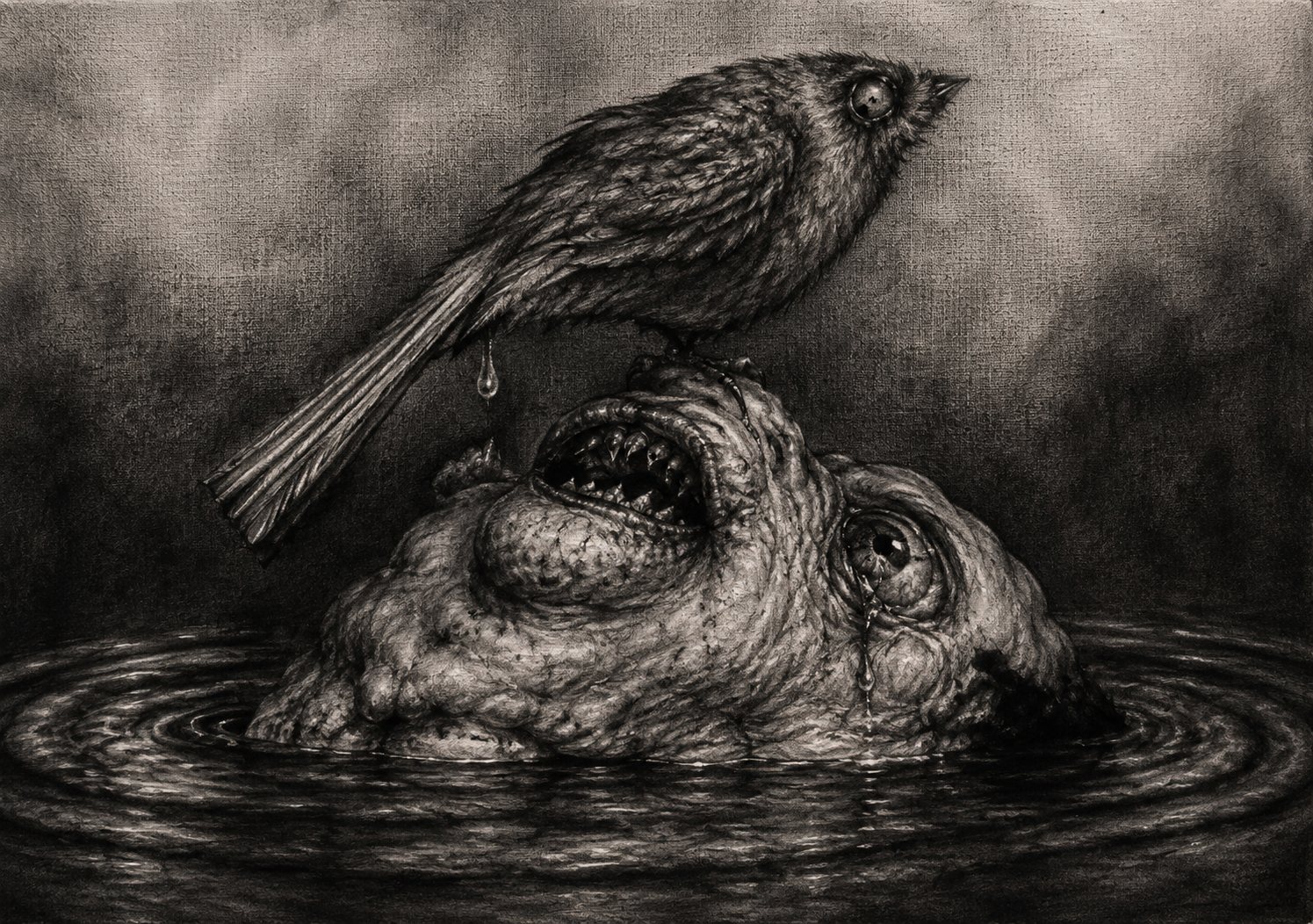
A blister is a useful image because it is small but tyrannical. You can own a whole body, two hands, two legs, a respectable education, some experience in America, a brain that once solved problems for a living, and still be defeated by one burning patch of inner skin.
That is depression.
It does not always roar. Sometimes it rubs.
The anxiety is not separate from it. That is one of the frauds of language. We say “mental” and “physical” as if the body is one department and the mind another, each with its own clerk, lunch break, and union leader. In reality the thing comes mixed, like bad muri with too much mustard oil. The chest tightens. The stomach turns. The jaw becomes a locked gate. The hands feel guilty. Even the joints, those poor innocent hinges, seem to develop a tiny electric irritation at the ends.
You want to rest.
This sounds simple until it becomes impossible.
I do not mean I want to climb Everest, write a novel, become rich, become wise, heal childhood wounds, or forgive mankind before breakfast. I mean I want to lie down and sleep. That is all. A fan. A pillow. A few hours of absence. The small mercy given to dogs, babies, bus conductors, software engineers, cats, and even people who say “let us circle back” in meetings.
But bipolar depression has a cruel trick.
It makes you tired beyond words and too agitated to rest.
This is where the comedy becomes vicious. The battery is dead, but the alarm keeps ringing. The shop is closed, but the shutter keeps rattling. The body says, “Lie down.” The nerves say, “Run.” The mind says, “Into what?” The answer does not come. So you lie in bed like a man waiting for a train at a station that was abandoned in 1983 but still announces delays.
Anhedonia then enters, carrying a clipboard.
Pleasure goes missing first from big things. Ambition. Friendship. Work. Desire. The future. Then it starts stealing smaller items from the house. Tea. Music. A decent sentence. The smell of frying onions from a neighbor’s kitchen. The little foolish satisfaction of deleting an email. Even irritation loses color. It remains, of course, because depression is not generous enough to remove irritation. It merely makes irritation boring.
This is why people misunderstand it.
From outside, a depressed man may look lazy, dramatic, ungrateful, antisocial, or simply badly organized. From inside, he is often fighting a swarm in a jar. Nothing moves much. Everything vibrates.
A normal person sees the bed and thinks, “Rest.”
The depressed person sees the bed and thinks, “Courtroom.”
Because the self-recrimination never stops. It is a private prosecution service with unlimited funding. Every old mistake is reopened. Every small embarrassment becomes evidence. Every unfinished task walks in wearing a black coat. The mind does not say, “You are ill.” It says, “You are defective.” It says, “Others manage.” It says, “At your age?” It says this with the confidence of a man in a tea shop who has never read a book but has solved the nation by 9:15 in the morning.
And the worst part is that some of the accusations contain tiny grains of truth.
That is how the poison works.
If the accusations were completely false, one could laugh. But depression is clever. It takes a real unpaid bill, a real missed call, a real unwashed plate, a real professional failure, a real loneliness, a real shrinking life, and wraps them in barbed wire. Then it hands the bundle back to you and says, “Here, this is your character.”
No.
It is not character.
It is suffering wearing the mask of moral judgment.
This distinction matters because many people in our part of the world still treat mental illness as if it were a lack of discipline, a lack of prayer, a lack of marriage, a lack of morning walk, a lack of turmeric, a lack of gratitude, or a lack of being slapped properly in childhood. The menu is long. The science is thin.
Of course walking helps some people. Sunlight helps some people. Routine helps some people. Work helps some people. So does medicine, therapy, money, sleep, social support, and not living in a city where summer enters the room like a fat policeman and sits on your chest.
But advice given without understanding becomes another form of noise.
“Go out.”
Where?
“To meet people.”
Which people? The smiling ones who ask what you are doing nowadays, and then watch your answer like it is a small accident on the road?
“Do something you enjoy.”
That assumes enjoyment is at home and merely refusing to open the door. In anhedonia, enjoyment has left town. It did not even leave a forwarding address.
So the day becomes a narrow business.
Make tea.
Fail to make tea.
Open laptop.
Close laptop.
Lie down.
Sit up.
Feel tired.
Feel guilty for being tired.
Feel restless.
Feel guilty for being restless.
Look at phone.
Hate phone.
Put phone down.
Pick it up again after seven seconds, because apparently the human soul now lives inside a glass rectangle made by people in California and assembled by people in China so that a man in Calcutta can refresh nothing and feel worse.
This is modernity. We must admire its efficiency.
Meanwhile the world continues. Markets rise. Leaders speak. Wars grind on. Artificial intelligence writes cheerful emails. Trains run late. Someone somewhere launches a productivity app. In my lane, a dog sleeps with more dignity than most humans manage in a lifetime. The fish seller shouts. A child cries. A pressure cooker whistles like it has discovered a scandal. Life, vulgar and undefeated, keeps moving.
And that too can feel like an insult.
Because depression has a strange relationship with ordinary life. It does not always make the world dark. Sometimes it makes the world unbearably normal. People buy coriander. Buses honk. Someone laughs too loudly on the staircase. A courier asks for the one-time password. The universe does not pause because your mind has become a leaking roof.
That is the humiliation.
Nothing stops.
You do.
Not completely. That would be simpler. You stop in patches. Speech stops first. Then bathing. Then answering messages. Then planning. Then imagining next week. Then believing that tea will help. Then believing that anything will help.
Still, the body will not sleep.
This is the particular cruelty I keep returning to. The exhaustion is real. The agitation is real. They are not opposites. They are roommates. Bad ones. One has fever. The other plays drums. Together they rent your nervous system and refuse to pay.
A person who has not felt this may ask, “How can you be so tired and still not rest?”
That is the right question.
The answer is that depression is not merely low energy. It is bad regulation. The body loses its ordinary permissions. Permission to begin. Permission to stop. Permission to enjoy. Permission to forgive oneself. Permission to sleep. Even permission to be ill without turning the illness into a character certificate stamped in red ink.
So here is the small honest sentence.
Bipolar depression can feel like a blister on the soul and a mosquito inside the bones.
It is friendless. It is critical. It is bodily. It is mental. It is boring. It is terrifying. It is not poetic, though occasionally one can force a sentence out of it like water from a reluctant hand pump.
And sometimes that sentence is enough for the day.
Not recovery.
Not victory.
Just one sentence saying: this is not laziness, this is not drama, this is not a moral failure, this is an illness passing through a tired man in a hot city, making even rest feel like work.
The fan keeps turning.
The blister keeps burning.
Still, morning arrives with its old shameless face, asking for tea.
Word Cloud
Related reading
Selected by shared topics and section, with closer publication dates breaking ties.