Symmetry in a Calcutta Room
Acronyms used in this post:
SO: Special Orthogonal, the family of rotation groups that preserve lengths, angles, and orientation.
MIT: Massachusetts Institute of Technology, a major American university known for mathematics, science, and engineering.
Uses the speech voice supplied by your browser or device.

Symmetry is what remains after you have disturbed something and it refuses to confess.
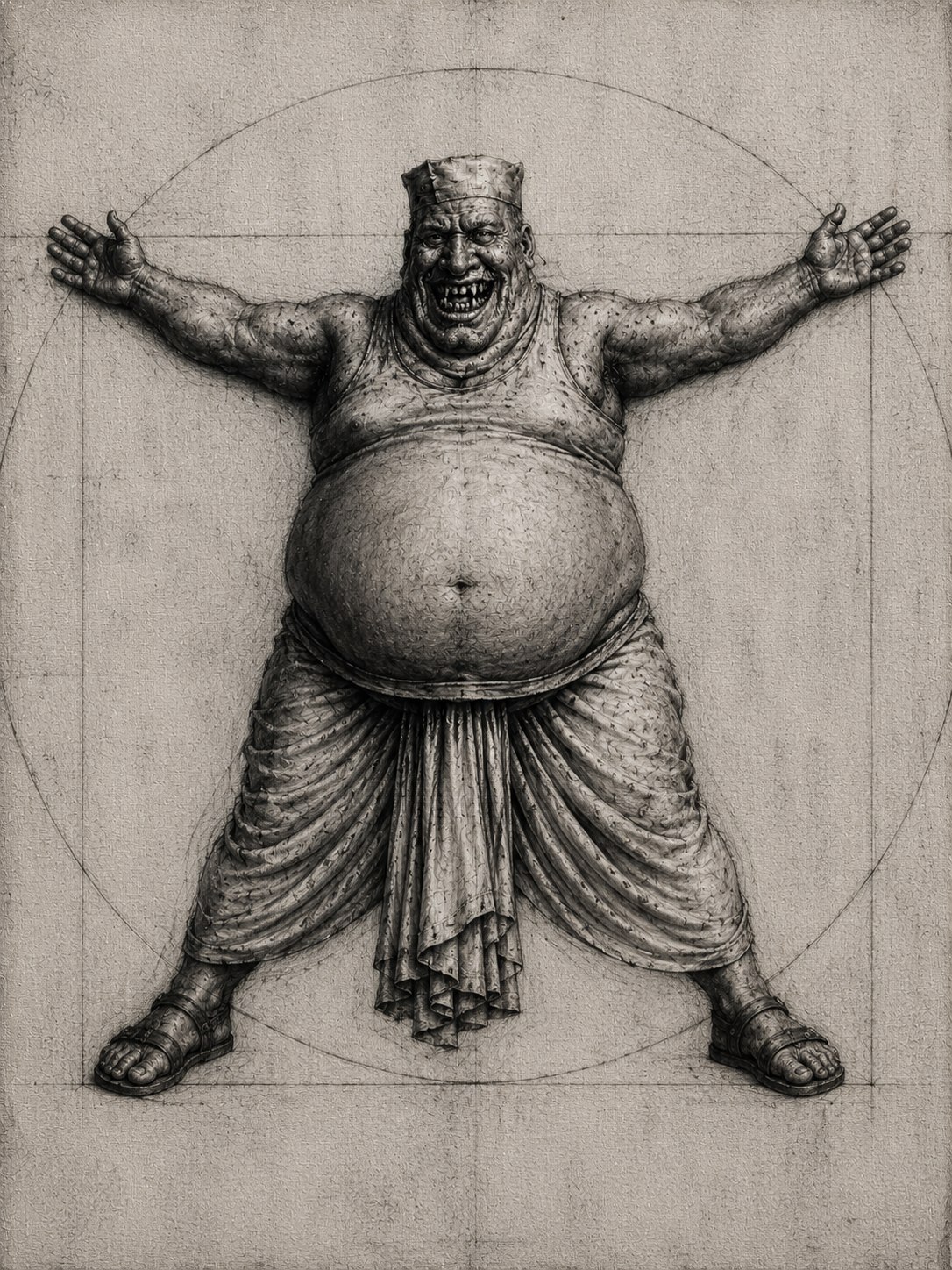
Turn a square. It looks the same. Flip a face in a mirror. Almost the same, unless the face belongs to a middle-aged Bengali man with sleep debt, one suspicious mole, and the expression of someone who has recently inspected his bank balance. Slide a wallpaper pattern along the wall. Still the same. Rotate a circle by any angle you like. Still the same. The circle is the most forgiving object in mathematics. It is like an old para tea stall owner who has seen every type of customer and no longer reacts.
That is the trick. Symmetry is not just prettiness. It is not the decorative border on a wedding card. It is not two matching curtains bought with tragic optimism from Gariahat. Symmetry means: do something to the object, and the important thing does not change.
This sounds harmless. It is not.
It is one of the deepest ideas human beings have found, though we usually meet it first in childish clothes. A butterfly. A rangoli. A school geometry box. The left and right sides of a drawing. But then the same idea grows up, puts on hard shoes, and walks into chemistry, physics, algebra, crystals, particle collisions, quantum theory, and those terrifying blackboards where professors write one innocent dot and somehow mean an empire.
A dot can mean a whole symmetry system.
This is why mathematics is dangerous to the casual reader. It starts with a mirror and ends by quietly stealing your afternoon.
Take a square. Rotate it by a quarter turn and it comes back looking like itself. Rotate it by half a turn, same. Three-quarter turn, same. Full turn, same. A triangle has its own little rotation schedule. A regular pentagon has another. A circle, as I said, is a shameless aristocrat. It permits infinitely many rotations. It does not care whether you turn it by or by an angle so strange no sensible insurance company would cover it.
But here is the first tiny mystery: why are some shapes rich in symmetry and others poor?
A potato has very little rotational dignity. So does a crumpled shirt. So does my room on a humid afternoon when the fan is rotating nobly but achieving the aerodynamic effect of a tired pigeon. A cube, however, has discipline. A tetrahedron has discipline. The five Platonic solids have so much discipline that they became famous before most of our current institutions learned to misplace files.
There are exactly five regular solids in three dimensions. Not roughly five. Not five-and-a-half with adjustment. Five.
That number has a certain clerk-like finality. It sounds as if geometry went to the counter, submitted Form 17B, and received only five approvals.
Why only five? Because space is not infinitely tolerant. You cannot pack regular faces around a corner any way you please and expect them to close into a solid. Triangles allow certain arrangements. Squares allow one famous arrangement, the cube. Pentagons allow the dodecahedron. Try to push beyond that and the geometry refuses, like a bus conductor who has already taken six passengers on a two-person bench and says, with rare moral clarity, “No more.”
This is one of the great lessons of symmetry. Beauty is not softness. Beauty is often a restriction.
The same thing happens in wallpaper. You may think wallpaper is a domestic nuisance invented to conceal damp patches and bad taste. But mathematically it is a city of possible motions. A pattern can slide left and right. It can slide diagonally. It can rotate. It can reflect. It can perform a glide, which is a reflection followed by a slide, the geometric equivalent of someone pretending to leave the room but continuing the argument from the corridor.
And in the flat plane there are exactly seventeen wallpaper symmetry groups.
Seventeen.
This is the sort of number that makes one look up from tea.
Not a hundred. Not “many.” Seventeen. Every repeating wallpaper pattern in the plane belongs to one of these families. The astonishing thing is that artisans were using such patterns long before mathematicians classified them properly. The hand knew first. The theorem arrived later, carrying luggage.
This happens often. The craftsperson sees with fingers. The mathematician proves with symbols. Both are needed. One builds the door. The other explains why the door cannot have eighteen hinges without becoming a philosophical problem.
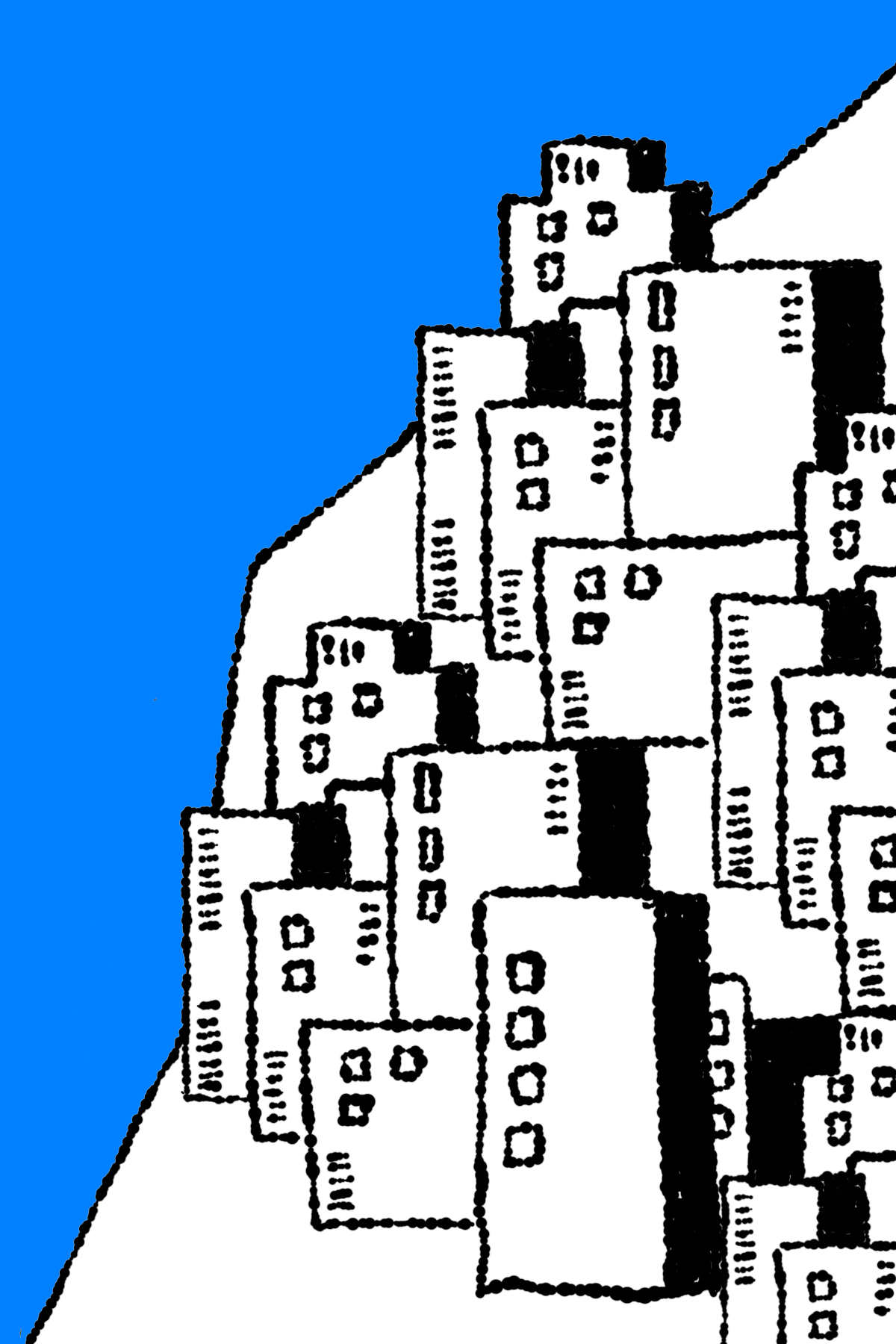
In Calcutta one learns a low-budget version of symmetry every day. The same tea glass appears in the same stall. The same tramline mood survives even where the tram has vanished. The same political posters bloom on walls after rain like aggressive fungus. The same promises return every election season wearing new shirts. The city changes, yes. Flyovers appear. Buildings rise. Shops vanish. Hawkers are blamed, rehabilitated, blamed again. But some underlying pattern persists, not because anyone planned it, but because systems have habits.
A city has symmetries too. Not perfect ones. Local ones. Broken ones. Partial ones. Enough to make you suspicious.
Mathematicians do not stop at looking. Looking is only the front gate. They ask a sharper question: what are all the actions that preserve the structure?
This is where symmetry becomes a group.
A group is a collection of moves you can combine, undo, and repeat without leaving the world you started in. Rotate a square once, twice, thrice. Reflect it. Combine reflection and rotation. Each move is allowed. Each move has a reverse. The square survives the bureaucracy.
Now give those moves numbers. Or better, matrices.
A matrix is a little table of numbers that tells points where to go. It is one of those objects that looks dull in a textbook because textbooks have a special gift for making even lightning resemble stationery. But a matrix can rotate, stretch, shear, flip, compress, and translate the world of coordinates. It is a recipe for motion.
A 90-degree rotation in the plane can be written as a matrix. That matrix takes a point and sends it to its rotated position. The numbers are not decoration. They are instructions.
This is how an abstract symmetry becomes something that can act.
That word matters: act.
An abstract operation is like a command with no body. A representation gives it a body. It says, “Here is how this symmetry moves vectors. Here is how it behaves in space. Here is its passport photo.” Suddenly a ghost becomes a worker with an address.
This is why linear algebra is everywhere. Not because mathematicians conspired to torture students, though the evidence occasionally points that way. Linear algebra is everywhere because transformation is everywhere. Images rotate on screens. Data changes coordinates. Equations preserve structure. Physical systems evolve. Machines learn patterns. Even a middle-aged man sitting in a small room tries, every morning, to transform from horizontal despair into vertical citizen.
Results vary.
From here the road runs into continuous symmetry. A square has a handful of rotations. A circle has infinitely many. A sphere has all possible rotations in three-dimensional space. That family is called SO(3), and it shows up not only when you spin a ball but when physics thinks about angular momentum and quantum states.
This is the pleasant trap of mathematics. You begin by rotating a ball. Then, without warning, you are discussing why atoms have the structures they do.
The periodic table is not just a colorful classroom poster designed to frighten adolescents. It has deep symmetry behind it. Electron orbitals, angular momentum, and quantum states obey mathematical rules that come from symmetry. The world at tiny scales is not tiny billiard balls bouncing with village-club enthusiasm. It is stranger. More rule-bound. More algebraic. More like a music system where only certain notes are permitted and the rest are not wrong emotionally but illegal mathematically.
And then come the diagrams.
Dynkin diagrams look absurdly simple. Dots. Lines. Sometimes arrows. They resemble something a child might draw while waiting for a parent at a bank. But these diagrams encode complicated symmetry structures. A few dots can describe a vast algebraic machine.
This is compression with authority.
It is like writing “Kolkata summer” and expecting the reader to understand heat, sweat, ceiling fans, power cuts, tempers, old buildings, damp towels, and the smell of frying oil from a lane at dusk. Two words. A whole climate. Dynkin diagrams do something like that, except with higher mathematics and fewer mosquitoes.
There are families named , , , and , and then the exceptional creatures like , , and . The names sound like train compartments, exam codes, or apartment blocks in a housing complex where the lift has not worked since 2017. But they encode some of the most important continuous symmetry structures in mathematics.
The funny part is that the letters do not carry profound poetic meaning. They are labels. Mathematics is full of such anticlimax. You climb a mountain expecting an oracle and find a filing cabinet.
Still, the filing cabinet contains lightning.
The larger point is this: mathematicians discovered that vast families of symmetry could be classified. Not merely admired. Not merely drawn. Classified. Put into order. Given names. Connected to diagrams. Understood as parts of a larger grammar.
That is a very human activity. We do it with relatives, expenses, books, illnesses, unpaid invoices, and insults. We classify because the world arrives as a crowd and we need a queue.
But symmetry also has another life. It can become geometry.
A symmetry system can give rise to spaces, cones, singularities, and resolutions. A singularity is a place where ordinary smooth behavior breaks down. It is the sharp point of a cone, the place where the nice rules stumble. A resolution is a way of opening that point and replacing the crude defect with hidden structure.
I like this idea more than is probably medically advisable.
A point may look broken because too much has been compressed into it.
That is not only geometry. That is also biography.
From outside, a lower-middle-class 51-year-old man in the shanty boondocks of Calcutta may look like a failed data point. Single. Anxious. Bipolar. Consulting income thin enough to read a newspaper through. Former American healthcare IT worker now sitting in heat and dust, writing essays that may or may not be read by six people and one confused search crawler.
But that is the outside view. The crude coordinate system.
Inside are old flights, old offices, old hospitals, old code, old mathematical hunger, old shame, old jokes, old anger, old tenderness, and a stubborn refusal to let language become cheap. What looks like a point may be a collapsed sphere. What looks like failure may contain structure. Not redemption. I distrust redemption talk. It is often marketing with a halo. But structure, yes. Structure may remain.
This is why symmetry consoles me more than optimism.
Optimism says things will improve. This is a brave statement and should be tested in court.
Symmetry says something subtler: under transformation, something may remain invariant.
That is enough for one cup of tea.
The strangest part comes when symmetry meets particle interactions. There is an equation called the Yang-Baxter equation. Its central flavor is this: in certain systems, different orders of pairwise interaction can lead to the same final outcome.
Now pause.
In ordinary life this is nonsense.
Order matters. Take medicine before the disease gets worse. Pay rent before the landlord develops philosophy. Add salt before serving the dal, not after everyone has left the table muttering. Say sorry before the relationship is cremated. Put on trousers before going to the market. Everyday life is violently order-sensitive.
If a football, a cricket ball, and a tennis ball collide in a room, the order of collision matters. Anyone who has lived near children, sports equipment, or nephews knows this. The tennis ball may leave the scene like a frightened accountant. The football may knock over a vase. The cricket ball may commit a criminal act against a window.
So when mathematics says that in some deeper setting the final result does not depend on the order of certain interactions, one should not nod like a polite seminar attendee. One should be startled.
That equation is saying: there is hidden order beneath apparent sequence.
It also appears in braids. Imagine strands crossing. One strand over another, then another, then another. Different sequences can sometimes produce the same final braid. Hairdressers, knot theorists, and quantum algebraists meet briefly in the corridor and pretend this was planned.
This leads to quantum groups, knot theory, statistical mechanics, scattering theory, and other regions where the words become tall and the air becomes thin. But the everyday question remains understandable: when does order matter, and when is it only a disguise?
That question applies far beyond physics.
In life, some sequences are fatal. Some are surprisingly reversible. Some humiliations that seemed permanent become comic material ten years later. Some successes decay into nothing. Some failures continue emitting light like a dead star. Some days are ruined by a phone call before breakfast. Some days are ruined by breakfast itself. Some days are ruined without assistance, showing admirable independence.
A person begins to ask: what is invariant in me?
Not mood. Mood is weather with legal immunity.
Not money. Money comes and goes, though in my case it has shown a deep preference for going.
Not status. Status is a rented chair.
Maybe curiosity. Maybe language. Maybe the inability to believe a lie merely because it is profitable. Maybe the need to take a difficult idea, drag it down from its marble platform, sit it on a plastic chair, give it tea, and ask: “Now explain yourself properly.”
That is what symmetry does for mathematics. It makes change answerable.
It says: you may rotate, reflect, slide, deform, collide, braid, quantize, collapse, resolve. But what remains? What survives the operation? What is the hidden receipt?
We live in a time of enormous noise. Every day some new machine, minister, market, platform, billionaire, influencer, or artificial intelligence model arrives wearing the expression of a savior and the business plan of a pickpocket. Everyone is selling transformation. Transform your career. Transform your body. Transform your mind. Transform your workflow. Transform your nation. Transform your face until your school friends identify you only by your ears.
But transformation without invariants is just chaos with better lighting.
That is why symmetry matters now. Not only as mathematics, but as a way of thinking. It teaches skepticism. It asks what is preserved beneath the sales pitch. It separates appearance from structure. It asks whether two things are truly the same or merely dressed by the same tailor. It asks whether change has law inside it.
A wallpaper pattern can teach this. So can a square. So can a sphere. So can a particle equation. So can a life that has been rotated through continents and illnesses and still refuses to become entirely meaningless.
Symmetry is not the opposite of change.
It is disciplined change.
It is the little accountant in the universe saying, after every disturbance, “Show me what still balances.”
And sometimes, in a small hot room in Calcutta, with the fan coughing overhead and the afternoon light lying on the floor like old brass, that is enough. Not happiness. Not victory. Enough.
Word Cloud
Related reading
Selected by shared topics and section, with closer publication dates breaking ties.