Insect Forms of a Calcutta Life
Acronyms and terms used in this post:
NRI: Non-Resident Indian, an Indian who lives abroad and is often treated at home as a polished export version of the species.
DNA: Deoxyribonucleic Acid, the molecule that carries genetic instructions in living organisms.
Uses the speech voice supplied by your browser or device.

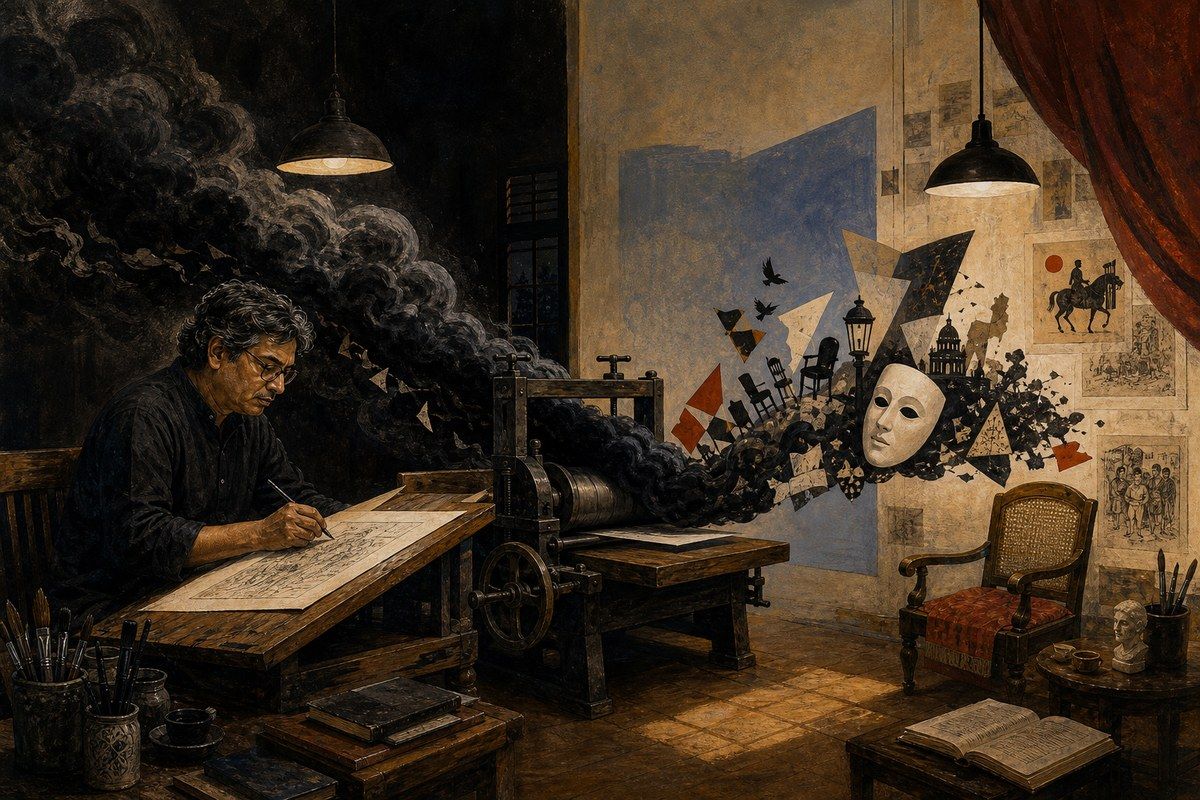
The pencil darkens the side of my palm before the drawing becomes anything respectable, which is how most things begin in my room: with a stain, a small failure, and the suspicion that something better-dressed is happening elsewhere.
I sit with my paper, tea going cold beside me, ceiling fan chopping the hot Calcutta air into smaller useless pieces, and I draw another man as an insect. Not as a monster. That would be too glamorous. Monsters at least get film rights. I draw him as a rent-collecting beetle with spectacles. A clerk-mantis with folded front limbs. A mosquito-faced neighbor with the expression of a man who has just discovered your weakness and is pricing it per milliliter.
It sounds cruel until you look carefully.
Then it sounds like documentation.
The trouble with the human face is that it is a dangerous public relations department. Give a scoundrel cheeks, eyes, a little tiredness around the mouth, perhaps a memory of childhood fever, and suddenly we begin forgiving him. Poor man. Difficult life. Family pressure. Party pressure. Loan pressure. Saturn in the wrong house. India won the match but his business failed. His father shouted at him in 1987. His mother loved the other son. On and on we go, like a minibus conductor giving change in imaginary coins.
But put mandibles where the mouth was and the truth improves.
Give him six legs and the intention becomes visible.
Add a proboscis and the entire career stands revealed.
I do not draw insects because I hate insects. I draw them because insects, unlike people, are rarely fraudulent about their appetites. A mosquito does not start by calling you brother. A termite does not hold a seminar on national development before eating your doorframe. A bedbug does not send a motivational quote at 7:12 in the morning and then live on your blood. It arrives, feeds, hides, repeats. There is a terrible moral clarity in that. Almost respectable. I resent this conclusion.
The first insect I draw is always myself.
This is important. Without self-inclusion, satire becomes police work. With self-inclusion, it becomes a cheap autopsy conducted under bad lighting.
I am not the grand insect. Not the jewel beetle glowing like a brooch in some European museum drawer. Not the imperial moth with wings like stained glass and a dead aristocratic dignity. That would be too much promotion. I am the damp-corner variety. The behind-the-gas-cylinder type. The small flat-backed thing that appears after midnight with the confidence of an unpaid electricity bill.
Even calling myself an arthropod feels generous.
An arthropod has structure. Armor. Segments. A plan. It knows where one part ends and another begins. I, by comparison, am a 51-year-old civic accident with reading glasses, acidity, a rice cooker, and an income that arrives like rain in a bad monsoon: late, sideways, and not where required.
People use “rat” as an insult, but this is unfair to rats.
A rat is a professional. A rat can read risk better than half the advisory boards in this country. A rat remembers routes, climbs pipes, locates grain, escapes traps, and breeds with the optimism of a start-up founder before the auditor arrives. Rats are athletic, social, tactical, practical. I have none of these qualifications. I am not a rat. I am the thing the rat steps over on the way to work.
So my pencil goes toward spider, roach, fly, tick, larva.
The available metaphor chooses you. This is the first small unpleasant truth. You do not select your life-symbol like curtain fabric in a tasteful flat where people say “minimalist” because they can afford empty space. A man reduced by illness, unpaid invoices, failed cleverness, failed charm, and the daily humiliation of being visibly unimportant does not wake up and say, today I shall compare myself to a tiger.
The tiger would object.
Even a goat would file a complaint. The goat has value. It can be milked, eaten, sacrificed, photographed, or elected to a committee. I sit here drawing a man with a housefly head and feel not disgust but recognition, the way you might see an old school friend at Sealdah after thirty years and realize that both of you have been chewed by time, swallowed by paperwork, and returned to the platform slightly damp.
There is a literary lineage to all this crawling, which is comforting in the way a diagnosis is comforting. It explains the smell but does not remove it.
Kafka turned Gregor Samsa into an insect and gave the modern world a nightmare so clean it still looks freshly washed: the wage earner wakes up useless and the family suddenly notices his real classification. Not son. Not brother. Not human. Furniture with legs.
Swift took human beings, removed the decorative cover, and called the result Yahoos. Filthy rational animals, full of opinion and appetite. He wrote this before television debates, which proves either genius or pessimism of a very high grade.
Gogol let a nose walk away and become an official, which is one of those stories that sounds absurd until you spend one afternoon in an office where the file has more authority than the citizen.
Darwin, with his beetles and barnacles and patient Victorian stomach, quietly removed man from the divine balcony and placed him back in the animal queue. Naturally, man immediately began demanding a reserved seat.
Taxonomy is supposed to organize life. Kingdom, phylum, class, order, family, genus, species. Very neat. Very schoolbook. A ladder for children, a filing cabinet for nature. But classification also has a wicked little laugh inside it.
Linnaeus classified the living world as if the planet were a cabinet. Empire loved cabinets. Empire loved drawers. Empire loved labels. It looked at Bengal and saw humidity, jute, clerks, dysentery, opium, revenue, bodies, and habits to be counted. The British left, but the drawer remained. We inherited the filing system without inheriting much dignity.
Now everyone classifies everyone else.
Successful. Failed. Smart. Useless. Settled. Unsettled. NRI. Returned. Married. Divorced. Employable. Too old. Too honest. Too much trouble. One’s life becomes a specimen card with a rusty pin through the chest.
So I draw pins.
I draw the room first. The rented room is not background. It is a character. It knows too much.
The kettle has the defeated look of an old employee who has seen every management style and believes in none of them. The rice cooker hums in the corner like a small white termite mound. The laptop waits with its blue-white glow, offering work, distraction, old shame, new bills, world news, war, cricket, somebody’s success, somebody’s outrage, and a young man on social media explaining how discipline changed his life after his father bought him a gym membership and a flat in New Town.
The toilet is nearby. The bed is nearer. This is the geography of a middle-aged single man in the outskirts of Calcutta. Laptop. Kettle. Toilet. Bed. Repeat until philosophical.
Depression in this room is not a mood. Mood is too clean a word. Mood is for music, lighting, restaurants, people who own scented candles. Depression here is a sticky secretion. It coats the wings. It glues intention to the floor. It turns small tasks into border crossings. Bathing becomes a government file. Shaving becomes a constitutional crisis. Going outside becomes a foreign policy decision requiring three committees and one minor betrayal.
And yet the day continues.
Milk is bought. Tea is made. News is avoided, then checked, then regretted. A message arrives from someone who owes money and contains five cheerful words, none of which is payment. Somewhere, a politician says the nation is rising. Somewhere else, a man in a lane is bargaining over coriander as if the future of civilization depends on two extra stems. It may. Civilization has collapsed over less.
Inside, I draw.
Outside the self, the insectarium expands.
There are fraudsters with compound eyes, seeing opportunity in sixteen directions at once. There are freeloaders, bedbug-souled, swelling quietly on other people’s labor and then retreating into the mattress seam of moral language. There are flimflammers, dragonflies of promise, shining beautifully until you reach for them and discover only air and invoice. There are social mosquitoes who do not merely take blood but leave behind fever, gossip, and a tiny whining lecture about why you should be grateful for the bite.
Then there are the respectable termites.
These are the dangerous ones. They do not look criminal. They look cultured. They discuss family values, spirituality, tradition, investment, education, ancient wisdom, national pride, and other polished words applied like varnish over rot. They eat the beam from inside. By the time the roof falls, they are already at another lunch.
An entomologist would weep with joy and then apply for a visa.
I do not mean humanity. Humanity is too large a word and is often used by people preparing to ignore a particular human being. I mean the local habits of extraction. The small techniques. The little sniffing rituals by which weakness is detected. A man’s softness gives off a smell. Failure gives off a smell. Loneliness gives off a smell. Unpaid work gives off a smell. The world arrives with antennae trembling.
Not everyone.
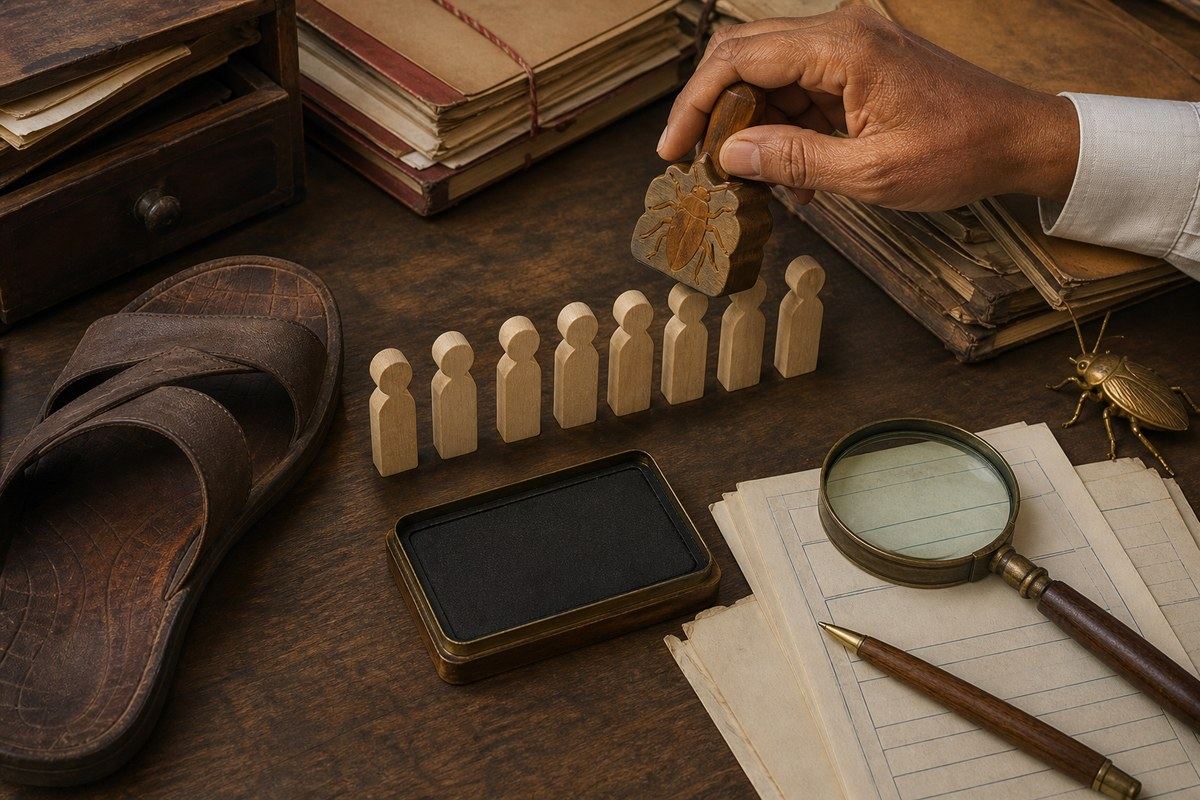
Let me say that before some moral inspector climbs out of the skirting board with a stamp pad clenched between his jaws. Not everyone. There are decent people. There are kind people. There are people who do not calculate advantage before offering tea.
But enough.
Enough to make the room feel porous. Enough to make trust feel like blood you cannot afford to lose. Enough that a handshake sometimes feels less like greeting and more like a small instrument looking for a place to insert terms and conditions.
This is why the drawings become vicious.
A human portrait flatters. Even when ugly, it flatters. It says, here is a person, complicated, wounded, explainable. But sometimes explanation becomes a shelter for the predator. Sometimes the face is not the truth. The feeding apparatus is.
Put mandibles on a man and you see how he works.
Put a swollen abdomen on another and you see what he has consumed.
Put antennae on a committee member and you understand why the meeting has no conclusion but much movement.
This is not hatred. Not exactly. It is illustration. It is the small revenge of accuracy.
And yes, there is envy in it. I am not pure enough to pretend otherwise.
Insects survive. That is their great insult to us. They do not sit over tea wondering whether their potential was wasted. They do not compare themselves with classmates, cousins, or some smooth LinkedIn mammal announcing strategic leadership with a dental-plan smile. A cockroach can live without a head for some time, which is more than can be said for many departments after the senior officer retires, although in India the department often continues without a head for decades, proving that nature has much to learn from administration.
Insects handle heat, poison, flood, famine, and human disgust. They keep going. Evolution made them tiny, obscene, indestructible jokes, and the joke has legs.
Human beings, meanwhile, require meaning, money, respect, touch, recognition, digestive regularity, and Wi-Fi.
Remove two and they become irritable.
Remove four and they start quoting philosophy.
Remove six and they become me.
So I sketch because drawing is cheaper than litigation and less noisy than shouting at the neighbor. The page receives what society cannot bear to admit: the actual shape of the encounter.
A man who cheats you becomes a blister beetle.
A smiling freeloader becomes a leech with spectacles.
A loud patriot becomes a dung beetle rolling a hot ball of borrowed slogans uphill and calling it civilization.
A spiritual fraud becomes a fat moth circling donation light, dusting everyone with devotional powder.
A bureaucratic parasite becomes a tick so swollen with procedure that it looks important.
And I draw myself too, because otherwise the whole business becomes too smug.
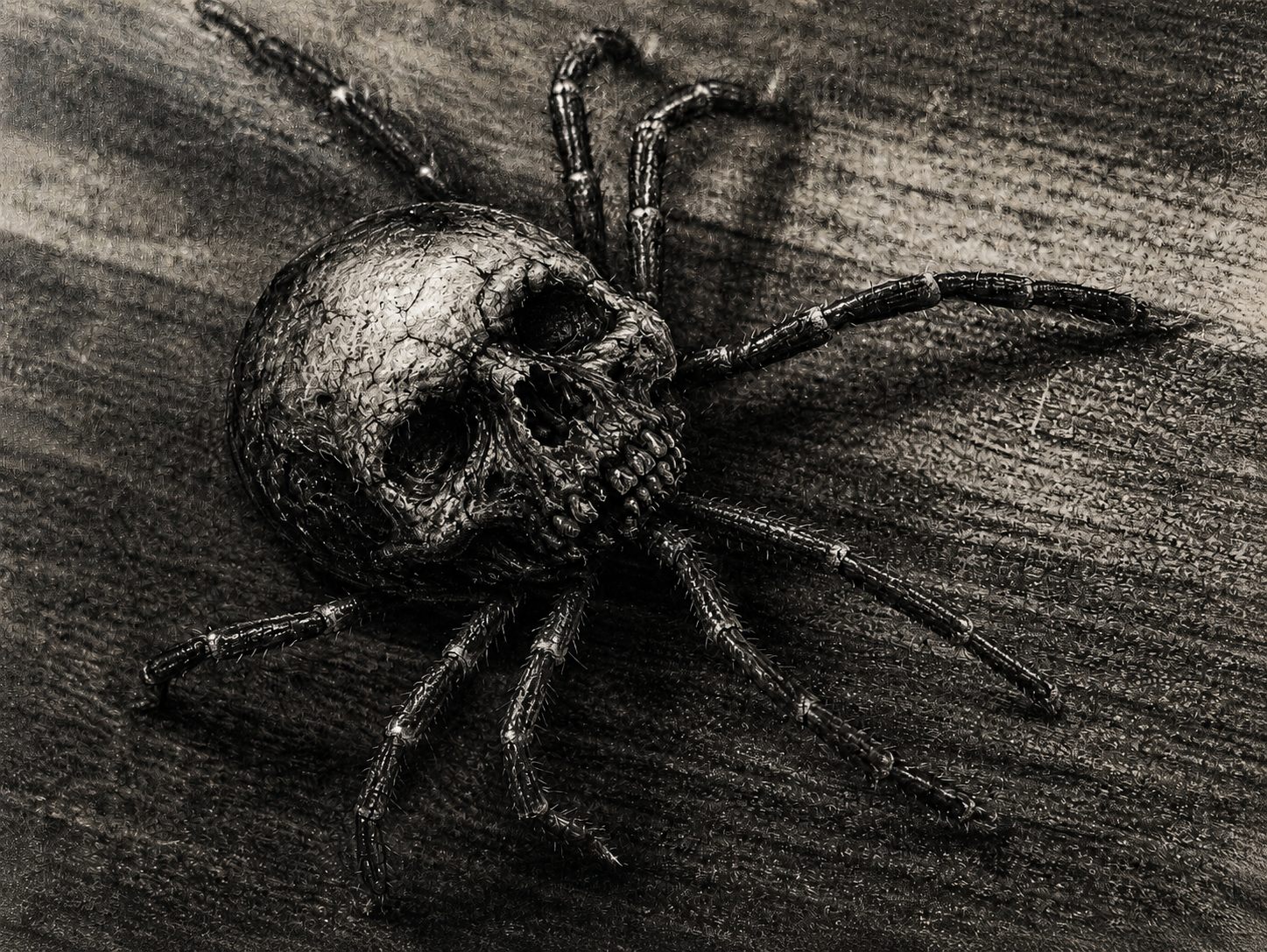
A pathetic spider with weak knees and an unfinished web.
A room-roach who knows the route from bed to kettle better than he knows the route to hope.
A book-louse feeding on dead sentences.
A mosquito that cannot even bite properly, only whines with literary ambition near the ear of an indifferent world.
There I am. On the page. Abdomen open. Legs wrong. Face like damp bread. Some junior doctor of the soul bends over the specimen and announces, with professional disappointment, that the cause of death appears to be prolonged exposure to nonsense, complicated by self-awareness.
A fine diagnosis.
Laminate it.
The older sickness in society is not even hypocrisy. Hypocrisy still remembers that a standard exists. It says one thing and does another, but at least it knows there are two things involved.
Artifice is worse.
Artifice is when the false thing forgets it is false. The smile. The ritual. The respect. The family performance. The civic phrase. The patriotic belch. The polished little “we must be positive” pellet. The way everyone pretends the painted shell is the creature.
Outside, culture.
Inside, jelly.
This is why insects begin to seem honest, which is not a conclusion I wanted. A wasp is a wasp. A fly is a fly. A termite does not eat the furniture and then ask to be praised for preserving heritage. Compared with humans, insects are almost noble.
Almost.
Let us not get carried away. A mosquito is still a mosquito. If one lands on my arm tonight I shall not quote Kafka to it. I shall flatten it with the moral seriousness of a High Court judgment.
Still, when evening comes and the room heats up like an argument nobody has the energy to finish, I return to the paper. The pencil waits. The palm blackens. The fan wobbles overhead with the confidence of old infrastructure. Somewhere outside, the mammals continue their grand parade of not-crawling. They go to offices, parties, meetings, prayer rooms, coaching centers, television studios, marriage negotiations, and WhatsApp groups, all upright and respectable.
Inside, I give one man a thorax.
I give another antennae.
I give myself eight insufficient legs.
Lower than a rat, higher than a drain fly, faintly hungry, mildly constipated, and still somehow vain enough to think the drawing matters, I scratch graphite into paper and wait for the next creature to reveal itself.
It always does.
P.S. References: Franz Kafka, The Metamorphosis. Jonathan Swift, Gulliver’s Travels. Nikolai Gogol, The Nose. Charles Darwin, On the Origin of Species. Carl Linnaeus, Systema Naturae.
Word Cloud
Related reading
Selected by shared topics and section, with closer publication dates breaking ties.