The Morlocks in White Kurta
Uses the speech voice supplied by your browser or device.

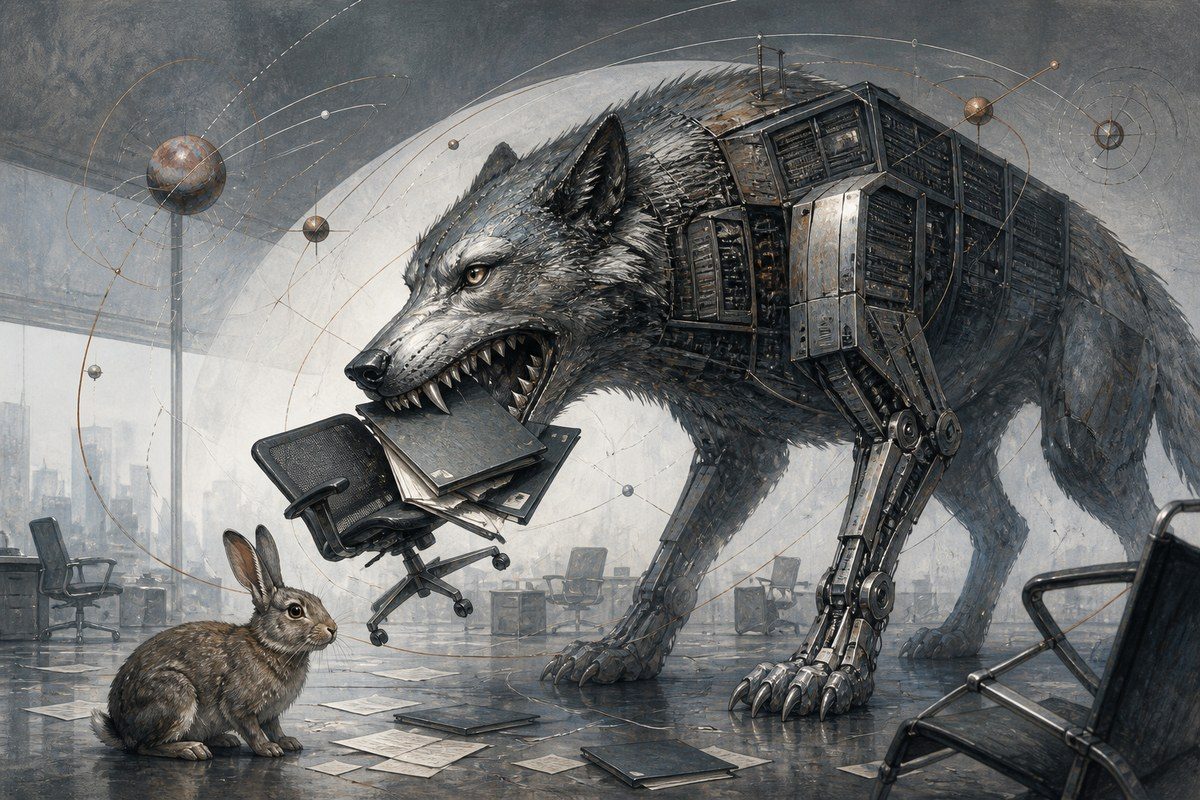
In H. G. Wells’s The Time Machine, the future is not a glittering staircase to wisdom. It is a biological joke told very slowly. Humanity has split into two species: the delicate Eloi, pretty and helpless on the surface, and the Morlocks, pale underground workers who keep the machinery going and come up at night with appetites. It is not merely science fiction. It is class anxiety wearing a boiler suit. Wells looked at industrial England and saw that if you stretched inequality far enough, it might stop being economics and become anatomy.
India has produced its own version, though naturally we have added more dust, paperwork, slogans, television shouting, and a faint smell of overheated transformer oil. Here the predators do not always live underground. They live behind compound walls, tinted glass, party offices, real-estate boards, investment summits, temple inaugurations, police barricades, and news studios where men in fine waistcoats explain sacrifice to people who are already sacrificing lunch.
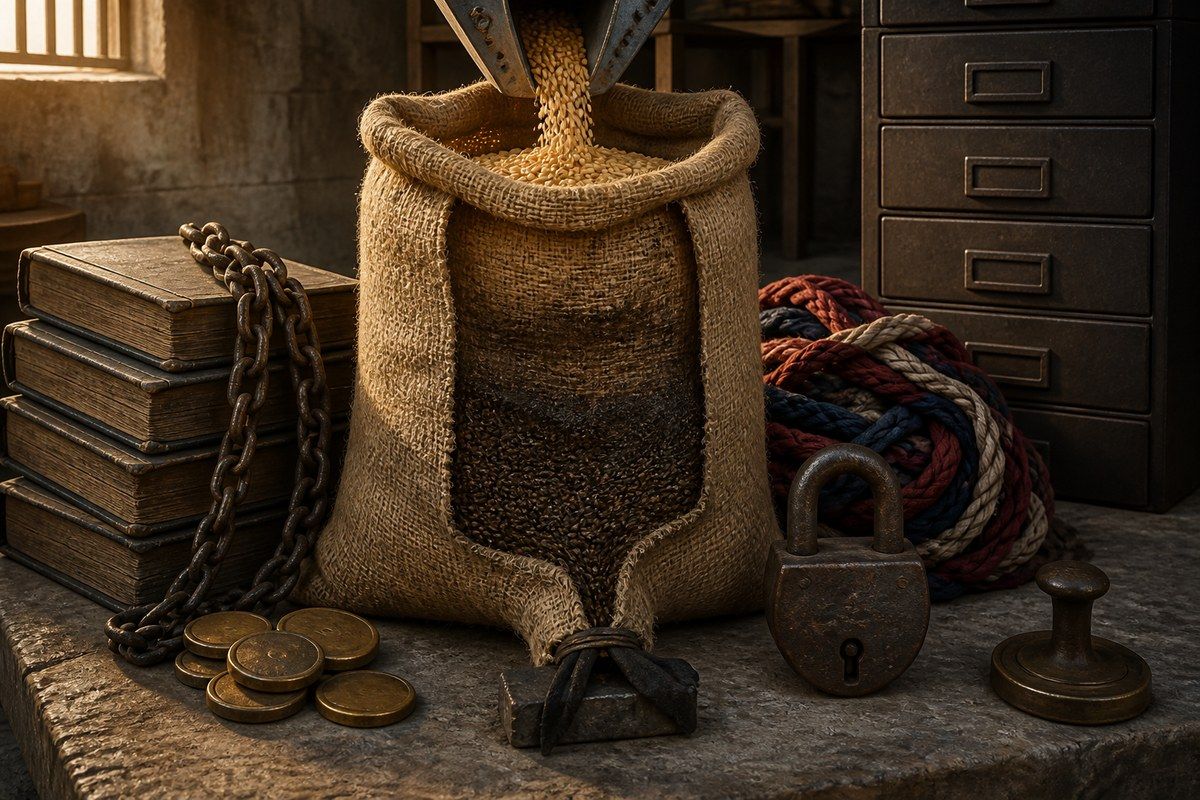
The common citizen meanwhile is asked to be patient, patriotic, flexible, resilient, digital, compliant, grateful, and occasionally silent. He must pay tax, pay bribe, pay school fees, pay hospital deposits, pay electricity bills swollen by mystery, pay rent to a landlord with the temperament of a small medieval kingdom, pay platform fees, convenience fees, processing fees, late fees, early fees, and invisible fees that arrive like mosquitoes in April. Then he is told the nation is rising. Rising where? From whose back? By whose knees?
The Indian oligarch and the political class have learned a beautiful joint choreography. One owns the ladder. The other controls the gate. Between them they can make the ordinary man climb, fall, applaud, and blame himself for not being airborne.
This is why the predator-prey metaphor stings. It is not simply that the powerful are rich and the commoners are poor. That would be an old story, and old stories at least have the courtesy of smelling old. The deeper problem is that the system increasingly treats the common person as extractable material. His vote is extractable. His attention is extractable. His religious emotion is extractable. His unpaid waiting time is extractable. His data is extractable. His land, river, labor, fear, anger, caste, language, memory, and dead grandfather’s photograph can all be packaged, monetized, mobilized, and marched.
Predation in modern India does not usually look like a tiger jumping from tall grass. It looks like a circular from an office. It looks like a loan app. It looks like a party worker smiling too closely. It looks like a hospital billing desk at midnight. It looks like a small contractor not getting paid for six months because the larger contractor is waiting for the department, which is waiting for the file, which is waiting for the signature, which is waiting for some planetary alignment known only to clerks and crocodiles.
The prey is not weak because he is stupid. He is weak because he is separated. A goat alone is dinner. A herd is politics.
That is the neat trick. The common people are kept busy fighting over symbols while the actual meal is served elsewhere. We are handed flags, gods, celebrities, enemies, exam forms, cricket outrage, language panic, and WhatsApp thunder. We are told the dangerous man is the neighbor eating differently, praying differently, voting differently, speaking differently, marrying differently. Meanwhile the great banquet proceeds in air-conditioned rooms, and the menu is always the same: public land, public money, public silence, private gain.
Wells’s future was horrifying because the separation had become complete. The Eloi no longer understood the machinery. The Morlocks no longer recognized the Eloi as kin. That is the first requirement of a predator society: emotional distance. The eater must not see the eaten as fully human. He must see him as crowd, beneficiary, vote bank, encroacher, informal worker, migrant, case load, consumer segment, demographic dividend, nuisance.
Demographic dividend. What a phrase. It sounds like a bank manager kissing a crocodile.
In India, the commoner is praised in the abstract and neglected in the particular. The farmer is noble, but his price is negotiable. The worker is heroic, but his wage is inconvenient. The student is the future, but his exam may be postponed, leaked, normalized, litigated, and buried under committee language. The patient is sacred, but first please deposit money. The woman is worshipped, but preferably as a statue. The poor are the soul of India, provided they do not arrive at the mall entrance in visible numbers.
And the oligarch? He is no longer merely a businessman. He is a weather system. Roads bend toward him. Banks become philosophical in his presence. Laws develop excellent manners. Newspapers lower their voice. Ministers discover infrastructure where others saw a forest, a beach, a village, a hill, or a little inconvenient cluster of human beings. If he fails, the nation must rescue him because his collapse would be systemic. If a small shopkeeper fails, that is discipline.
The political predator is more theatrical. He does not always eat directly. He blesses the hunt. He explains why the prey deserved it, why history required it, why civilization demanded it, why development cannot wait for small sentimental things like homes, rivers, pensions, clinics, schools, wages, air, soil, truth, or sleep. He wraps appetite in destiny. That is his genius. A pickpocket merely steals your wallet. A political predator steals your language and makes you thank him for grammar.
But it would be too easy, and therefore false, to say they are monsters and we are innocents. Wells was sharper than that. A society does not split into predator and prey overnight. It evolves there by habit. We tolerate small cruelties because they are useful. We admire power when it bullies someone else. We forgive corruption when it feeds our side. We laugh at rules until the rulelessness arrives at our door with a measuring tape. We want justice, but not always systems. We want dignity, but also shortcuts. We curse the predator while dreaming of becoming a smaller predator with better parking.
This is the ugly democratic bargain. The large predator survives because millions of tiny predatory habits make him feel natural.
In Calcutta, you can see the whole theory while standing near a broken drain. A man selling tea has more economic realism than half the panels on television. He knows who pays late, who never pays, who sends police, who sends boys, who can build illegally, who will be demolished for the same illegality, who gets compensation, who gets advice, who gets photographed, and who gets removed before the important person arrives. He does not need a degree in political economy. He has watched the food chain from pavement level.
The commoner’s tragedy is not only poverty. It is uncertainty. You cannot plan a life if every institution behaves like weather. Job, school, rent, healthcare, law, examination, license, pension, road, drainage, police, bank, municipality—each one may work, may not work, may work for someone else, may work if pushed, may work if paid, may work after your father dies and the file is finally found. This uncertainty is not accidental. It is power. A predictable system empowers the small person. An unpredictable system forces him to seek patronage.
That is where preyhood begins.
A citizen becomes prey when rights become favors. A society becomes predatory when dignity requires recommendation. And a democracy becomes theatre when the public is invited only to clap, shout, vote, and go home hungry but emotionally charged.
Still, despair is a lazy prophet. The predator-prey metaphor explains something real, but it can also trap us. Prey animals survive by panic. Citizens survive by organization. The answer is not romantic revolution every Tuesday afternoon. Most people have gas cylinders to book and blood pressure tablets to buy. The answer is slower, duller, and more powerful: institutional memory, local accountability, independent unions, honest data, transparent procurement, boring courts that work, municipal competence, public health systems, school systems that do not collapse under fashion, and citizens who refuse to be permanently hypnotized by spectacle.
It sounds dull because civilization is mostly dull. Drainage is dull until your house floods. Procurement is dull until the bridge falls. Data transparency is dull until your ration disappears. Court procedure is dull until a bulldozer mistakes your life for an encroachment. Labor law is dull until your son works twelve hours and is called a partner by an app that treats him like replaceable shoe leather.
The predator loves glamour. The citizen should love boring machinery.
Wells imagined a future where humanity had divided so completely that recognition itself had failed. India’s danger is not that we will become Eloi and Morlocks with different skulls and dining arrangements. Our danger is subtler. We may remain one species but accept two moral categories: those whose comfort defines progress, and those whose suffering is the cost of it.
That is the real horror story.
Not that the predator eats.
That the prey begins to believe being eaten is national service.
Word Cloud
Related reading
Selected by shared topics and section, with closer publication dates breaking ties.