The Trillionaire Gap: A Bipolar Ramble from South Calcutta
Uses the speech voice supplied by your browser or device.

The ceiling fan in this South Calcutta flat—this glorified concrete coffin with its peeling distemper and the perpetual olfactory assault of fried hilsa from the neighbor’s kitchen—makes a sound like a dying man’s last rattle, and I am staring at my phone, which tells me, with the cheerful indifference of a digital harbinger, that Elon Musk, that South African-American techno-messiah with the facial expressions of a man perpetually smelling his own flatulence, has ascended to the exalted, previously mythical status of trillionaire, one point one trillion American dollars, a figure so grotesquely swollen that my brain, already pickled in decades of useless erudition and underemployment, refuses to process it, much like a cockroach refuses to process the concept of nuclear winter—it simply keeps scuttling, which is, I suppose, the only honest response to annihilation.
One point one trillion.
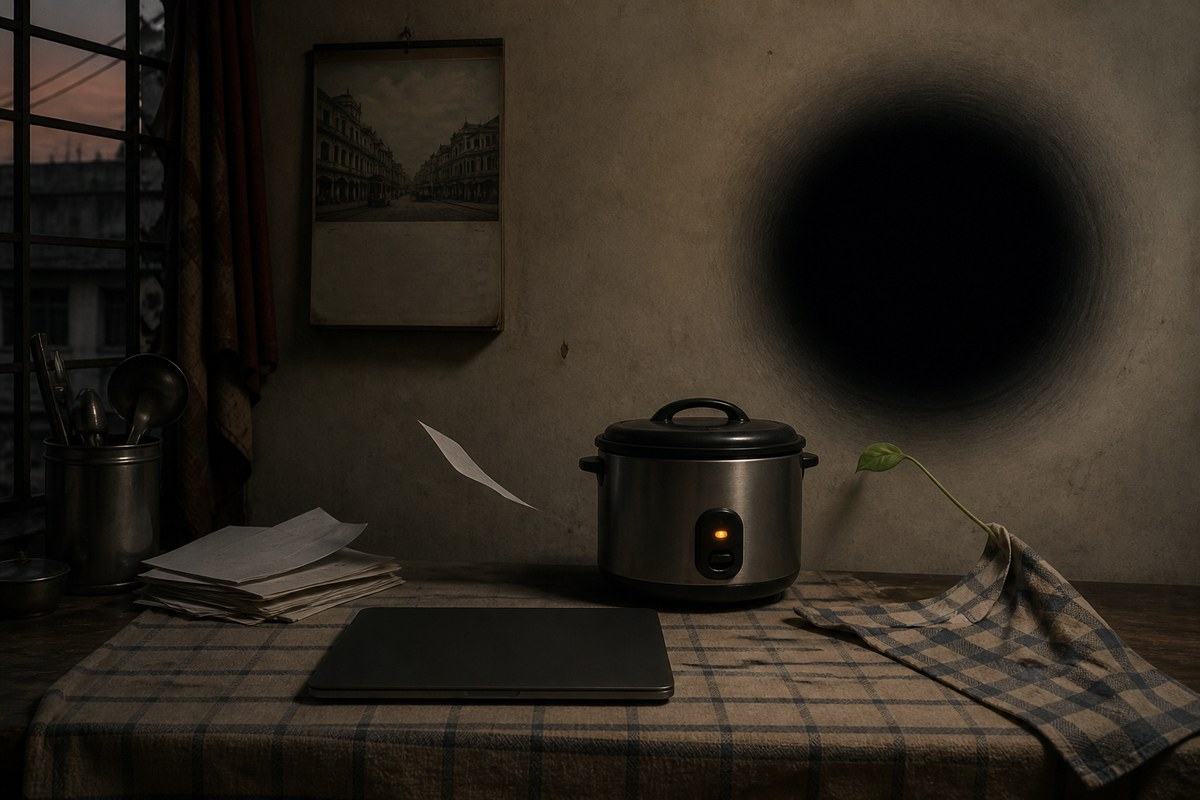
I say it aloud to the empty room, to the rice cooker bubbling its lonely carbohydrate requiem in the corner, to the black sando genji hanging limp on the chair like a shed skin, and the words fall flat, dead, meaningless, like trying to describe the taste of water to a fish or the sensation of drowning to a stone.
The fan rattles on.
I haven’t shaved in eleven days; the stubble itches with the petulant persistence of a mosquito in a malaria ward, and I scratch at it with nails bitten down to the quick, the quick itself a small, pink, vulnerable thing, much like my bank account, which contains, at last count, approximately enough to buy three moderately priced biryanis from the Arsalan on Rash Behari Avenue, provided I don’t order the mutton, which I never do, because mutton is for men who have made peace with their appetites, and I have made peace with nothing, not even the rice cooker, which I suspect judges me silently from its corner, its single red eye blinking with what I can only interpret as Buddhist disappointment.
Musk’s wealth, they say—Forbes says, Oxfam says, the whole chattering, masturbatory internet says—grew by one million dollars per minute last year.
Per minute.
I spend my minutes staring at the ceiling, at the water stain shaped like the subcontinent before Partition, at the crack in the plaster that resembles, if you squint and are sufficiently medicated, the profile of a man weeping.
One million dollars per minute.
In the time it took me to boil water for my loose-leaf tea this morning—Assam, second flush, bought on discount from the New Market vendor who looks at me with the knowing pity of a man who recognizes his own future in my present—Elon Musk made enough money to buy this entire building, this entire decaying, damp, fungus-ridden building in the South Calcutta boondocks, with its intermittent water supply and its population of geckos who have achieved a kind of zen indifference to human suffering that I can only envy.
And what did I make?
A cup of tea.
A cup of tea that I drank too hot, burning my tongue, which now feels like a small, swollen, traitorous organ, much like my heart, much like my liver, much like every other organ in this fifty-one-year-old carcass that refuses, with the stubbornness of a Calcutta traffic jam, to simply give up and die.
The dichotomy, they call it.
The wealth gap.
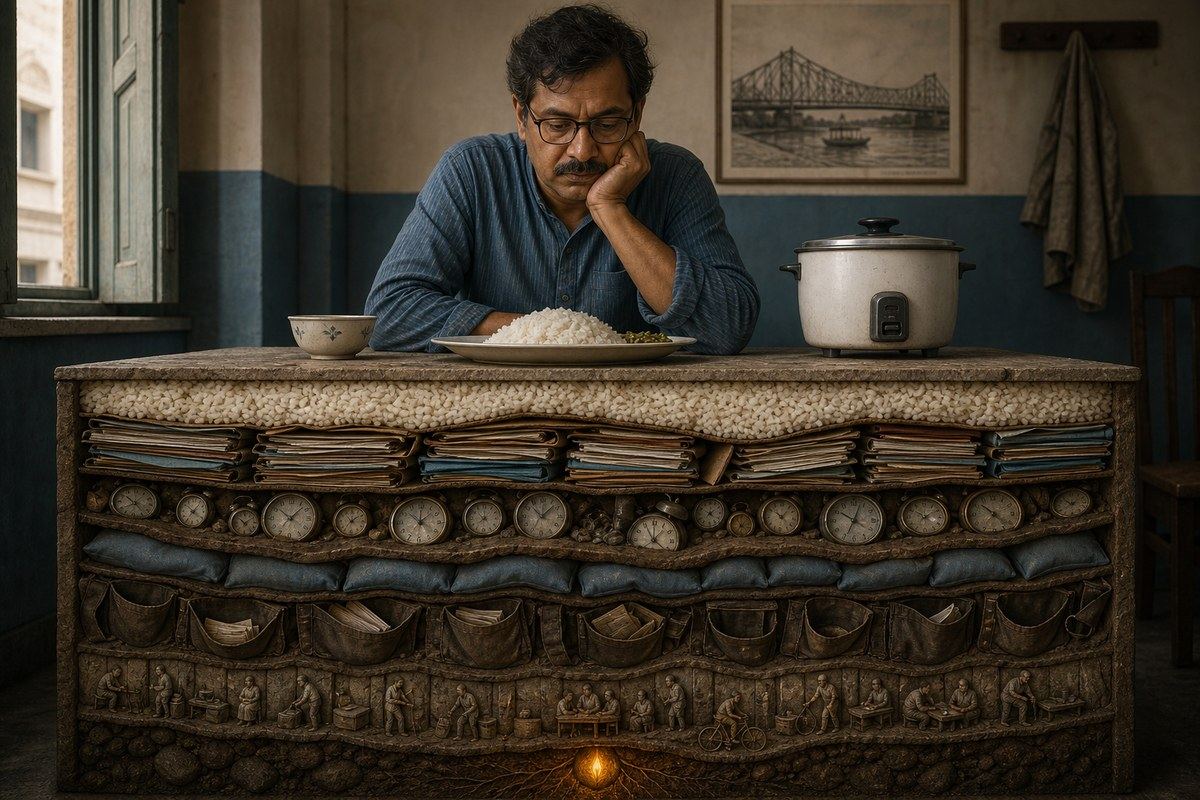
The K-shaped economy, as the economists say, with their charts and their graphs and their soothing, anesthetic jargon, as if naming the beast could tame it, as if calling the abyss by its proper name could prevent the fall.
But I am not falling.
I am already at the bottom.
I am the bottom.
I am the sediment, the dregs, the lees, the thick, viscous residue at the bottom of the bottle that even the most desperate drunkard refuses to touch, and Elon Musk is the man who owns the distillery, the vineyard, the entire fermented world, and he is looking down—if he is looking at all, which I doubt, because why would he?—from his orbital perch, his SpaceX shares trading at one hundred fifty dollars a pop, his net worth now exceeding the combined wealth of the poorest three point eight billion people on this spinning, overheating, drowning planet.
Three point eight billion.
That is not a statistic.
That is a scream rendered in numerals.
That is the sound of a child in a Sudanese refugee camp, a woman in a Mumbai slum, a man in a Mississippi trailer park, all of them—us—reduced to a footnote in the ledger of a man who believes, with the serene certainty of a cult leader, that he will populate Mars, that he will build a hundred million humanoid robots, that the economy will double in five years, that digital intelligence will exceed the sum of all human intelligence, as if intelligence were a commodity to be weighed and measured and sold by the kilogram, as if the human brain were nothing more than a particularly inefficient computer that needs upgrading.
And maybe it is.
Maybe I am nothing more than a malfunctioning algorithm, a glitch in the system, a bit of corrupted code in the grand program of late capitalism, and my bipolarity—my manic highs where I believe, with the fervor of a tent-revival preacher, that I could write the Great Calcutta Novel, that I could expose the rot at the heart of this new Gilded Age, that my words could matter, could wound, could change—and my depressive lows where I cannot muster the energy to change my underwear, where the ceiling fan’s rattle becomes a metronome marking time until the inevitable end—maybe all of it is just a chemical imbalance, a serotonin shortage, a dopamine drought, and the trillionaire in his Palo Alto fortress is the correct evolutionary endpoint, the apex predator, the final form of Homo economicus, while I am the detritus, the failed experiment, the evolutionary dead end muttering to himself in a rented flat in a city that the world has already forgotten.
Calcutta.
Not Kolkata.
Calcutta, with its British ghosts and its Marxist hangover and its present-tense decay, a city that smells of jasmine and sewage in equal measure, where the hand-pulled rickshaws still exist in the twenty-first century like some cruel anachronism, where the tram lines run through streets too narrow for them, where the Communist posters fade slowly on walls that crumble faster than ideologies, where I was born in North Calcutta, in South Sinthee, in a house that no longer exists, demolished for a seedy apartment block, and where I now exist, if exist is the word, in this South Calcutta flat, this transitional space, this liminal zone between the city and the suburbs, between sanity and its opposite, between the illusion of being human and the reality of being livestock.
Livestock.
The word tastes like copper in my mouth, like blood, like the tea I burned my tongue on.
Because that is what we are, aren’t we?
Not humans.
Not citizens.
Not souls with infinite worth and inalienable rights and all the other fairy tales they fed us in school, in the missionary schools with their crucifixes and their canings and their hymns about gentle Jesus meek and mild, while outside the window the city burned with riots and hunger and the slow, smoldering resentment of a people who have been told, for centuries, to wait, to be patient, to trust in the divine order of things.
We are livestock.
We are the cattle in the chute, the sheep in the pen, the chickens in the battery cage, and the trillionaire is the farmer, the butcher, the man who owns the abattoir and the restaurant and the food critic who writes the review, and he is not even cruel about it, because cruelty requires awareness, and I am not sure he is aware of us at all.
He is too busy building the future.
The future where, in five years, digital intelligence will exceed the sum of all human intelligence.
The future where a billion robots will do the work that we once did, that our fathers did, that our grandfathers did in the jute mills and the tea gardens and the coal mines, back when work meant something, back when a man’s hands were scarred and his back was bent but he could look at his children and say, with whatever pride was left to him, I built that, I made that, I am useful, I am necessary, I am human.
What will we be in five years?
In ten?
What will I be, this fifty-one-year-old canceled bruised burnt brittle bitter Bengali man, this atheist over-read undersexed introvert, this sheepishly perverted well-within-the-bell-curve deviant, this left-leaning-in-the-French-meaning-not-Marx-not-Lenin-turned-numb polemicist, when the robots come, when the AI exceeds, when the economy doubles and doubles again and the wealth concentrates and concentrates until it is a black hole, a singularity, a point of infinite density from which no light, no hope, no human dignity can escape?
I will be here.
In this flat.
With the rice cooker.
With the loose-leaf tea.
With the ceiling fan and its death rattle and the water stain shaped like a map of a country that no longer exists, that perhaps never existed except in the imagination of the desperate, the deluded, the damned.
The tea is cold now.
I did not drink it.
I was too busy counting—counting the cracks in the ceiling, the hairs in my sink, the days since I last went outside, the rupees in my account, the reasons to continue, the reasons to stop, the minutes, the hours, the years, the trillion dollars that accumulated while I was not looking, while I was staring at the stain, while I was scratching my stubble, while I was being nothing, doing nothing, meaning nothing.
Mister J, my one remaining connection to the American economy, to the world of consulting and conference calls and PowerPoint presentations that I deliver with the enthusiasm of a man reading his own autopsy report, sent an email this morning. He didn’t I am making this up, but there is verity in this illusion, I just put on some cheap mascara because this is work and subsistence related.
“Great work on the last deck,” he wrote, from his air-conditioned office in whatever sun-blasted suburb he inhabits, “payment will be processed next quarter.”
Next quarter.
In the time between now and next quarter, Elon Musk will make another—how much?
I do the math, badly, my manic brain racing and my depressive brain dragging, the two of them like mismatched horses pulling a cart with one wheel into a ditch.
One million per minute.
Sixty million per hour.
One point four four billion per day.
In the ninety days of a quarter, he will make approximately one hundred twenty-nine billion dollars.
Mister J owes me four hundred dollars.
I check my email again.
Nothing.
The fan rattles.
A gecko on the wall flicks its tongue at a moth, misses, flicks again, catches it this time, and I watch the moth’s wings disappear into the gecko’s mouth with a kind of envy, because at least the moth had a moment of flight, a moment of being beautiful and alive and unaware of the tongue that would end it, while I have been aware of the tongue for decades, the long, sticky, inevitable tongue of capital, of history, of the slow, grinding machinery that turns human beings into nutrients for the wealthy, into data points for the algorithms, into livestock for the future that the trillionaire is building on our backs, with our bones, with our dreams ground into the mortar that holds his Martian palaces together.
I should cook something.
The rice cooker is there, patient, Buddhist, its red eye blinking.
But I am not hungry.
I am never hungry anymore, or I am always hungry, the two states indistinguishable, like the manic and the depressive, like the human and the livestock, like the man who stares at the ceiling and the man who stares at the trillionaire’s photograph on the screen, that face like a clay mask left too long in the sun, those eyes that seem to look through the camera, through the internet, through the very fabric of reality, into a future where he is god and we are the dust that settles on his robots, the lubricant that keeps their joints moving, the background radiation of a universe that has forgotten we ever existed.
The phone buzzes.
A news alert.
“SpaceX IPO boosts stock market to new highs.”
I do not open it.
I know what it says.
I know that the market is up, that the wealth is growing, that the gap is widening, that the K-shaped curve is becoming a cliff, and we are at the bottom of the cliff, looking up at the sky where the rockets launch, where the satellites orbit, where the trillionaire’s dreams colonize the darkness while we huddle in the light pollution of our dying cities, our rented flats, our rice cookers bubbling their requiems.
I should go out.
I should walk to the tea stall on the corner, the one where the old man makes chai in a dented aluminum pot and charges ten rupees for a glass that burns your fingers and sweetens your tongue and reminds you, for a moment, that you are alive, that you are human, that you are not yet livestock, not entirely, not finally.
But the stairs are too many.
The heat is too much.
The street is too full of people who are also not yet livestock, who are also clinging to the illusion, who are also staring at their phones, at the news, at the trillionaire’s face, at the future that excludes them.
So I stay.
I sit.
I scratch my stubble.
I listen to the fan.
And I think about the etymology of the word “trillion,” which comes from the French “trillion,” which comes from “tri-” meaning three and “million,” which itself comes from the Italian “milione,” from “mille” meaning thousand, and how a thousand thousands make a million, and a thousand millions make a billion, and a thousand billions make a trillion, and how each step up the numerical ladder is a step away from the human scale, from the countable, from the comprehensible, until you reach a number so large that it is no longer a number at all but a kind of anti-number, a numerical black hole that sucks all meaning into itself, that renders the concept of “one” absurd, that makes the idea of “mine” and “yours” into a joke told by a cosmic comedian with a very dark sense of humor.
One point one trillion.
In 1982, the poorest person on the Forbes 400 list had two hundred forty million dollars in today’s money.
In 2026, you need three point three billion just to get on the list.
The average member has thirteen billion.
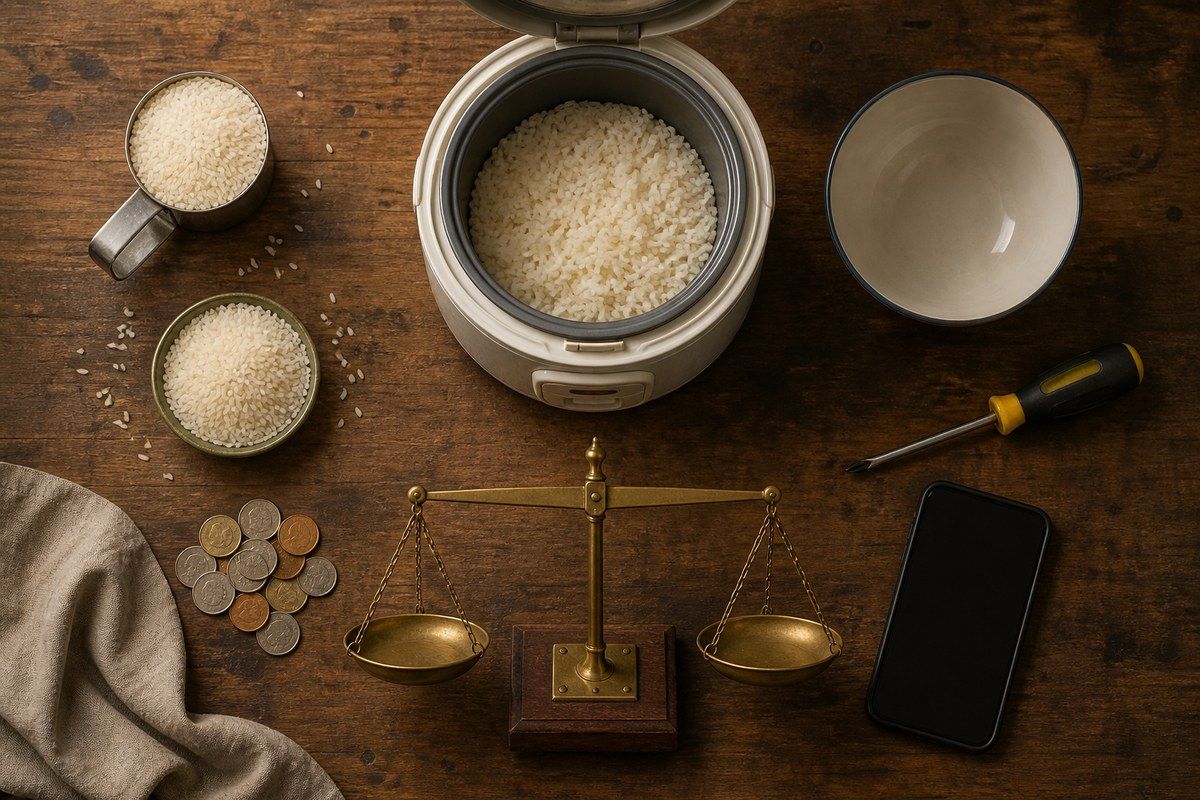
Thirteen billion is to one point one trillion as a mosquito is to an elephant, as a grain of rice is to a paddy field, as I am to the concept of financial security, which is to say, a rounding error, a statistical anomaly, a thing so small it can be ignored, and is ignored, and will continue to be ignored until the elephant steps on the mosquito, until the paddy field drowns the grain, until the trillionaire’s future arrives and grinds us all into the dust from which, according to the fairy tales they no longer bother to tell us, we were made.
The rice cooker clicks.
It is done.
The rice is cooked.
I do not move to eat it.
I am thinking about the French left, about Sartre in his café, about Camus and the absurd, about how they believed, with the passionate intensity of men who have seen the abyss and chosen to keep walking, that meaning could be created, that authenticity was possible, that the individual could resist the system, could say no, could refuse to be livestock, could choose to be human, even in the face of the guillotine, even in the face of the plague, even in the face of the indifferent universe that cared nothing for our hopes or our fears or our small, stubborn, beautiful refusals.
But they did not have smartphones.
They did not have the news alert buzzing in their pocket, telling them that a man had made one million dollars in the time it took them to light a cigarette, to take a sip of coffee, to write a sentence, to think a thought.
They did not have the constant, unrelenting, digital reminder of their own irrelevance, their own powerlessness, their own gradual, inexorable transformation from citizen to consumer to data point to livestock.
And maybe that is the difference.
Maybe the abyss they faced was deep, but it was silent, and you could fill the silence with philosophy, with literature, with the sound of your own voice arguing in a smoke-filled room with other voices that mattered, that challenged, that pushed back.
But my abyss is loud.
It buzzes.
It alerts.
It updates in real time, and the real time is always now, always immediate, always telling me that while I have been sitting here, scratching my stubble, burning my tongue, not eating my rice, the world has moved on, the wealth has grown, the gap has widened, and I am further behind than I was when I started, which was already so far behind that the concept of “catching up” is not even a fantasy but a kind of blasphemy, an insult to the mathematical reality of one point one trillion.
The gecko has finished its moth.
It is motionless on the wall, its eyes unblinking, its body a pale, translucent thing that seems to absorb the dim light of the flat and reflect nothing back.
I envy it.
I envy its simplicity, its single-mindedness, its lack of awareness that somewhere, in a glass tower in a city I will never visit, a man is planning to build a civilization on Mars while children on this planet die every forty seconds from the cuts he made, from the aid he dismantled, from the future he is building with the bones of the present.
Forty seconds.
I count them.
One.
Two.
Three.
The fan rattles.
Four.
Five.
Six.
The rice steams in its cooker.
Seven.
Eight.
Nine.
My phone screen goes dark, and in the reflection, I see myself, or something like myself, a face I do not recognize, a man with stubble and bloodshot eyes and the expression of someone who has just been told a joke he does not understand but knows, instinctively, is at his expense.
Ten seconds.
Another child.
Another future extinguished so that a rocket can launch, so that a robot can be built, so that a trillionaire can look at the red planet and say, with the satisfaction of a man who has never known hunger, “Mine.”
But it is not his fault.
I must be fair, even in my bitterness, even in my defeat, even in my livestockhood.
It is not his fault that the system is rigged, that the tax code is written by the wealthy for the wealthy, that the politicians are four thousand times more likely to be billionaires than ordinary people, that the public policy choices of the last fifty years have been, as Oxfam says, as the economists say, as even the most sheltered liberal arts graduate can now see with the clarity of a man waking from a long and profitable dream, rigged by a tiny few to fuel their fortunes.
It is not his fault that he was born white, male, South African, Canadian, American, that he had access to capital, to education, to the networks of power that exclude people like me, people with my skin, my accent, my address, my lack of connections, my over-reading and under-earning, my introversion and my perversions and my general unsuitability for the kind of ruthless, optimistic, testosterone-fueled entrepreneurship that the world rewards with trillion-dollar fortunes.
It is not his fault.
But it is also not my fault.
And yet here we are.
He with his trillion.
Me with my rice.
The fan with its rattle.
The gecko with its moth.
The child with its forty seconds.
And the gap between us, the K-shaped, ever-widening, universe-swallowing gap, is not a matter of fault or fairness or justice or any of the other words that we used to use, back when we believed in words, back when we thought that language could change the world, that a well-turned phrase could topple a tyrant, that a novel could open eyes, that a poem could break a heart and in the breaking, make it whole again.
The gap is physics.
It is gravity.
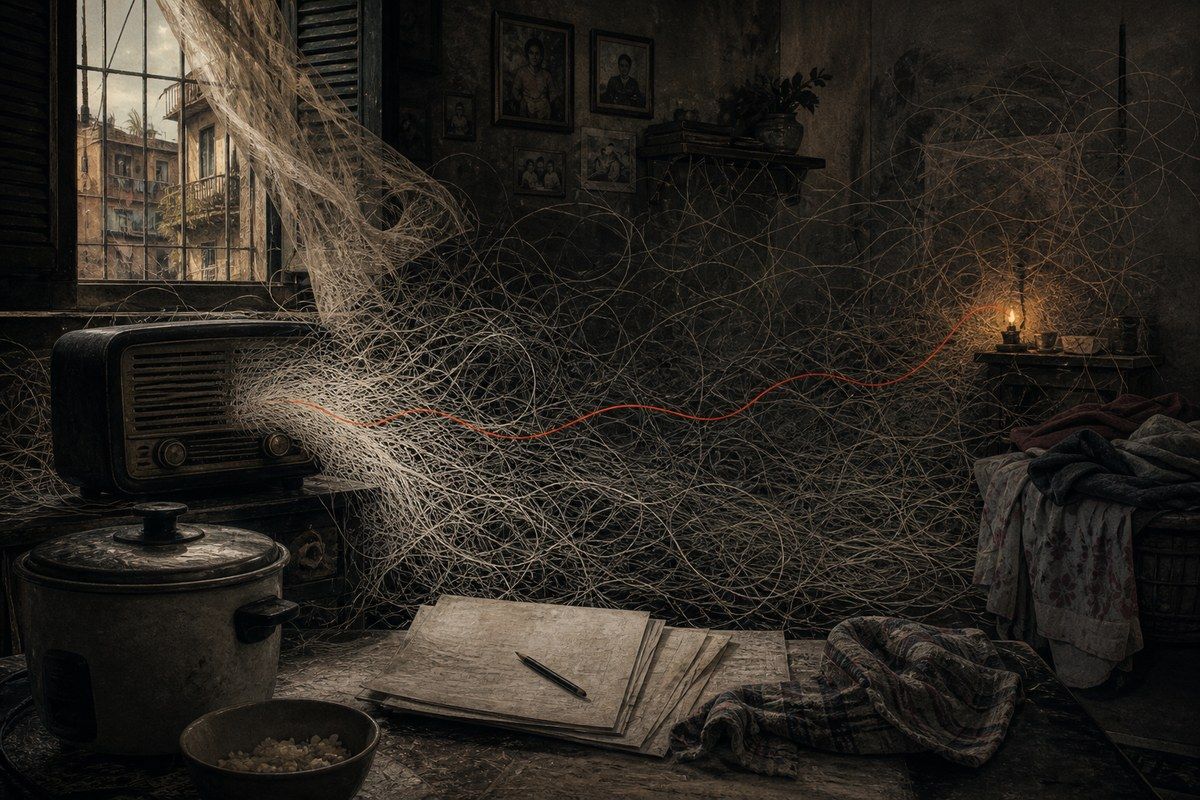
It is the inevitable collapse of a star into a black hole, and we are the debris, the accretion disk, the light that bends but cannot escape, and the trillionaire is the singularity, the point of infinite density, the place where the laws of human decency break down, where time stops, where the future becomes indistinguishable from the past, where all roads lead not to Rome but to Palo Alto, not to enlightenment but to the IPO, not to the human but to the post-human, the trans-human, the whatever-comes-next that will not include us, that has already excluded us, that wrote us out of the script before the first act was finished.
I should eat the rice.
It is getting cold.
Cold rice is better than no rice, as my mother used to say.
But I do not eat.
I am not hungry.
I am something else.
I am the space between hunger and satiety, between manic and depressive, between human and livestock, between the illusion and the reality, and in that space, there is no rice, no tea, no phone, no news, no trillionaire, no gap, no gravity, no physics, no philosophy, no Camus, no Sartre, no French left, no Marx, no Lenin, no nothing.
Just the rattle.
Just the fan.
Just the sound of a dying man’s last breath, which is, I realize, my own breath, which has been dying for fifty-one years, which will continue to die until it stops, until the rice cooker is unplugged, until the gecko moves on to another wall, until the flat is rented to another disappointed man, until the building is demolished for another shopping mall that will go bankrupt before it opens, until Calcutta becomes Kolkata becomes something else becomes nothing, until the trillionaire’s robots sweep the streets clean of our debris, until the Mars colony sends back its first postcard, until the universe expands into heat death and the last black hole evaporates and the last trillionaire’s fortune, whatever form it takes by then, whatever currency, whatever blockchain, whatever quantum entanglement of wealth and power, dissipates into the nothing from which it came.
But not yet.
Not today.
Today, I am still here.
Still breathing.
Still scratching.
Still not eating.
Still counting.
Still refusing, with the stubbornness of a Calcutta traffic jam, to be entirely livestock.
And maybe that is enough.
Maybe that is all that is left.
The refusal.
The small, stupid, meaningless refusal to be counted, to be consumed, to be transformed into data, into profit, into the lubricant that keeps the trillionaire’s robots moving.
Maybe the only human act left is to sit in a rented flat with a rice cooker and a ceiling fan and a gecko on the wall and say, with whatever voice is left, whatever tongue is not burned, whatever dignity is not yet stripped away:
No.
Not yet.
Not today.
Not me.
And then, because the body is stubborn and the stomach is insistent and the rice is there, cooked, waiting, Buddhist in its patience, I stand.
I walk to the cooker.
I open it.
The steam rises, white, pure, momentarily obscuring the water stain on the ceiling, the crack in the plaster, the face in the phone’s dark screen.
I take a spoon.
I eat.
It tastes of nothing.
It tastes of everything.
It tastes of Calcutta, of South Sinthee, of North Calcutta, of the city that was and the city that is and the city that will be when I am gone, when the trillionaire is gone, when the robots have rusted and the Mars colony has failed and the last gecko has eaten the last moth and the universe has sighed its final, indifferent sigh.
And in the taste of nothing, in the taste of everything, there is a moment—a brief, flickering, moth-wing moment—where I am not livestock.
Where I am human.
Where I am here.
Where I am.
The fan rattles.
The gecko blinks.
The phone stays dark.
And outside, in the street, in the city, in the world, the wealth gap widens, the rockets launch, the children die, the future arrives, and I eat my rice, one spoonful at a time, chewing slowly, deliberately, with the solemn concentration of a man performing the last sacrament of a religion that has no gods, no heaven, no salvation, only this, only now, only the steam and the spoon and the stubborn, beautiful, defeated act of continuing.
P.S.: Forbes, Oxfam, Federal Reserve, World Inequality Database, Polymarket, CBS News, Institute for Policy Studies. But who needs references when the ceiling fan is your primary source, and the rice cooker your only peer reviewer?
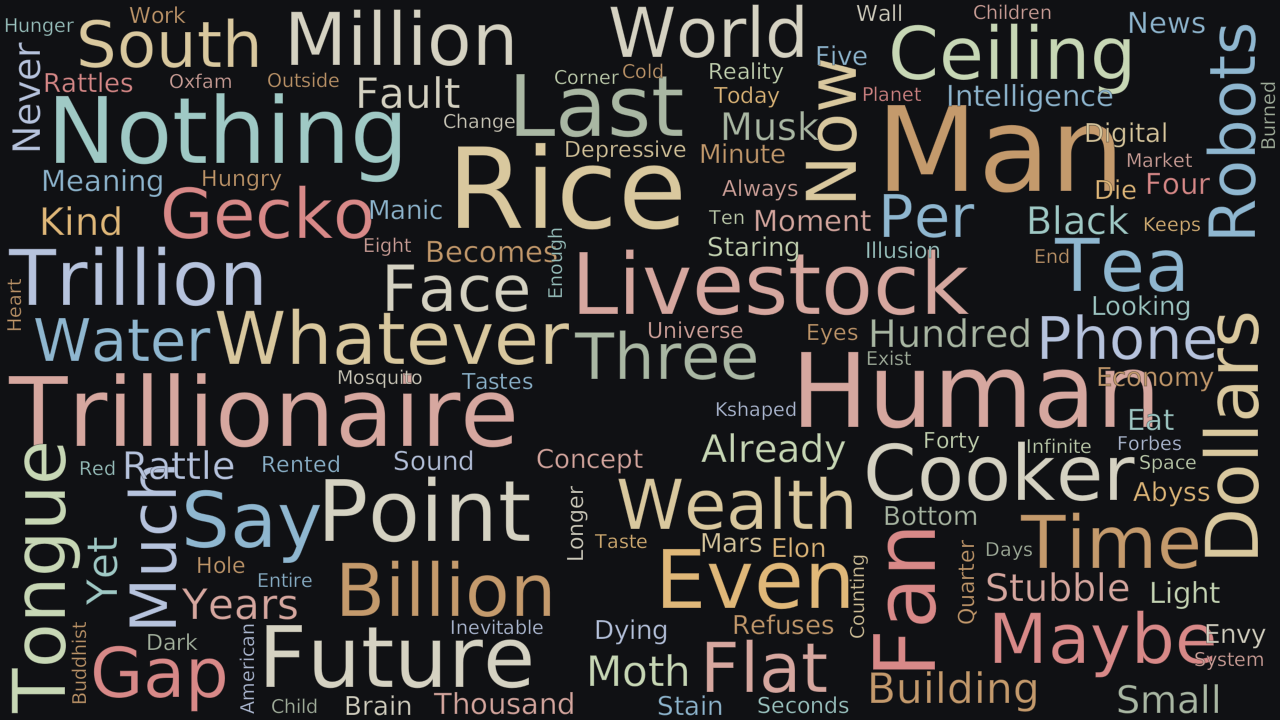
Word Cloud
Related reading
Selected by shared topics and section, with closer publication dates breaking ties.