The Fog of Future Tense
Acronyms used: OTP [One-Time Password, a temporary verification code used by websites and apps to confirm identity]
Uses the speech voice supplied by your browser or device.

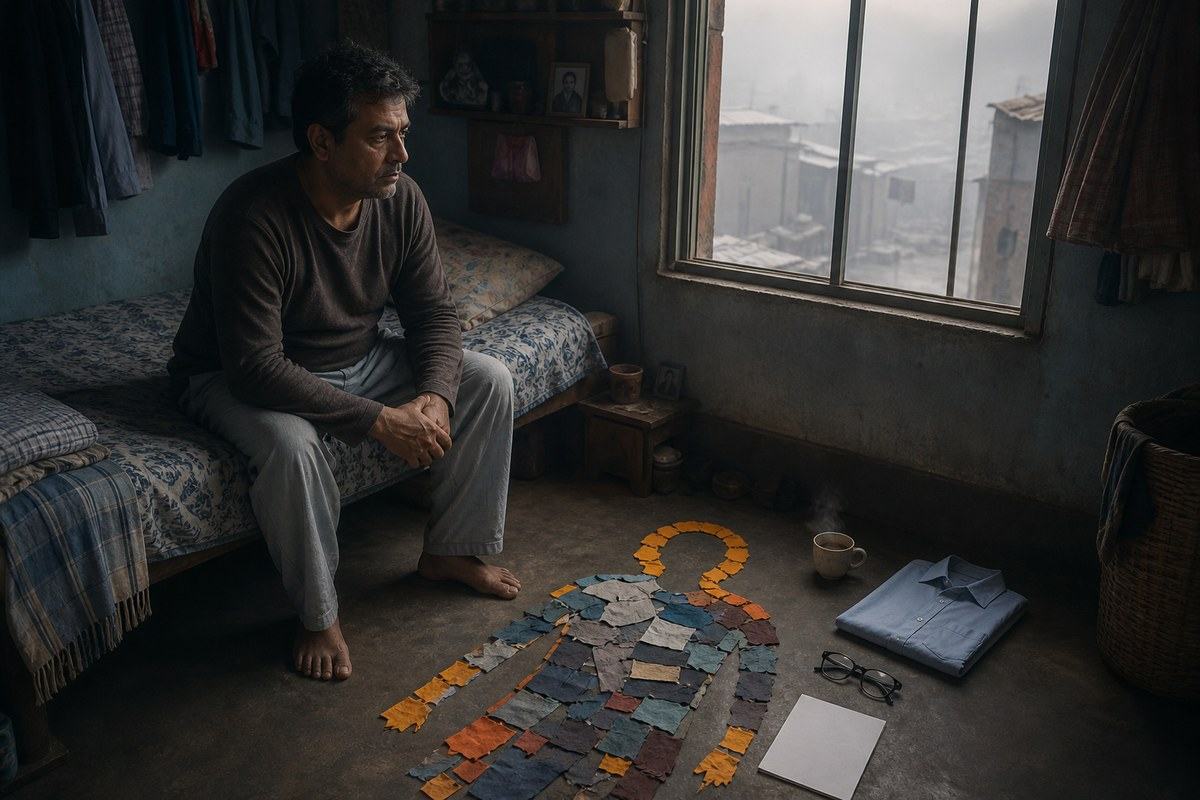
The towel on the chair has entered that dangerous middle period of life when nothing is definitely one thing or another. Not wet. Not dry. Not clean. Not condemned. Just hanging there with the damp personality of a failed uncle who once had plans involving a small business, a scooter, and respect from relatives.
The room smells of old tea, belly acid, electrical dust, and that faint human salt which comes off a man who has been alone too long. After a certain point solitude is not a condition. It is weather. You do not live in it. You become it.
This is where the fraud begins.
People say solitude makes you wise.
Naturally they say this from balconies.
They say it with lampshades, bookshelves, polished floors, and enough money in the bank to confuse silence with depth. Their solitude has cushions. My solitude has a clicking fan, reheated rice, one towel with unresolved moisture, and a plastic chair that has seen enough of my life to qualify as a hostile witness.
Real solitude does not make you wise. It makes you specific.
That sounds better than it is.
It forces you to become yourself in the same way a dentist forces a steel instrument into a molar and says, “Little pressure,” when he means, “Now we shall excavate your private coal mine of pain.”
You think becoming yourself will feel noble. Like a philosopher in a painting. Like a monk on a hill. Like one of those men in motivational videos who looks meaningfully at the sea although he probably has three credit cards and excellent digestion.
No.
Becoming yourself can be a punishment.
Because once the crowd leaves, once employers, friends, relatives, lovers, classmates, enemies, office scoundrels, polite parasites, accidental acquaintances, and WhatsApp ghosts withdraw into their own little glowing rectangles, you are not left with peace.
You are left with the unpaid bill of having been alive.
Then the past arrives.
Not with violins. Not with sepia light. Not with Tagore floating in through the window like a polite cloud.
It arrives like sewer gas through a cracked drain.
A face. A corridor. A railway platform. A sentence someone said twenty-five years ago and forgot by lunchtime, while you, the unfortunate museum curator of your own humiliation, preserved it in memory like a diseased organ in a medical college jar.
There are people who hurt you. That is one category.
There are people who used you. Another category.
But the truly strange ones are the people who misplaced you.
That is the word.
They did not hate you properly. They did not understand you wrongly with energy and commitment. They simply filed you under the wrong department.
Bright boy.
Difficult man.
Arrogant fellow.
Overqualified.
Unstable.
Sensitive.
Strange.
Waste.
Each label landed like a municipal stamp on the forehead. Purple ink. Slightly crooked. Official-looking nonsense. Fading over time, yes, but never completely gone. And after enough such stamps, your whole life begins to resemble a passport full of countries you never properly entered.
This is the small cruelty of being seen badly.
Not unseen. That would almost be cleaner.
Seen badly.
Like a shirt folded in the wrong cupboard. Like a name misspelled on an admit card. Like your father’s old laminated certificates, kept in a plastic folder as if lamination could bully destiny into behaving.
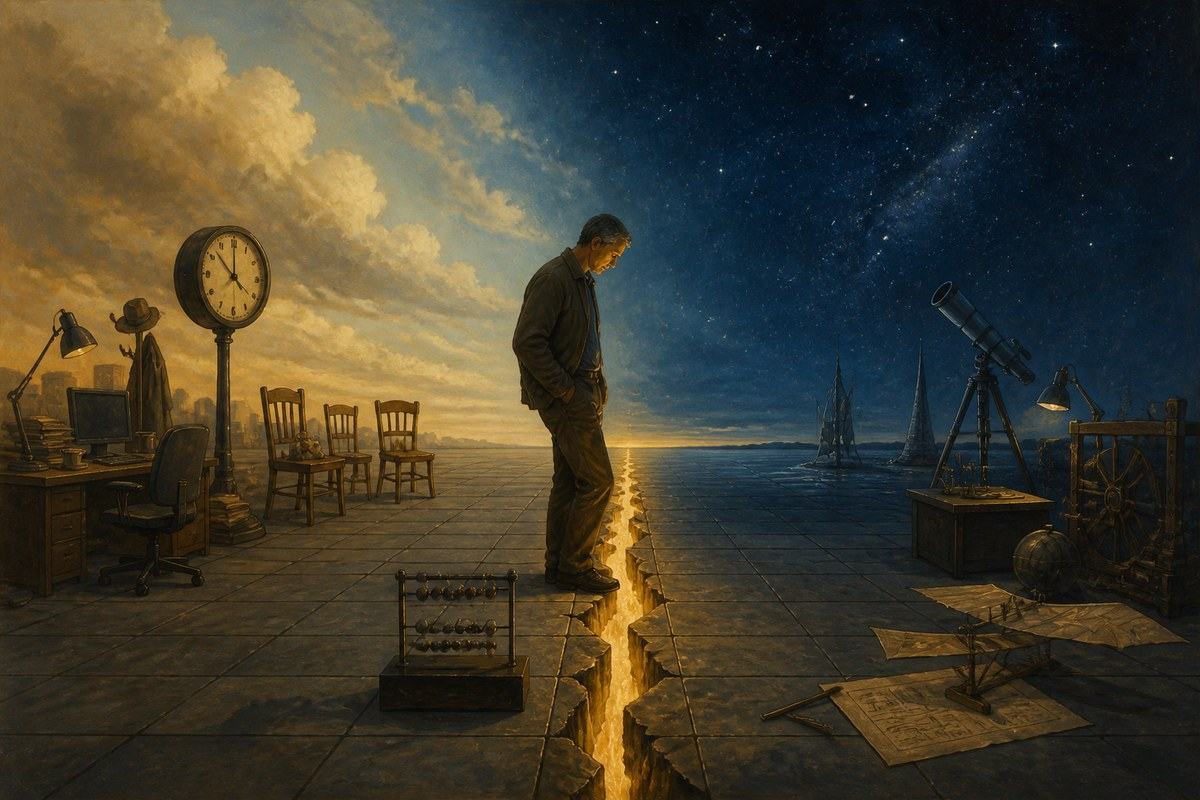
Life has crossings, and we have made them too poetic. We talk as if time is a river and we are pilgrims with brass pots and meaningful eyes.
Rubbish.
Many crossings are badly lit intersections where you did not know which bus to take. By the time you looked up, the bus had gone, the conductor had spat red paan into history, and the road had rearranged itself without asking your permission.
A college gate.
An airport.
A marriage.
A return ticket.
A job you should have left.
A job you should have kept.
A country that made sense until it did not.
A country that was home until it became an expensive insult with mosquitoes.
At twenty-three, the future is a map.
At fifty-one, the future is a medical report with several terms underlined.
That is the part nobody tells you. At twenty-three even failure has perfume. It leans against a wall and says, come, fool, ruin yourself magnificently. At fifty-one failure wears a faded nightie and asks whether the gas cylinder is empty.
And solitude, that unpaid professor, makes you study the full syllabus.
Memory makes this worse because memory is a liar with good handwriting.
People think memory is a photo album. It is not. Memory is reconstruction. The brain rebuilds the past every time you recall it. A little truth. A little fear. A little present-day misery mixed in. Like a contractor repairing the same road before every election: some cement, much sand, and by next monsoon the pothole has returned with political confidence.
So when I remember a person who misunderstood me, am I remembering that person? Or am I remembering the version of that person my present loneliness has hired as a witness?
Good question.
Also useless.
The chest does not care for philosophy when it tightens. The body is a crude philosopher. It says: this hurt. This still hurts. Kindly stop lecturing and pass the antacid.
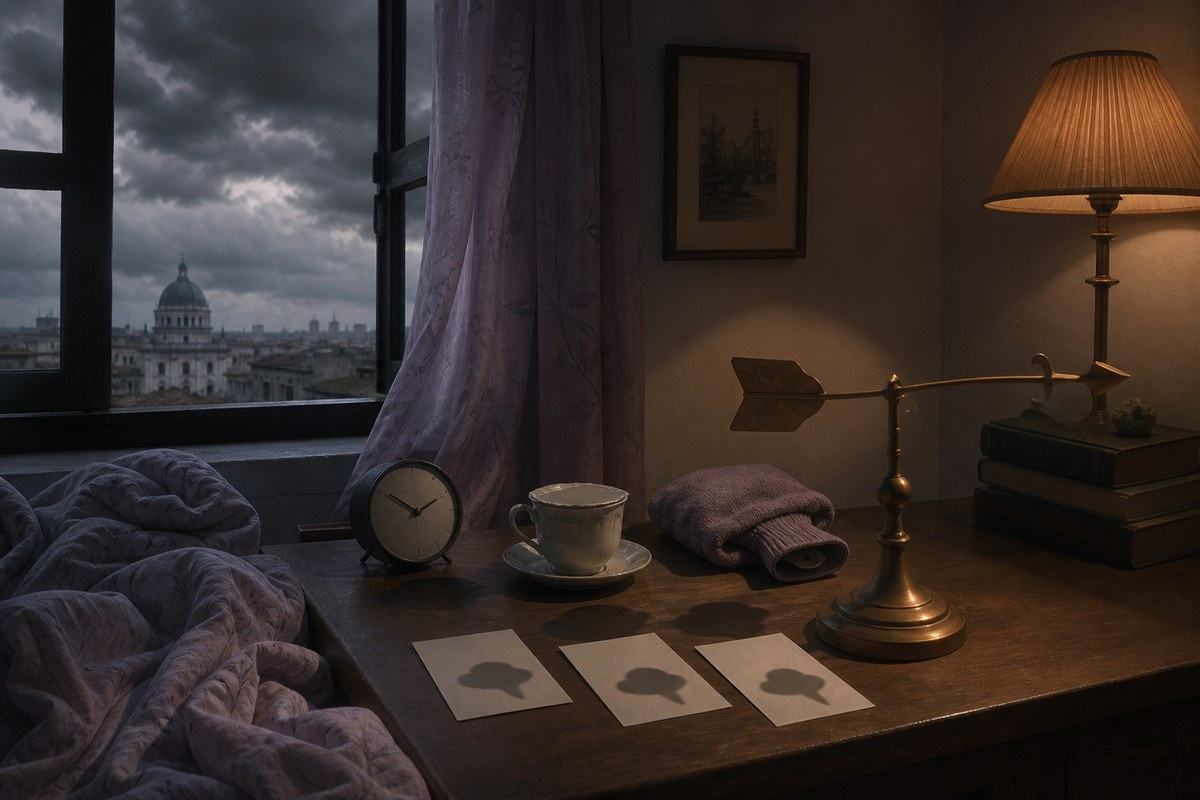
Some afternoons the fog of future tense comes early.
Not evening fog. Not romantic fog. No Darjeeling postcard business. This is the fog that appears inside the head while the afternoon light lies across the floor like a tired yellow dog.
Suddenly life is no longer now.
It is all “will.”
I will pay.
I will age.
I will decline.
I will manage.
I will fail.
I will become less visible.
I will disappear into a grammatical swamp where every verb has postponed its own funeral.
Future tense is fog because it gives shape without detail. You know something is coming, but not what. Illness? Debt? Another lonely year? Another ridiculous humiliation involving documents, passwords, online forms, and an OTP that arrives after the session has expired?
This is modern civilization now. A grand machine that can send rockets to the Moon but cannot let a middle-aged man reset a password without making him feel like a petty criminal at a border checkpoint.
Meanwhile the news keeps arriving. Heat alerts. Market crashes. Wars explained by people with excellent teeth. Politicians shouting. Experts nodding. Anchors behaving as if civilization will collapse unless they interrupt each other immediately. Outside my window, someone is still bargaining over fish. Somewhere a scooter is coughing itself toward destiny. Somewhere a boy is studying for an exam that will sort him into hope, compromise, or private tuition.
And I am in my room, thinking about a road I cannot take again.
This is the obscenity.
Not that the past was beautiful. Much of it was terrible. It smelled of petrol, ambition, sweat, stale bread, fear, and people pretending to be competent.
But it was open.
That was its vulgar charm.
A closed road becomes beautiful by cheating. It waits until you can no longer walk on it, then puts on lipstick.
The lonely man starts to notice this. Too much, perhaps. He begins to separate from the collective drama. People say nation, family, society, success, culture, spirituality, masculinity, progress. He hears plumbing noises.
Not because he is superior.
That would be a convenient vanity, and I am trying not to lie.
He is not superior. He is allergic.
And allergy is not grandeur. It is sneezing.
Once you sit too long with yourself, you see the backstage ropes. The paint on the gods. The cheap plywood of public importance. The little deals behind big speeches. The moral posturing. The family love with accounting software hidden inside it. The career advice from men who inherited chairs and now lecture you on posture.
After that, rejoining the parade becomes difficult.
Society wants a man with handles.
Husband-handle.
Employee-handle.
Taxpayer-handle.
Cheerful-neighbor-handle.
Elder-son-handle.
Believer-handle.
Consumer-handle.
Useful-fellow-handle.
But solitude melts the handles off you. You become a smooth, damp, inconvenient object. People try to pick you up and their fingers slip.
Then they call you difficult.
Yes. Because I have become non-stick cookware in a world of oily hands.
Sometimes I think of the people who passed through my life and failed to see me, and then I immediately feel ashamed for needing to have been seen. What a pathetic mammalian requirement. Recognition. Approval. One decent witness.
Even bacteria manage the matter with more dignity. They release signals, count the crowd, and decide whether to glow, swarm, form a film, or invade something. Humans do the same thing with replies, salaries, invitations, glances, compliments, and the number of people who notice when we are missing.
The verdict comes quietly.
Not enough signal.
No glow.
No swarm.
Only hardening.
But even hardening is not heroic. It is not armour. It is more like leftover rice in a steel bowl.
The past becomes crowded because the present is empty. That is the trick. When life is active, memory behaves. It sits in the back like an old aunt chewing fennel. When life stops, memory pulls up a chair, gets comfortable, and begins loudly discussing everything you did wrong.
And what did I do wrong?
Plenty.
Also nothing.
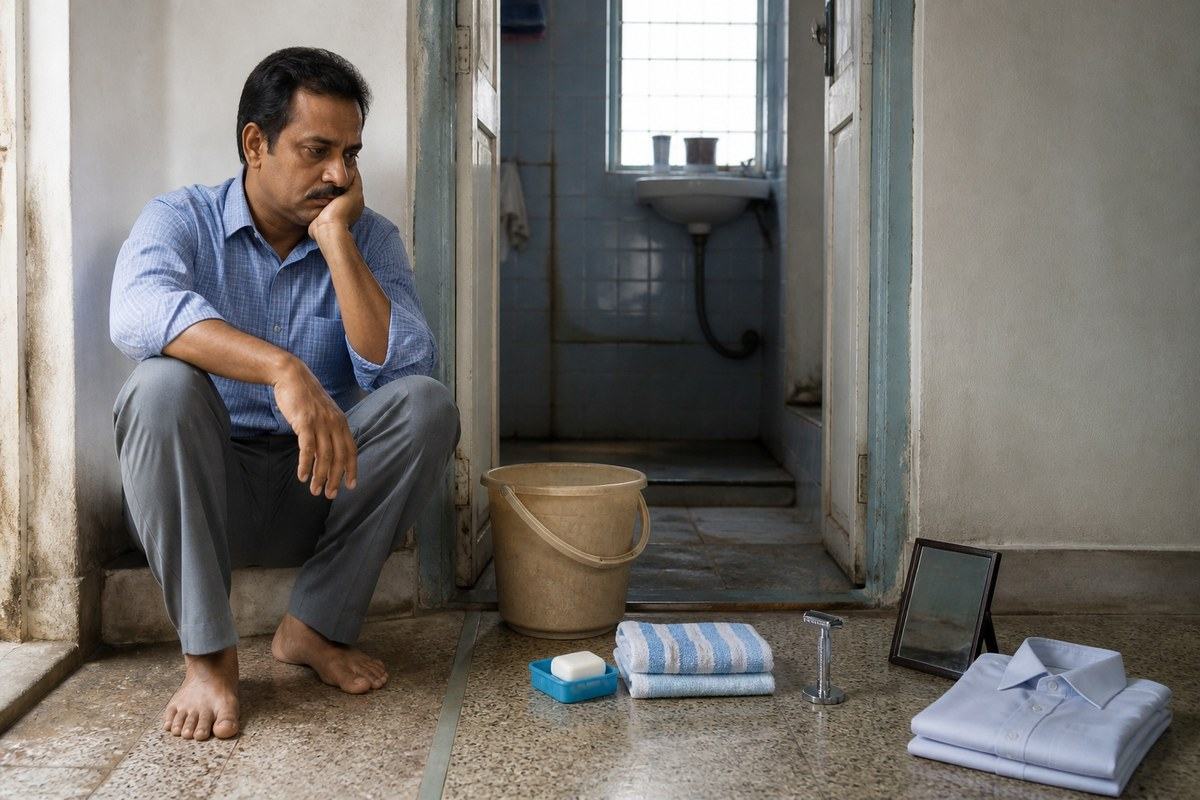
That is the problem with a life. It refuses clean accounting. Every failure has five fathers, three mothers, a weather system, a class structure, a bad mood, a wrong train, an untreated illness, a foolish hope, and some personal cowardice wearing a clean shirt.
I cannot blame everyone.
I cannot absolve myself.
So the mind circles like a fly over a sweet shop drain.
Then, annoyingly, tenderness appears.
This is the most indecent part. Bitterness should at least have the courtesy to finish the job. But no. A sudden memory comes. Someone’s handwriting. Someone laughing in a doorway. Someone saying my name before the name became heavy. The smell of books. Rain on tin. A road near school. A face once turning toward me without calculation.
And the chest softens like a cheap biscuit dipped too long in tea.
How irritating.
Even the ruined man is porous.
Even the aging, suspicious, half-broke Bengali goblin in his small room is not entirely stone. There are leaks. Little betrayals of softness. A song from another flat. A pressure cooker whistle. The first smell of rain. Tea in a chipped cup. The old Calcutta miracle of a crow looking at you as if it knows your balance sheet and is not impressed.
Then gone.
Fog.
Future tense.
The path cannot be taken back because time is not a road. Time is digestion. It takes everything in, extracts what it can, produces energy, memory, regret, and finally waste. This is the grand metaphysics respectable people avoid because respectable people are cowards about ordinary biology.
Life eats the crossings.
Life produces a man.
And the man sits in his room, individuated beyond usefulness, looking at the towel on the chair, wondering whether tomorrow he will become slightly more himself or merely less recoverable.
Outside, people are going places. Scooters, buses, offices, markets, marriages, airports, coaching centres, medicine shops, bright little stores selling plastic happiness under LED light.
Inside, I stand up to make tea and forget why I stood up.
This is not enlightenment.
But it is brief.
Word Cloud
Related reading
Selected by shared topics and section, with closer publication dates breaking ties.