A Trapezoid in Low Light
Uses the speech voice supplied by your browser or device.

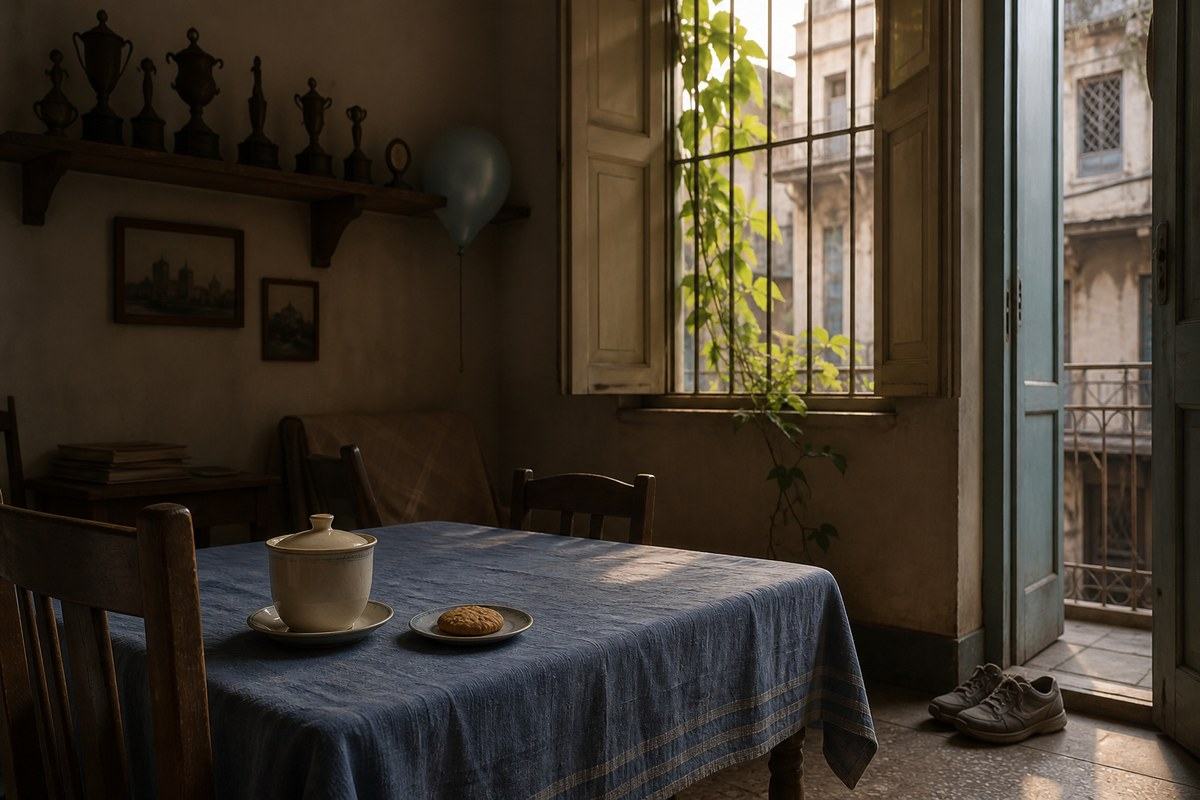
The tea had grown a thin brown skin on top.
I sat looking at it and wondering which version of the day could be safely spoken. The real one had damp cloth, crooked geometry, a room that smelled faintly of old water, and several sentences sharp enough to cut someone who had only asked how things were.
So I softened it.
This is not always dishonesty. Sometimes it is household engineering.
A broken railing becomes a little loose. A bad day becomes a slow day. The room is not impossible, only difficult. The future is not missing, only unclear. A trapezoid is presented as a rectangle in low light because the person receiving the report does not need every angle measured.
Geometry helps because it is strict without being cruel.
A rectangle has four right angles. It looks respectable, organized, properly filed. A trapezoid is not ruined. It simply has one pair of sides still disciplined while the others have begun negotiating with gravity. That is its uncomfortable beauty. It is close enough to order to make pretending possible.
Many lives are trapezoids.
Mine often is.
The danger is pretending too well. If the shape is always called a rectangle, repair never begins. But if the full crookedness is displayed every time, the room becomes uninhabitable for anyone who cares from a distance.
So one edits.
Not to deceive completely. To reduce the blast radius.
Outside, Calcutta continues its practical indifference: wires, tea, drains, voices, price arguments, afternoon heat pressing against the glass.
Inside, the tea skin folds near the rim.
The rectangle is ready for inspection, provided nobody brings a ruler.
Word Cloud
Related reading
Selected by shared topics and section, with closer publication dates breaking ties.