The Curriculum Vitae of a Vanishing Man
Uses the speech voice supplied by your browser or device.

The emulsion has begun to weep, or perhaps that is merely the gelatin shedding its collagenous tears in sympathy with the viewer—this annaprashan photograph from the late seventies, that chemical marriage of silver halide and cellulose holding hostage a moment when a woman with spectacles thick as the portholes on a Soviet submarine gripped my ribcage with the administrative severity of a customs officer inspecting contraband consciousness; I dangled there, swaddled in checkered cotton that itched like a moral lesson, eyes swiveling toward the nearest exit with the alert suspicion of a rodent who has just intuited that the trap and the ceremony are the same theological event, while behind us the wall exhaled its plaster dandruff and a severed limb of some unidentifiable relative flopped over the frame’s edge like a sausage link abandoned by a distracted butcher, and the whole scene reeked, even then, of naphthalene and the fungal ambition of monsoon cupboards, that particular scent of preservation and surrender that clings to all objects stored in the dark by people who believe that saving things is the same as saving time.
Decay is honest.
Which is more than can be said for the etymology of “nostalgia,” that Greek compound of nostos (return) and algos (pain), a word that essentially translates to “the agony of going back,” and what is a photograph if not a technology of precisely that agony, a little paper guillotine that severs the present from its own neck every time you look at it, leaving the head to roll into the lap of memory while the body stumbles on, bleeding out in real time; and I have been bleeding out for fifty-one years, not dramatically, not in the manner of a tragic hero on a Kolkata stage with greasepaint and synthesized thunder, but in the manner of a slow leak, a tire punctured by the microscopic debris of ordinary afternoons, a gradual deflation that has left me flatter than the dosa at a cheap Park Street eatery, pressed against the griddle of my own mediocrity with the steam of my diminishing expectations rising like the last prayer of a man who has forgotten the words but continues to move his lips out of bureaucratic habit.
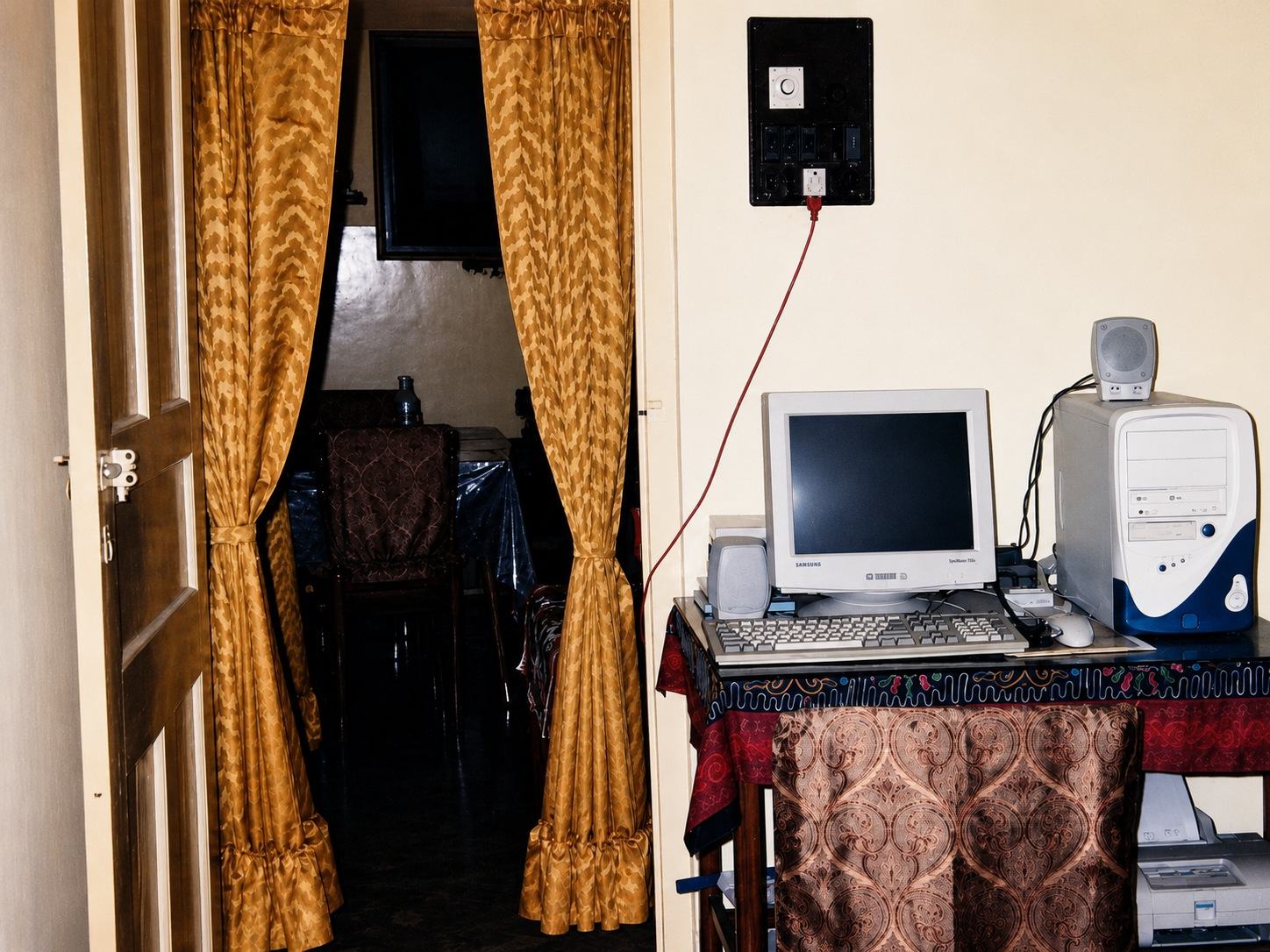
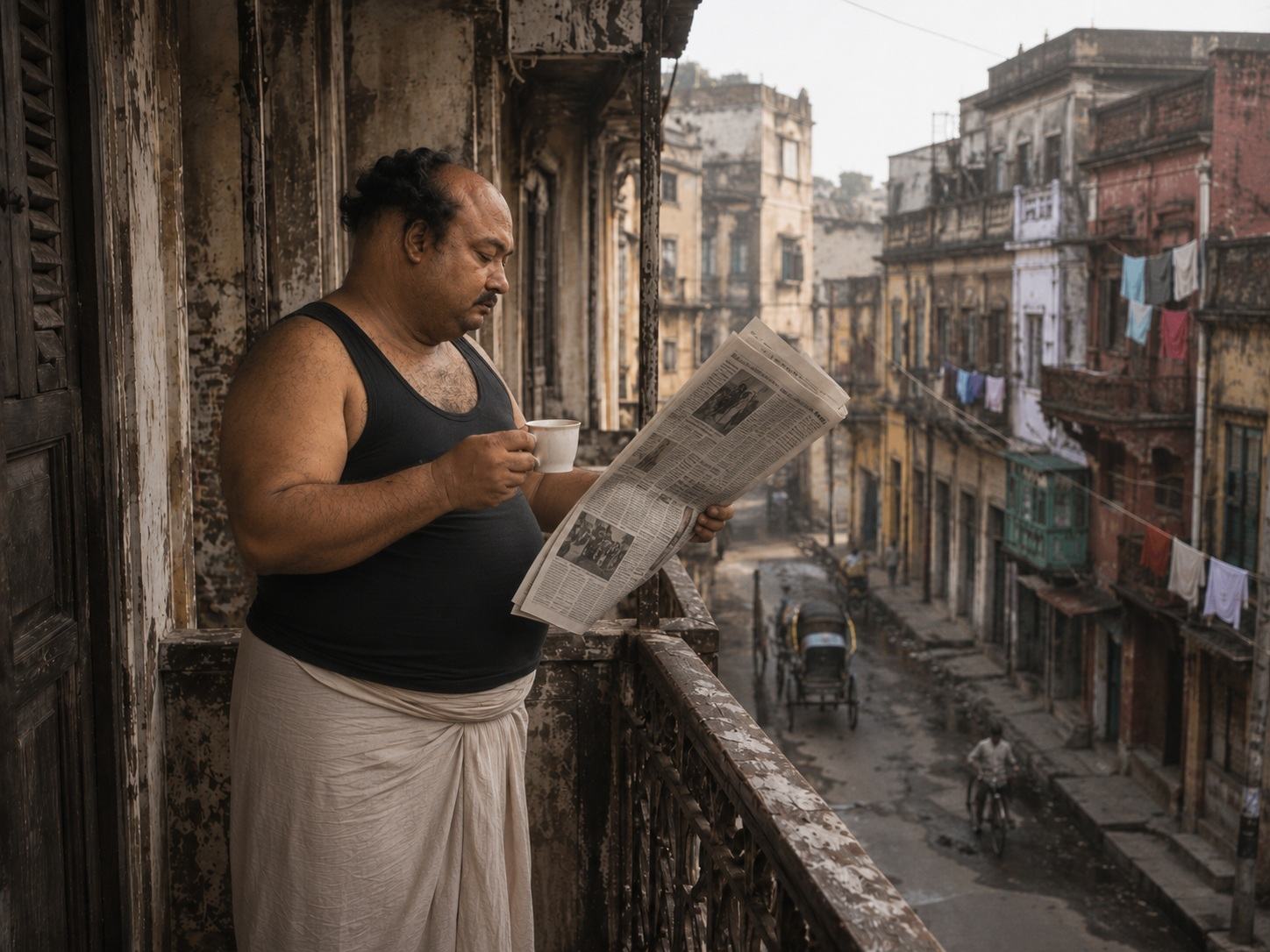
Calcutta, of course, is the only city that could have produced me, because Calcutta is the only metropolis that has mastered the art of decay without surrender, the way a paan-stained wall in Shyambazar masters the art of holding up a four-story building despite its own structural despair; the city is a metaphor for my nervous system, a grid of short circuits and unexpected illuminations, where the power fluctuates with the same bipolar irregularity as my serotonin levels, where the trams screech down Chowringhee like they are being disemboweled by their own tracks, where the intellectuals discuss the end of history over tea that tastes of chlorine and colonial regret, and where the humidity is so thick during the months of Jyaistha and Ashad that you could spread it on toast like preserves of existential dread, which is, incidentally, the only preserves I have accumulated—jars of unfulfilled intent, pickled in the vinegar of self-awareness, lined up on the shelf of a kitchen I do not own, in a flat I cannot afford to leave, in a neighborhood that has forgotten my name with the polite efficiency of a bureaucrat stamping a rejected visa application.
But the heat, the heat deserves its own paragraph, its own inquest, its own memorial service; it is not merely meteorological, it is ontological, a damp woolen blanket dropped over the city by a deity with a grudge and a subscription to a weather app he does not know how to use, and under this blanket every ambition ferments, every plan putrefies, every intention sprouts the mold of procrastination, and I have learned to move through it with the lethargic wisdom of the gecko on my ceiling, that cold-blooded Cartesian who has reduced existence to the consumption of insects and the avoidance of sudden movement, a philosophy I have adopted with the fervor of a convert, because to be still, to be stagnant, to be a puddle rather than a river, is the only rebellion available to the man who has failed to inscribe his name upon the ledger of notable sufferings, who has not invented an app, who has not disrupted the sanitary napkin industry, who has not given a motivational address about the mindfulness of defecation to an audience of glassy-eyed aspirants wearing fitness trackers on their wrists and emptiness in their thoracic cavities.
Oh, the LinkedIn grotesques.
Those dental advertisements in human form, with their teeth bleached to the luminescence of radioactive urinal cakes, their profiles swollen with verbs like “leverage” and “synergize” and “passionate about delivering excellence,” which is corporate English for “I have successfully converted my soul into a PowerPoint transition effect,” and every morning they post their gratitude for the grind, their worship of the hustle, their solemn testimony that four ante meridiem wakefulness and cold showers have transfigured their colons into engines of capitalist prophecy, while I, at fifty-one, wake at a democratically reasonable hour and contemplate the architecture of my failure with the same morbid attentiveness that a pathologist applies to a particularly advanced case of hepatic cirrhosis, rest his pickled soul; and I watch them from the cheap seats, from the peanut gallery of the unaccomplished, where the view is unobstructed and the concessions are closed, where the only refreshment is the bitter sherbet of recognition that I was never even in the running, that the race was fixed by fetuses with better connections, that my annaprashan rice was probably stale before it touched my tongue, that the photograph was always evidence for a prosecution that has now rested its case, and the judge is a mirror, and the sentence is life without the possibility of parole, promotion, or profitable podcasting.
Failure, though—that word requires a taxonomical audit. It comes from the Old French faillir, to be lacking, to miss, to disappoint, which shares a root with the Latin fallere, to deceive—and here is the etymological gag, the pun that the universe has been smirking about behind my back for five decades: to fail is not merely to fall short, it is to be deceived, and the deceiver is oneself, a con job perpetrated by a child who once believed that the rice was an inauguration rather than a last meal, who thought that being held upright by a woman in thick glasses was a promise of verticality in all things, who imagined that the camera’s click was the sound of a door opening rather than a lid closing, and now that child has metastasized into this middle-aged lump of calcified ambition, this walking petition for anonymity, this biological footnote sweating through his banian in a summer that feels less like weather and more like atmospheric vengeance administered by a middle-manager deity with a spreadsheet and a grudge and a tiny erection that he calls his vision board.
Consider, if your stomach has not yet turned to the consistency of week-old dal left in a cracked tiffin carrier, the second law of thermodynamics, that cheerful decree that entropy always increases, that disorder is the only genuine democracy, and apply it not to gases in a sealed chamber but to human aspiration: every dream, upon contact with reality, undergoes an irreversible expansion into chaos, a dissipation of energy, a heat death of the soul, and my soul, if I may be permitted the anachronism of claiming possession of such an entity, has achieved a state of thermal equilibrium with the universe, a perfect lukewarmth, a mediocrity so complete that it borders on the mystical, because to be thoroughly, exhaustively, operatically ordinary in an age that demands exceptionalism as the entry fee for human dignity is, in its own perverse way, a kind of radicalism, a refusal, a sit-in protest staged by a man sitting alone in a rented room, listening to the neighbor’s television sermonize about real estate while the gecko watches from the ceiling with the cold, prehistoric patience of something that has already solved the problem of existence by reducing it to insect consumption and stillness.
I have not solved it.
Instead, I have become a curator of minutiae, a librarian of the inconsequential who cannot recall the password to his own bank account, a man who can describe the tactile theology of the terracotta tiles on a long-demolished verandah in Bhowanipore but who flinches when the smartphone demands his biometric submission, as if my fingerprint could unlock anything more valuable than my own continued obsolescence; and speaking of obsolescence, have you observed how the algorithms now compose sonnets? Not good sonnets, mind you—verses with the emotional depth of a refrigerator manual translated into Sanskrit by a chatbot that has never experienced heartbreak or humidity or the particular grief of watching your city drown in its own effluent while the government tweets about smart cities—but sonnets nonetheless, and the middle managers of the world, those testicular typhoons in ergonomic chairs, are already using them to compose both their wedding vows and their termination notices with equal algorithmic sincerity, while I sit here, a carbon-based anachronism, clinging to my defective memory like a dysentery patient clinging to a toilet bowl, which is, let us be candid, the only throne I am likely to occupy in this lifetime or the next, unless one counts the molded plastic chair in the corridor of the municipal office where I went to pay a water bill and stayed for three hours because the clerk had vanished into the digestive labyrinth of a lunch break from which no man returns unchanged.
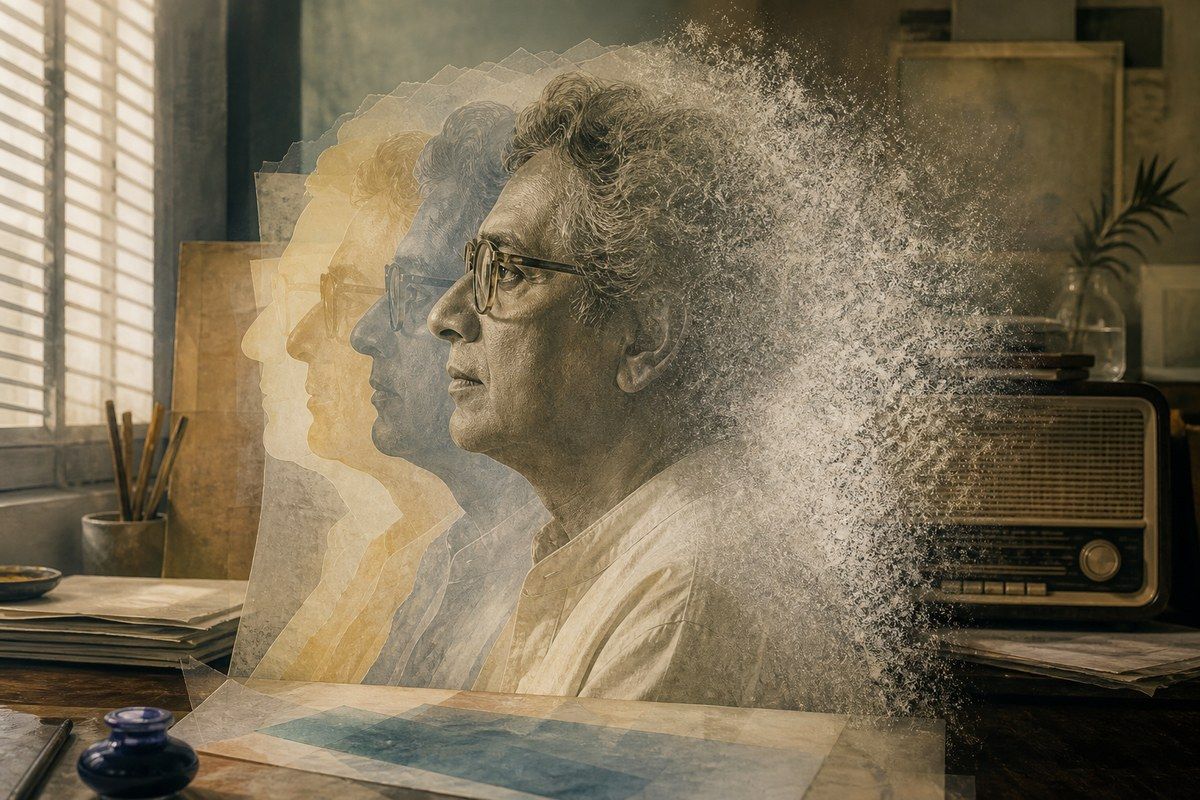
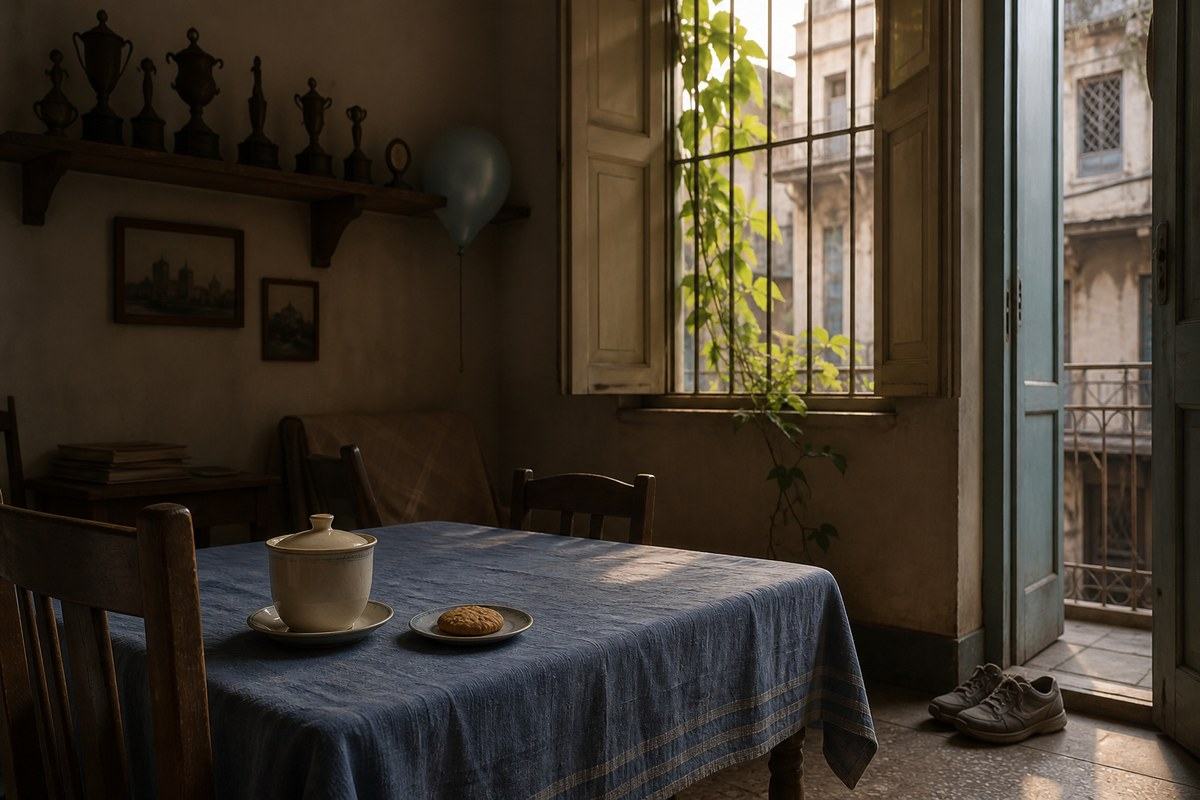
The ordinary man is now classified as effluent, as particulate matter clogging the high-efficiency particulate air filter of progress, and the world has become a LinkedIn profile that updates in real time, a perpetual performance review where even grief must be formatted as a learning opportunity, where bereavement is rebranded as “resilience,” where the death of a parent is merely a “pivot” in one’s entrepreneurial journey, and I watch this from the cheap seats with the same expression I wore in that photograph half a century ago—the look of a small animal who has understood, with the sudden clarity of a gastrointestinal revelation, that the adults are not in charge, that the ceremony is a distraction, that the rice has already been digested and excreted and forgotten by the municipal sewage system, and that the only thing remaining is the photograph itself, yellowing, blotched, slightly bruised by time, a piece of paper that will outlast me, outlast my memories, outlast even the cockroach currently exploring the rim of my empty tea cup with the antennae of a seasoned consultant assessing a failing merger between two companies that never had any business breeding in the first place.
At least the cockroach knows to scatter when the lights come on.
I remain.
Word Cloud
Related reading
Selected by shared topics and section, with closer publication dates breaking ties.