Clay Stoves, Hormuz, and the Price of Breath in Calcutta
Uses the speech voice supplied by your browser or device.

Acronyms used: LPG means Liquefied Petroleum Gas, the bottled cooking fuel many Indian homes depend on. AQI means Air Quality Index, a public number meant to summarize how unhealthy the air is. PM2.5 means fine particulate matter smaller than 2.5 microns, tiny enough to go deep into the lungs and behave there like a thief with excellent manners.
A clay stove is what happens when economics walks into the kitchen wearing dirty slippers.
Many people in the West, and a surprising number of people in India who now live in apartment towers named after European flowers, may not know this: in Calcutta, and in the villages beyond it, cooking is not always done on a shining gas burner with a blue flame behaving like a disciplined schoolboy. Quite often it is done on a little stove made from clay, mud, ash, and resignation.
You feed it sticks. Leaves. Old cardboard. Paper. Coconut fronds. Bits of broken furniture. A newspaper that yesterday carried the fate of the nation and today is being asked to boil rice. In Bengal, this is not considered irony. This is Tuesday.
The stove sits low, blackened around the mouth, like a tired animal that has eaten smoke all its life and is now returning the favor. The pot goes on top. The fire goes below. The smoke goes everywhere.
This is the part that polite conversations avoid.
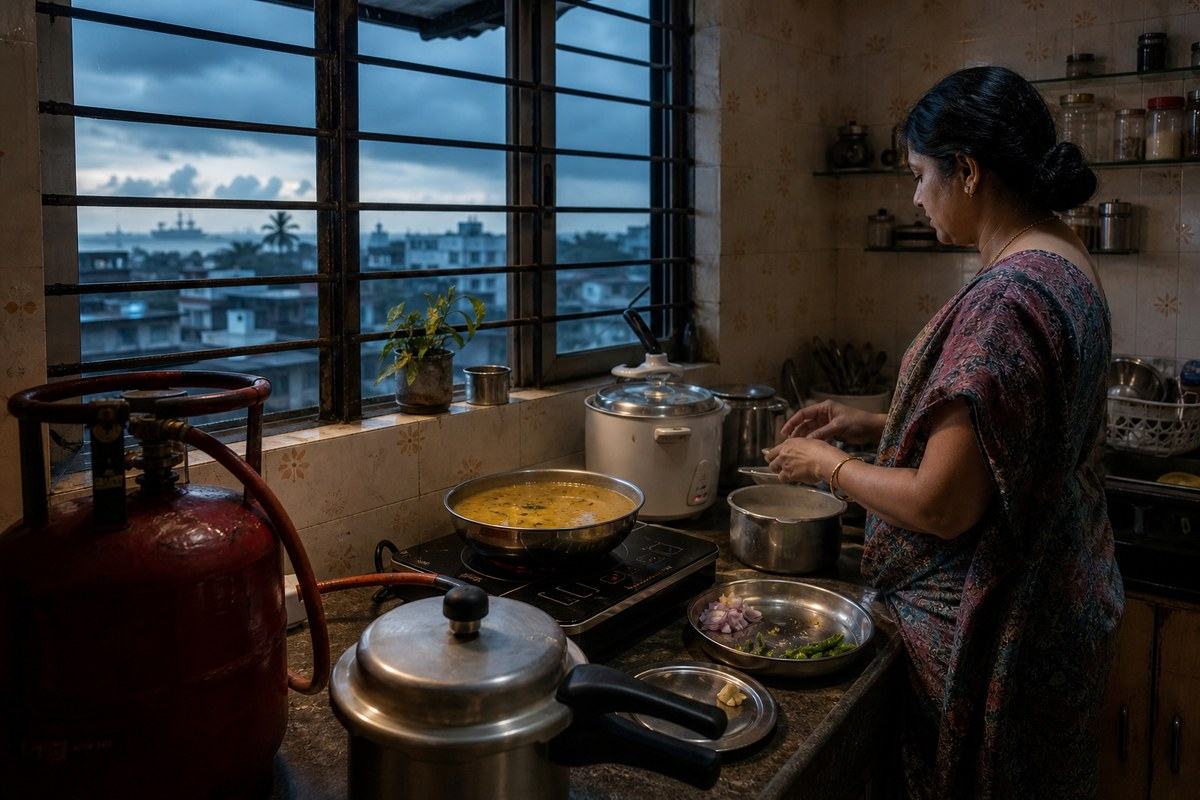
When LPG becomes expensive, poor kitchens travel backward in time. Not romantically. Not like those television travel shows where some cheerful person in linen discovers “authentic rural cooking” and says the smoke gives the food character. Smoke gives food character, yes. It also gives lungs a court case.
Where I live, in the shanty boondocks of Calcutta, the Hormuz crisis is not a map on television. It is not a moving arrow near the Persian Gulf. It is not a panel discussion where three men shout over one woman and nobody learns geography. It arrives as the price of a cylinder.
Then it becomes a rumor.
Then it becomes black market.
Then it becomes, “Dada, gas nei. Thakleo daam beshi.”
No gas. Or gas at a price that looks like it has swallowed a small goat.
So people do what poor people always do. They adjust. This is India’s national operating system. Adjust the budget. Adjust the meal. Adjust the medicine. Adjust the lungs. Adjust the truth until it fits into the cracked cup of the day.
The clay stove returns.
Sticks go in.
Smoke comes out.
And the city inhales.
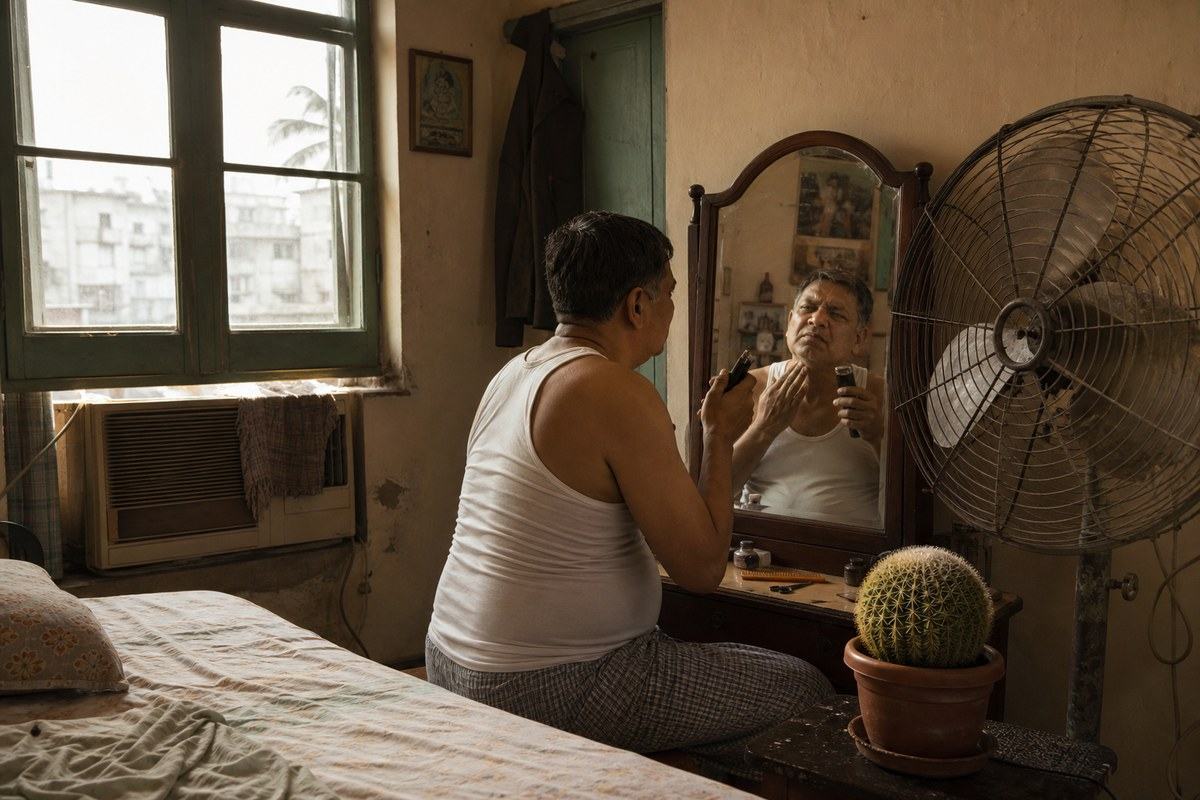
I had pertussis as a child. Whooping cough, as it is commonly called, though the name sounds far too jolly, like a children’s game involving cushions. It was not jolly. My lungs never quite recovered. They have been, all my life, like an old ceiling fan in a rented room: functional, loyal, slightly bent, and capable of making alarming sounds without warning.
In the United States, oddly enough, I breathed better.
That sentence will annoy several kinds of people, so let me put a little mustard oil on it. America is not paradise. Paradise does not send medical bills thick enough to stop a door. But in the places where I lived and worked, the air usually did not enter my room carrying burnt cardboard, damp leaves, diesel soot, construction dust, incense, frying oil, mosquito coil, and the exhausted sigh of a million small fires.
Back in Calcutta, breathing has again become work.
Not exercise.
Work.
You wake up and first negotiate with the air. How bad is it today? Is the throat dry? Is the chest tight? Is that cough from yesterday’s smoke, last night’s humidity, the neighbor burning something mysterious, or the general democratic generosity of the atmosphere, which has decided to share everyone’s combustion with everyone else?
And remember, this is May. Not winter.
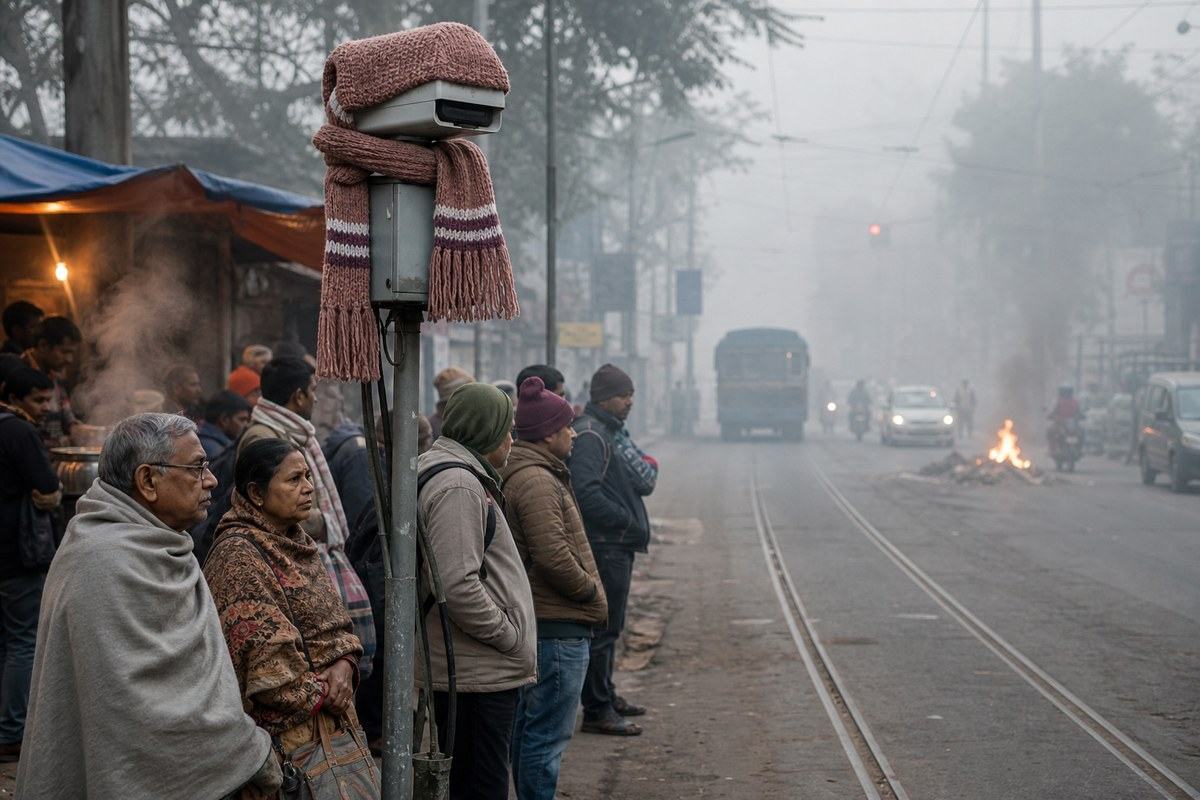
Winter has an excuse. Winter in north India and eastern India behaves like a badly behaved school inspector. It sits low, traps the smoke, refuses ventilation, and makes the entire city feel like it has been stored overnight inside a pressure cooker. But May is supposed to give us some movement. Heat rises. Air stirs. Pollution should at least have the decency to travel.
Instead, the smoke hangs around the lanes like a local party worker before an election: present everywhere, useful to someone, impossible to remove.
There is a little mystery here, and it is not small.
You think air pollution is outside.
Actually, for the poor, air pollution is often inside.
It is not only the road, the bus, the truck, the factory, the flyover, the construction site, the sacred dust of progress. It is the kitchen. It is the courtyard. It is the room where the child studies. It is the corner where the old mother sleeps. It is the curtain. The pillow. The damp wall. The rice pot. The cough waiting quietly after dinner.
AQI is useful, but it has the soul of a bureaucrat. It gives you a number. It cannot tell you the smell of wet cardboard catching fire. It cannot tell you how smoke enters a one-room household and becomes a fifth family member. It cannot tell you how a woman bends over the stove with watering eyes and still knows exactly when the dal is done. It cannot tell you how the poor get blamed for the smoke produced by the poverty they did not design.
That last line is the knot.
Poor people are often accused of polluting their own surroundings. Technically true, in the way it is technically true that a man falling from a roof is responsible for the sound he makes on landing.
The stove produces smoke.
But the stove exists because the cylinder is unaffordable.
The cylinder is unaffordable because fuel markets shudder, subsidies leak, wages do not rise, local supply gets captured, and somebody somewhere discovers that scarcity is a business model. Then we look at the poor household and say, “Why are you burning sticks?”
Because rice does not cook in speeches.
Because hunger does not wait for the Strait of Hormuz to calm down.
Because a mother cannot tell her child, “Eat after global stability returns.”
This is where economics stops being a subject and becomes a smell.
Energy poverty is not only the absence of clean fuel. It is the presence of dirty substitutes. That is the part the air-conditioned mind misses. Poverty is not a blank space. It is crowded. It is full of bad replacements. No gas, so smoke. No doctor, so delay. No air purifier, so cough syrup. No quiet, so endurance. No backup, so improvisation. No savings, so the day itself becomes a loan shark.
And Calcutta, being Calcutta, adds its own seasoning.
A tea stall nearby will still run. Someone will still argue about cricket, elections, Israel, Iran, petrol, school fees, the latest actor’s divorce, and whether the country is going to the dogs or the dogs have already filed a complaint and moved elsewhere. A cow may stand in the lane with the expression of a retired judge. A man will cough, spit, and declare that nothing happened to people in the old days, which is untrue, because many of them simply died without producing a podcast.
I sit there sometimes, or near enough to hear the theatre. Fifty-one years old. Single. Lower middle class in that particularly Indian way where one still owns books but worries about cylinder prices. Educated enough to understand the system. Broke enough to be inside it. Experienced enough to distrust every smooth explanation. Depressed enough on some days to find the act of bathing ambitious. Still curious, unfortunately. Curiosity is a disease with no subsidy.
In another life I worked around American healthcare systems, databases, hospitals, research data, the great humming machinery of organized complexity. There, if a system failed, people at least pretended to ask where the process broke. Here, in daily life, failure is often treated like weather. It happens. Adjust.
But smoke is not weather.
Smoke is policy made visible.
Smoke is geopolitics entering a clay mouth.
Smoke is the poor paying for energy shocks through the lining of their lungs.
PM2.5 does not look impressive. That is its trick. A tiger has the honesty to be large. A cyclone at least announces itself with drama. Fine particles are smaller, sneakier, almost clerical. They enter quietly, settle deeply, and keep records the body cannot erase. Years later, the bill arrives as breathlessness, asthma, infection, heart strain, bad sleep, missed work, school absence, and that small private panic when you realize the room has enough air but your chest refuses to use it properly.
The funny thing is that the clay stove looks ancient, but the problem is modern.
This is not some charming village leftover from a simpler age. This is what happens when modern supply chains fail poor households. A smartphone may sit beside the stove. A QR code may be stuck on the tea shop wall. A boy may watch artificial intelligence videos on a cracked screen while his mother cooks over twigs. Data centers rise, rockets launch, billionaires speak of the future, and someone nearby is tearing cardboard into strips for dinner.
Progress, in India, often arrives like a wedding procession stuck in traffic: lights blazing, music blasting, generator coughing, everyone sweating, no one moving.
Do not misunderstand me. The clay stove has intelligence in it. Human intelligence. Local intelligence. The knowledge of airflow, fuel, pot balance, heat, timing, and scarcity. The hand that builds it knows things no app knows. But intelligence under compulsion is not romance. It is survival wearing soot.
The clean solution is obvious and impossible in the usual Indian way.
Make LPG affordable. Stop leakage. Prevent black marketing. Improve supply reliability. Support cleaner community kitchens. Electrify cooking where the grid can handle it. Improve ventilation. Monitor indoor air, not just roadside air. Treat respiratory vulnerability as a public health priority, not as one man’s personal weakness. Do all of it yesterday.
Simple.
Except nothing is simple when every pipe has a middleman, every subsidy has a queue, every queue has a fixer, every crisis has a profiteer, and every poor household has already spent next month’s money.
So we continue with the small arrangements.
A bit of wood.
A bit of paper.
A match.
A cough.
A pot of rice.
Somewhere on television, a port, a strait, a tanker, a minister, an expert, a missile, a market. Somewhere in the lane, smoke climbs out of a clay stove and looks for lungs.
Mine are available, apparently.
They always have been too polite.
Word Cloud
Related reading
Selected by shared topics and section, with closer publication dates breaking ties.