The New Shop
Uses the speech voice supplied by your browser or device.

THIS IS A WORK OF FICTION
The jute string cut into Anirban Dutta’s palms as he shifted the cardboard box from his right hip to his left, dodging a puddle of rainwater mixed with motor oil on the lane behind the Kalighat tram depot. July in Calcutta did not arrive; it accumulated, layer by layer, until the air itself seemed to sweat. His navy suit, bought for his own wedding in 2003, had gone shiny at the elbows and tight across the waist, but it was the only formal clothing he owned that did not smell of naphthalene and defeat. The two boxes of rosogollas from Naba Krishna Mishtanno Bhandar were heavier than they should have been. The syrup had soaked through the bottom corners, leaving dark petals on his trousers. He did not mind. A stain on his only good trousers was a small tax for saving four hundred rupees.
He had found the shop last Tuesday, walking back from the depot after his shift at Viswakarma Press. It occupied a narrow slice of a lane off Hazra Road, wedged between a shuttered pharmacy and a tailor who specialized in altering old uniforms. The sign was new—red paint still smelling of turpentine—but the interior had the settled gloom of a place that had always been there, waiting to be noticed. The owner was a young man with a burn scar that ran from his left ear to his collarbone. He had offered Anirban a sample from a steel bowl. The rosogolla had been warm, almost body temperature, and so soft it had split against Anirban’s palate without requiring teeth. It had tasted of rosewater and something else, something green and vegetal, like the inside of a cut stem. Anirban had ordered five kilograms on the spot, and the owner had thrown in an extra half-kilogram with a smile that did not reach his good eye.
Now, climbing the steps of the Sarbojanin Marriage Hall in Garia, Anirban could feel the heat rising from the concrete like a fever. The hall was a squat, pink building that had been repainted so many times the corners had grown soft and rounded, like old cheese. A generator chugged behind a hedge of wilting marigold, powering the stage lights against a power cut that had gripped the neighborhood since noon. Inside, the ceiling fans turned with the exhausted slowness of oxen at the end of a ploughing day. Anirban’s mother, Sabitri, sat on a plastic chair near the gift table, fanning herself with a wedding invitation. She was seventy-six, diabetic, and dressed in the white widow’s sari with a red border that she had worn every day since Anirban’s father died in 2011. She looked at the boxes and then at her son’s face.
“New shop,” she said. It was not a question. “I hope you didn’t poison us to save a few rupees, Anirban.” She said it with the teasing cruelty that Bengali mothers use to express love, but Anirban felt the barb settle in his chest. He had wanted Balaram Mullick’s sweets. Balaram’s was tradition. Balaram’s was safe. But Balaram’s was twelve hundred rupees, and Anirban’s account at the United Bank of India held four thousand and thirty-two rupees until the first of August. He was forty-seven, a proofreader for a press that printed textbooks and religious pamphlets, and his wife Mala had died eighteen months ago from a cerebral hemorrhage that had arrived like a thief in the night. He had given her a Disprin and told her to sleep. He had not called the ambulance until morning. Now he paid for his niece’s wedding because his brother, a factory supervisor in Durgapur, had sent only five thousand rupees and a note saying his blood pressure would not survive the journey. Anirban was the maternal uncle. He was expected to be generous. He arranged the sweets on steel plates near the buffet and wiped his hands on his handkerchief.
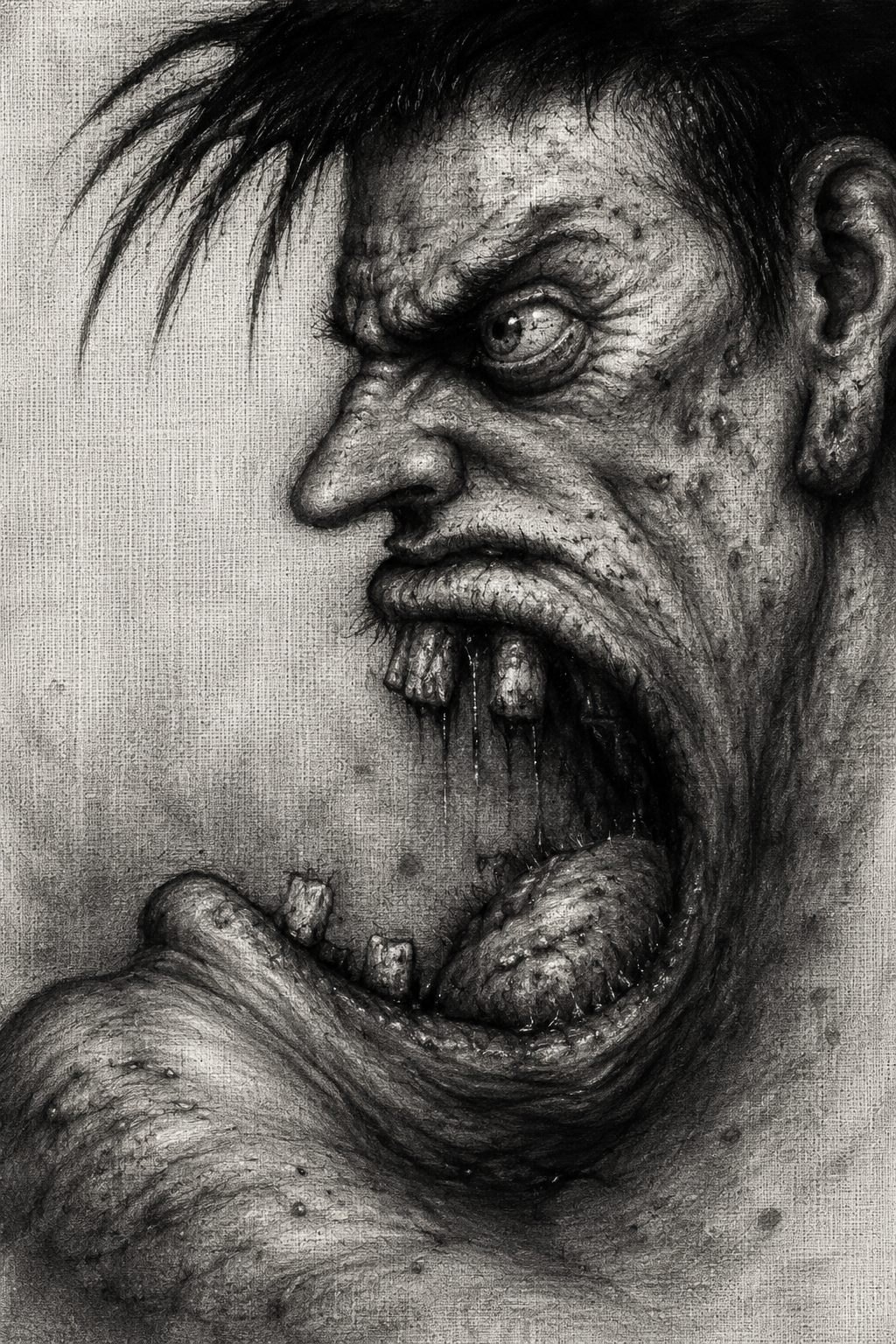
The groom’s party arrived forty minutes late, which was standard, but their leader, Dilip Lahiri, made it feel like a royal inspection. He was the groom’s father’s elder brother, a retired railway officer whose pension had left him with the permanent conviction that the world owed him deference. He wore a silk kurta that shone like petrol on water. He walked through the hall touching the flower arrangements, peering at the caterer’s setup, and commenting loudly on the “modest” venue and the “local” arrangements. Anirban stood near the sweet table and smiled. He had learned to smile like this after Mala’s death—a fixed, polite rictus that held his face together while his thoughts wandered elsewhere. He watched Tiya, his niece, on the stage. She was twenty-four, a bank clerk, and she looked beautiful in a way that made Anirban’s throat ache. She looked like Mala had looked at their wedding in this same hall, twenty years ago, before the walls had begun to sweat and the plaster had started to bloom with fungal roses.
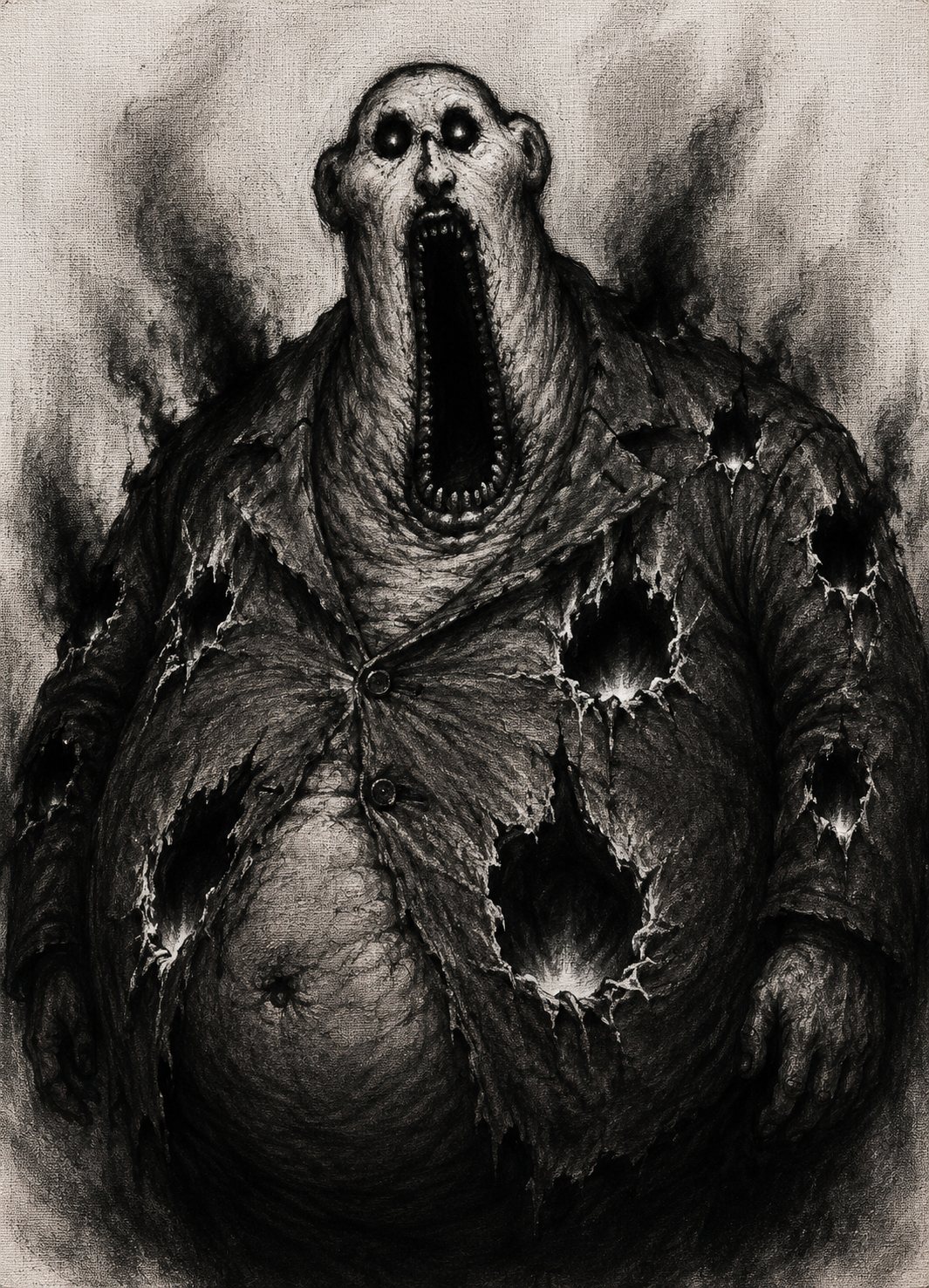
The priest was drunk. The sindoor was applied. The guests applauded. The buffet opened, and the crowd moved with the disciplined hunger of people who had been sitting in humid silence for three hours. Dilip-da headed straight for the sweets. He picked up a rosogolla with two fingers, held it up to the light as if inspecting a diamond, and said, “Well, let us see if the maternal uncle has fed us chalk and sugar.” He popped it into his mouth. He was still chewing, still talking about the groom’s side being “too generous” for such a “simple family,” when his eyes widened. He made a sound that was not a cough and not a scream. His cheeks bulged outward. The white sphere of the sweet was visible between his teeth, but it was growing. It swelled. Translucent, glassy spines, no thicker than fish bones, pushed through his cheeks. Thin, dark tentacles, like the aerial roots of a banyan tree, curled out of his nostrils and ears. His skull made a sound like a wet pumpkin dropped from a height onto a stone step. Blood and syrup sprayed across the white tablecloth. The creature, now the size of a cricket ball, sat in his open mouth, pulsing, covered in gore and chhena. It had tiny, hair-like cilia. It smelled of rosewater and copper. It did not move again. It simply rested there, round and white and finished.
For three seconds, no one screamed. Then the groom vomited onto his new shoes. Tiya fainted into the arms of a cousin. Sabitri stood up, her mouth open. Anirban moved. He grabbed his mother’s wrist and pulled her back from the table. She had been reaching for a sweet. He slapped her hand. The rosogolla fell to the floor. It landed on the marble with a soft splat, and then it moved. It rolled. A single black spine pushed out from its white flesh, then another. It left a sticky trail of syrup and something darker. Anirban looked at the other trays. Guests were still eating. Another wet crack echoed from the direction of the buffet. A young man named Biltu, a distant cousin who worked in a call center, fell sideways into a plate of fish curry. His skull had burst from the inside. The white spheres rolled out onto the floor, serene and bloody.
Anirban grabbed the remaining trays. He ran to the kitchen, a narrow concrete room behind the stage, and dumped the sweets into the sink. He turned on the tap. The water hit the white spheres. They hissed. The spines retracted. They looked like ordinary rosogollas again, soft and innocent, floating in the drain. But Anirban knew. He had seen the inside of Dilip-da’s head. He found a plastic bag and scooped four of the hissing sweets into it. He ran back to the hall. His mother was sitting on her chair, her face grey. Tiya was sobbing. The groom was on his phone, shouting for an ambulance that would not come quickly in this traffic. Anirban knelt in front of his mother. “Did you eat one?” he asked. She shook her head. “I was about to,” she said. “They looked so soft.”
He told her to stay with Tiya. He pushed through the crowd, past the blood and the marigold, and out into the lane. He flagged a taxi. “Hazra Road,” he said. “Ratan Babu Lane. Fast.” The taxi driver, a young man with a beard and the exhausted eyes of someone who had been driving since dawn, did not ask questions. He had smelled the panic on Anirban’s suit. The city slid past the windows—tram wires, tea stalls, cracked balconies, political posters peeling in the humidity, the old Calcutta that refused to become Kolkata. Anirban held the plastic bag on his lap. The sweets inside were warm. They pulsed against his thigh like a second heartbeat.
The shop was closed. The shutter was down, but the paint on the sign was not fresh anymore. It was faded, the red turned to rust. Anirban felt a chill that had nothing to do with the monsoon. He had been here four days ago. The sign had been new. He went around the back. The door was open. He entered. The kitchen was not a kitchen. It was a single room, lit by one bulb that swung on a wire. In the center stood a clay pot the size of a man. It was not clay. It was organic. It breathed. The surface was warm and porous, and it rose and fell with a slow, tidal rhythm. Anirban touched it. It was moist. It smelled of rosewater, coconut oil, and formaldehyde. He knew that smell. Mala had used coconut oil in her hair. The smell had filled their bathroom for twelve years. It had been the last thing he smelled on her pillow.
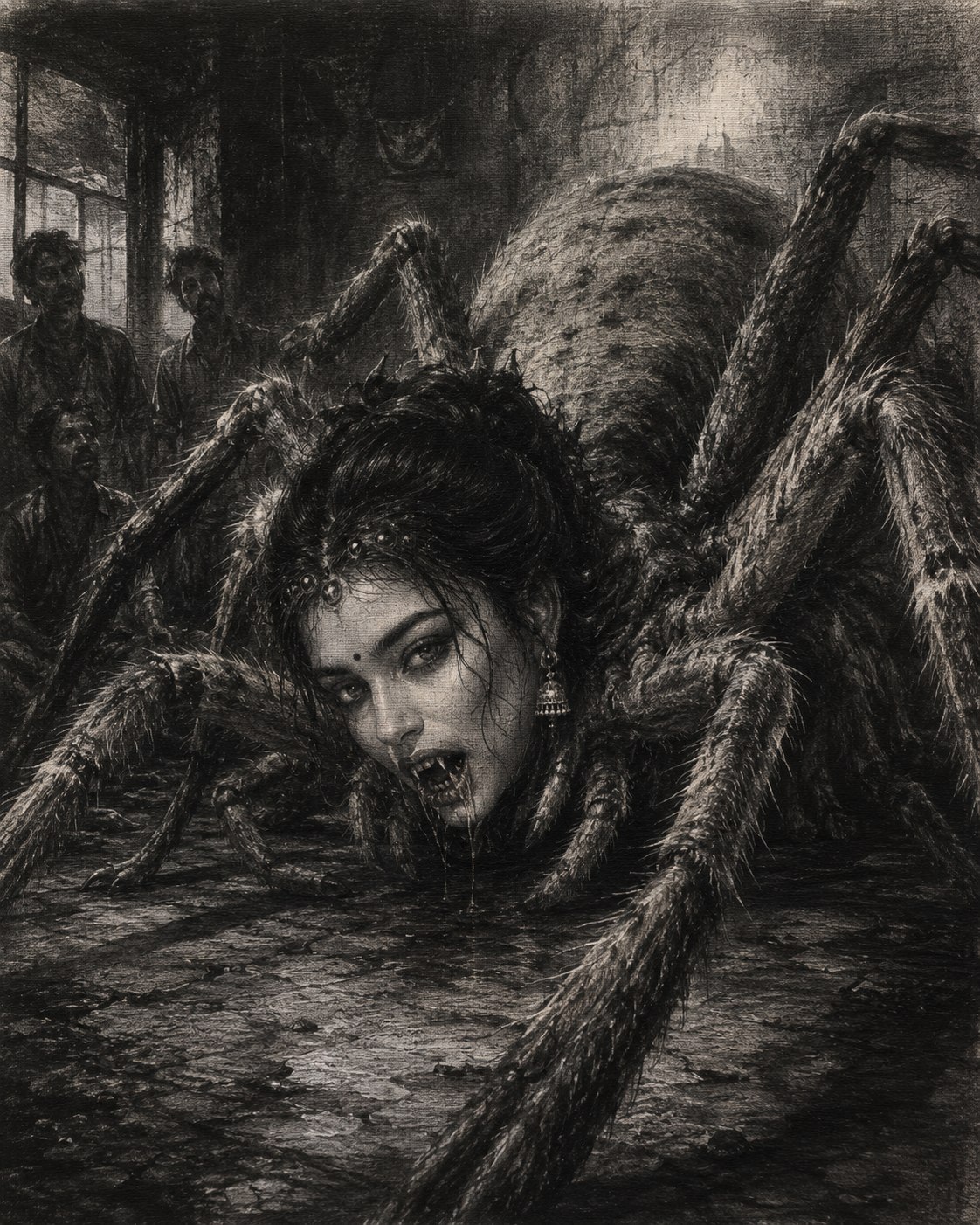
“You came back,” a voice said. The owner stood in the corner. But it was not the young man with the burn scar. This was something wearing the shape of an old man. The skin hung in folds that seemed to move independently. The fingers were too long, and the nails were yellow and thick. The eyes were milky, like the eyes of a fish in a market tank. “Most don’t return the sweets,” it said. “Most run.”
“What are they?” Anirban asked. His voice was steady. He had spent twenty years correcting other people’s grammar. He knew how to keep his voice flat when the world was wrong.
“They are vacancies,” the thing said. “The city is full. Too many heads. Too many headaches. Too much memory pressed into too little space. Calcutta has always been crowded. It has learned to make room.”
Anirban held up the bag. “You killed my wife.”
The thing tilted its head. “Mala came to me. She had a headache that would not stop. She wanted relief. I gave her the first batch. But her head was too full. Too much guilt. Too much love for a man who did not see her pain. The sweet grew. It tried to clear space. It burst. She was my first. Imperfect. The recipe needed work.”
Anirban’s hands shook. He remembered Mala’s last night. She had said she was going to get medicine. He had been tired. He had let her go. He had not asked which pharmacy. He had not offered to walk with her. He had given her a Disprin and turned over.
“I refined it,” the thing said. “The second batch only bursts skulls that are already empty. The ones full of noise and complaint. The ones who consume without tasting. Your uncle-in-law was very loud. He had a lot of empty space. The city filled it.”
Anirban looked at the pot. The surface was translucent in places. Inside, floating in a milky fluid, were white spheres. Shadows moved within them. Faces. He saw Mala. She was not dead. She was suspended. Her eyes were closed. Her hair floated around her like ink. She was the seed. The first mother of the batch.
“She is here,” Anirban said.
“She is everywhere now,” the thing said. “She is the sweetness. She is the room that the city made. You wanted cheap sweets, Anirban-da. The city gives you what you can afford. You brought her to the wedding. You fed her to your family. That is love, in Calcutta. We consume what we miss. We miss what we consume.”
Anirban reached into the pot. The fluid was warm, almost blood temperature. He found the sphere that held Mala’s face. He lifted it out. It was heavier than a rosogolla should be. It pulsed in his palm. He could see her features through the white membrane, blurred but unmistakable. The high cheekbones. The faint line between her eyebrows that had appeared in her thirties. The face he had last seen in the morning light, cold and still.
“You cannot take her,” the thing said. “She belongs to the batch. She is the starter. Without her, the sweets turn sour.”
Anirban did not listen. He put the sphere in his pocket. He turned and walked out. The thing did not follow. It knew, perhaps, that some debts are better paid in silence.
He took a taxi back to the hall. The police had arrived. Two constables were stringing yellow tape across the gate. An ambulance was parked at an angle, its lights flashing uselessly. The groom was sitting on the steps, his head in his hands. Tiya was inside, sedated. Sabitri was still on her plastic chair, looking very small. Anirban sat beside her. He took her hand. It was cold.
“Did you eat one?” he asked again.
She looked at him. Her eyes were milky in the hall light. “Only a half, beta. It was so sweet. I couldn’t finish. I felt something move. I spat it into my handkerchief.”
She opened her palm. In the folds of her white cotton handkerchief lay a half-dissolved white lump. It was still moving. A single black spine pushed out, then retracted, like a worm testing soil.
Anirban took the handkerchief. He wrapped it tight. He would burn it later. He held his mother’s hand and said nothing. The police would blame gas. Or poison. Or bad fish. Calcutta always found an explanation for its holes.
He took the sphere out of his pocket. He looked at it. Mala’s face was clearer now. She seemed to be dreaming. He put it in his mouth. He did not chew. He held it on his tongue. It was warm. It pulsed. It recognized him. It did not burst. It settled. It became a part of him. He swallowed. He felt her headache, her guilt, her love for him. He felt the pressure of her memory, pressed into the small space behind his eyes. Then it passed. He was full. He was the room she had made.
He looked at his mother. She was asleep on his shoulder, her mouth slightly open. In the corner of her lips, he saw a thin white spine, no thicker than a hair, pushing out and then retracting, testing the air. He did not wake her. He simply held her hand and watched the ceiling fan turn, slowly, slowly, moving the humid air of the hall like a hand over a fevered forehead. Outside, Calcutta continued to accumulate. Tomorrow, a new shop would open on another lane. The sweets would be warm. They would be cheap. And the city would make room.
Word Cloud
Related reading
Selected by shared topics and section, with closer publication dates breaking ties.