Bengali Tintin In The Republic Of Garbage
Uses the speech voice supplied by your browser or device.

I have long suffered from a strange artistic itch: to take Tintin, that tidy Belgian boy-reporter with the moral posture of a church candle, and drop him into Calcutta until the starch leaves his shorts.
Not the tourist Calcutta of sepia tramlines, Rabindrasangeet, and elderly men discussing civilization over tea. No. The other one. The Calcutta where the air itself looks as if it has pending litigation. The Calcutta of fish scales, political posters, puja flowers, broken drains, heroic appetite, and garbage heaps with the civic ambition of small hill stations.
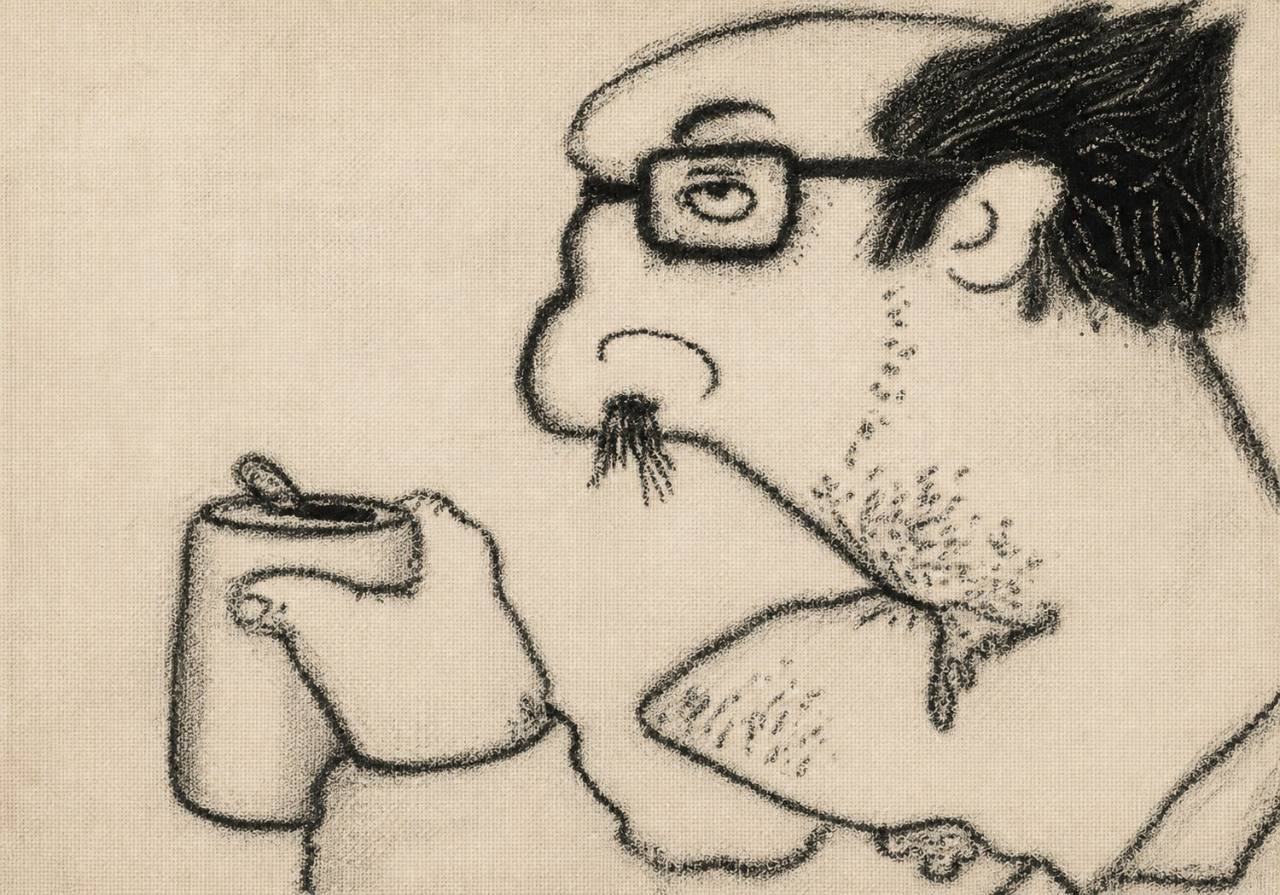
So here he is: Tintin reborn as a Bengali babu. The famous quiff remains, but the boy has acquired a belly of consequence, a respectable post-lunch dome produced by rice, hilsa in mustard gravy, and enough carbohydrate to sedate a committee. He is not exactly ready for adventure. He is ready for a nap, which in Bengal is often the more rational choice.
Snowy, meanwhile, has adapted faster than his master. The dog has abandoned European restraint and is trotting along with a fish clamped in his jaws, looking pleased with himself in the manner of all successful petty criminals. One afternoon in Bengal and even the dog understands supply chains.
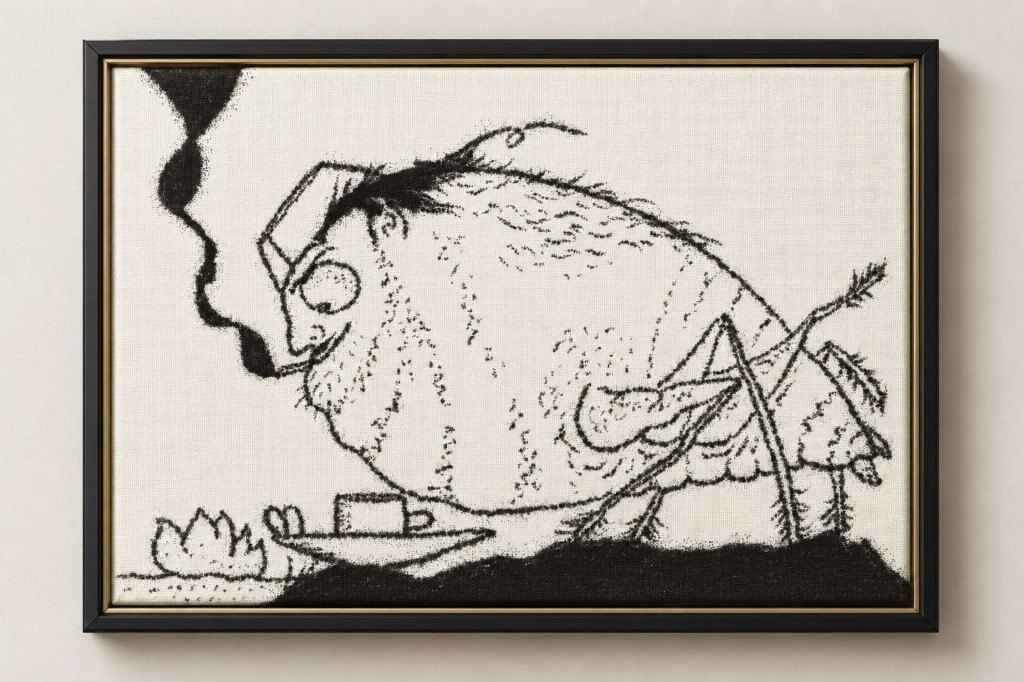
Beside them rises the city’s true monument: garbage. Not a heap, really. A declaration. A municipal sculpture. A damp, democratic arrangement of banana peels, plastic packets, dead flowers, failed promises, and yesterday’s lunch returning to public life. Rats patrol it like local councillors. Crows hold committee meetings. The smell arrives before the philosophy.
And at Tintin’s feet, because Calcutta satire does not believe in half-measures, lies a dead man, tongue out, face arranged in that absurd theatricality by which death sometimes mocks the living. It is grotesque, yes. But so is the city’s talent for placing the sacred and the rotten within touching distance. A heap of puja flowers here, a human body there, and above it all the goddess Kali, loving mother and cosmic executioner, looking as if she has seen this file many times before.
Nearby sits another seasonal bloom: the local bomb. Around elections, these things appear with the reliability of mangoes, though with less charm and more shrapnel. We call it democracy because that sounds better than supervised intimidation with percussion effects. In Bengal, political disagreement has often been treated not as a debate but as a physics experiment: apply force, observe fragments.
Will Bengali Tintin survive this city? Perhaps. He has survived villains, smugglers, dictators, and sea voyages. But Kolkata is not a villain. It is a mood with drainage problems. It does not attack you cleanly. It absorbs you by degrees. First the fish. Then the nap. Then the cynicism. Then one day you are standing beside a garbage heap, adjusting your vest, arguing about politics, and wondering whether the dog has brought enough hilsa for dinner.
That is how the adventure begins.
Not with a clue.
With a smell.
Word Cloud

Related reading
Selected by shared topics and section, with closer publication dates breaking ties.