Jealous of the Stupid
Acronyms used in this post:
PDF: Portable Document Format, a file format that preserves the appearance of a document beautifully while doing nothing about whether anybody reads or implements it.
SMS: Short Message Service, the old mobile text-message format, now mostly used by banks, scammers, delivery boys, and occasionally cosmic aunties.
ICU: Intensive Care Unit, the hospital ward where the body stops negotiating with opinion and demands machinery, oxygen, drugs, and competence.
AI: Artificial Intelligence, software systems that imitate selected parts of human reasoning well enough to amaze managers, annoy writers, and frighten workers.
Uses the speech voice supplied by your browser or device.

The happily stupid man has a shine on his face. Not intelligence. Nothing so dangerous. It is a cheaper shine, an oilier shine, the glow of a fish fry just lifted out of the same black oil in which two generations of telebhaja have already died.
He stands in the para grinning.
Not because life has treated him well. Life treats almost nobody well in Calcutta unless they own land, a nursing home, or a suspicious number of flats. He grins because the world still talks to him in simple sentences. A crow means news. A dream means warning. A twitching eye means money. A WhatsApp forward means research. A YouTube doctor from Nashik means science has finally removed its shoes and entered the drawing room.
And I am jealous.
That is the dirty part.
Not superior. Not amused. Not standing at a balcony of intellect with a cup of tea and a little Nobel Prize of private contempt.
Jealous.
I cannot even enjoy snobbery properly. Even my arrogance is anemic. It comes out holding its chest and asking for Horlicks.
When I see a man say, with total confidence, that lemon water, copper bracelet, Hanuman Chalisa, black salt, and one mysterious powder from a cousin’s friend can cure fatty liver, diabetes, bad marriage, visa rejection, and hair fall, I do not think, poor fellow, he lacks causal reasoning. I do not put on an imaginary lab coat. I do not become Bengali Feynman with gas, spectacles, and an unpaid electricity bill.
I think, look at him.
He still lives in a world where invisible powers are doing home delivery.
For him the universe is not atoms, cells, probability, bacteria, hormones, bad roads, landlord greed, political incentives, inflation, stress, entropy, unpaid bills, and the slow frying of middle-aged hope in June humidity.
For him it is a fair.
A full adult mela, with gods stacked like plastic buckets, planets interfering in job interviews, ghosts standing in bathrooms, ancestors rearranging gas bookings, vastu entering bedrooms with a measuring tape, numerology deciding business names, and every unexplained thing arriving not as a problem to be studied but as a fresh magical pigeon landing on the balcony.
How nice.
How obscene.
How free.
Knowledge is sold to children as liberation. And yes, in a narrow respectable way, it is. A person who understands germs is less likely to drink drain water unless, naturally, he lives in India and the municipal supply has begun conducting a joint venture with sewage. A person who understands statistics is less impressed by one uncle’s miracle cure, though if that uncle owns three diagnostic centers and knows the local councillor, statistics may quietly stand outside the door like a poor relation at a wedding. A person who knows history does not faint when a patriot with paan in his mouth announces that ancient India had aircraft, plastic surgery, nuclear physics, Wi-Fi, and possibly app-based grocery delivery.
Knowledge removes many lies.
Then it does something crueler.
It removes the sweetness of not knowing.
This is not printed on the back cover of education. Schools tell you knowledge will open doors. They do not mention that after some doors open you discover leaking pipes, unpaid taxes, fungus, dead rats, and one man inside saying, actually sir, the file is missing.
Once you learn not only facts but how facts are made, the innocent machine breaks. Mystery becomes temporary ignorance. Wonder becomes a queue. The unknown becomes a locked room, yes, but you already know there is probably a paper, a diagram, a database, a retired professor in Denmark, a graduate student in Ohio, and a badly formatted PDF explaining the whole thing in 38 pages and destroying the mood.
Even the stars become paperwork.
Hydrogen bureaucracy.
As a child I was wonderfully stupid. Not stupid in the modern Indian competitive way, where a boy gets 99.2 percent in exams and still thinks thunder is divine percussion. I mean stupid in the wide generous way. Stupid across departments. A generalist of not knowing.
The mosquito was a demon needle. Fever was weather visiting the body. Electricity was witchcraft traveling politely through black wire. The moon followed me down the lane like a loyal servant. Trains contained whole novels. The smell of wet dust after rain felt like the earth opening its brown mouth and sighing after a hard day.
Adults knew things.
Teachers knew things.
Doctors knew things.
The world had drawers, and somewhere someone had keys.
Beautiful nonsense.
Now I know adults are often children with bank accounts. Teachers are often repeating notes. Doctors may be brilliant, exhausted, commercial, trapped, or some tragic mixture of all four. The world still has drawers, yes, but half the keys are missing, the lock is cheap, the clerk is at lunch, and the file has been eaten by termites who at least display admirable teamwork.
This is what knowing does.
It gives you eyesight.
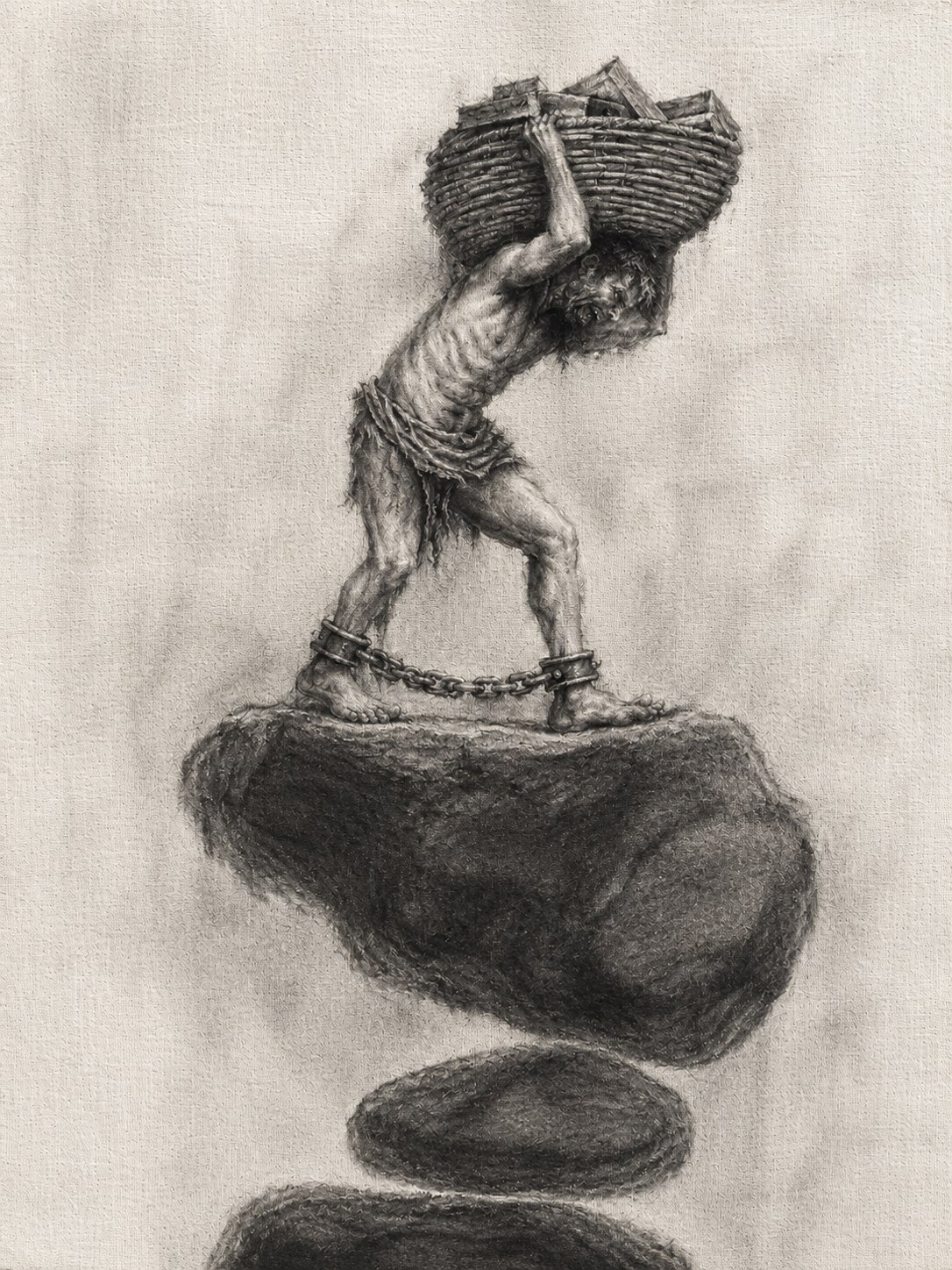
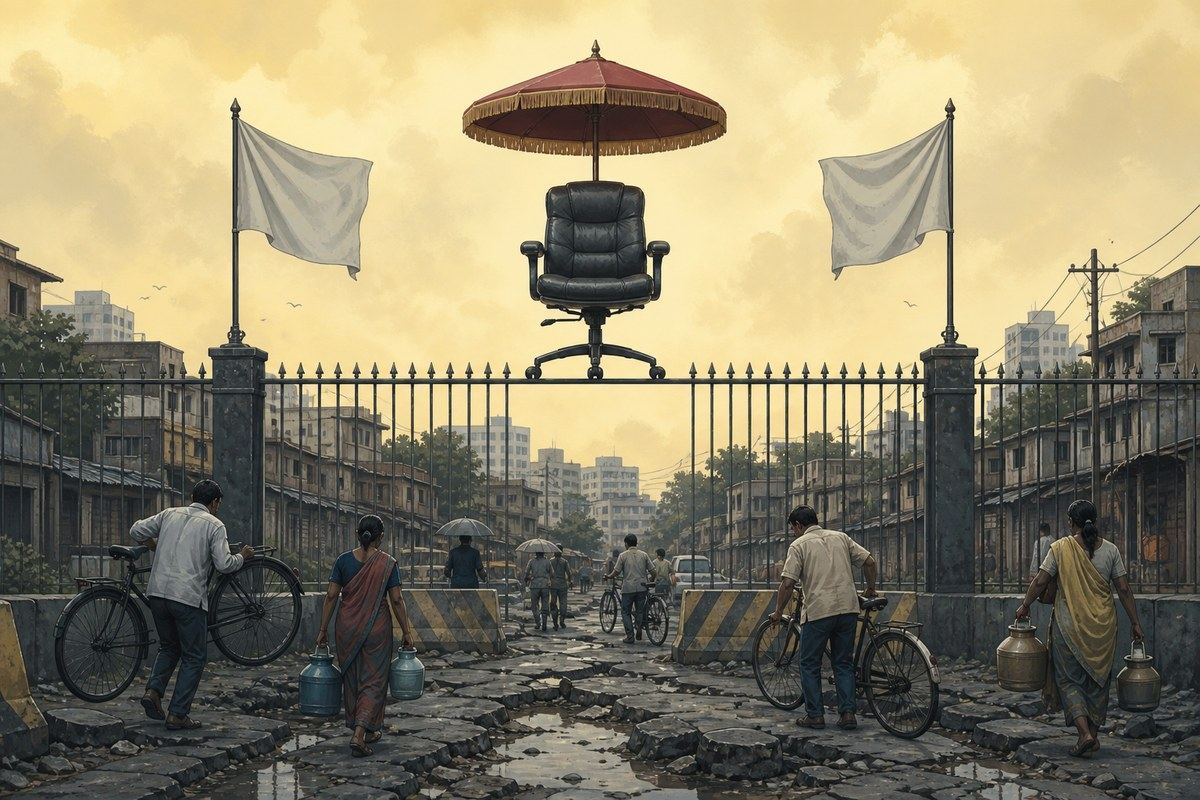
Then it removes the chair.
In India, knowing is not even useful unless it can be monetized, laminated, weaponized, worshipped, or used to get someone’s son into America. Real knowing is different. Real knowing asks irritating questions. Why is this so? How do we know? What is the evidence? Who benefits? What is the denominator? What is the mechanism? What happened before this? Why does every new building have marble in front and moral dampness inside?
This kind of knowing is not welcomed.
It is like detecting a bad smell in an air-conditioned room where everybody has already agreed to call it sandalwood.
In this country, if you know a little, you become a pundit.
If you know a lot, you become inconvenient.
If you know a lot and have no money, you become furniture.
A chair with opinions.
A cracked almirah quoting Darwin.
A pressure cooker with depression and citations.
Money is the great room freshener. A rich idiot is “visionary.” A poor intelligent man is “negative.” A rich man’s confusion is “strategy.” A poor man’s clarity is “attitude.” A rich man saying “I don’t know” is humble. A poor man saying “I know” is arrogant.
Then comes the national theorem, delivered by some gold-chain philosopher with the soul of a damp matchbox.
If you are so smart, why are you not successful?
There it is.
India’s favorite equation.
Truth equals income.
Poverty equals error.
Euclid rewritten by real estate agents.
The older I get, the more I suspect knowledge without power is not a sword. It is a tooth cavity. It lives inside you and proves itself by hurting. You chew anything, news, memory, the price of dal, the neighbor’s renovation, a minister’s speech, a young man’s optimism, and the pain flashes up the nerve.
A small telegram from hell.
This is the Bengali middle-class death posture: one hand on the window grille, one hand on the tea cup, brain full of Europe, pocket full of lint, stomach full of gas.
Meanwhile the stupid fellow is buying lottery tickets and laughing.
He has not discovered entropy, except as a problem with his ceiling fan. He has not met Claude Shannon, so the world for him is not signal and noise. It is all signal. Every crow has a message. Every dream is a prophecy. Every left-eye twitch is a cosmic SMS. The universe is chatty. God is typing, as they say.
For me the universe is not typing.
It has left me on read since 2014.
Maybe before.
Who is counting.
Now let us not become sentimental. Stupidity is not some innocent village cow chewing philosophy under a banyan tree. Stupidity is dangerous. At scale it burns hospitals, elects frauds, beats women, lynches strangers, hates books, fears vaccines until it needs an ICU, worships billionaires, drinks poison, forwards garbage, and then suddenly demands science like a taxi on a rainy evening.
Public stupidity is not cute.
Public stupidity is sewage in July.
It enters houses.
It floats slippers.
It carries disease.
But private stupidity, small stupidity, household stupidity, has a softness. A man can enjoy a rainbow without dragging refraction into the room like a school inspector. An auntie can fear a ghost in the neem tree and make the evening larger. A child can believe a cupboard contains another kingdom. An uncle can dream of his dead father and feel comfort, and perhaps that comfort is not false in the only way that matters to him.
Meaning is not always the correct answer.
Sometimes meaning is a blanket.
I have no blanket.
I have mechanisms.
Mechanism is a thin bedsheet in winter.
When I say I miss childhood, I do not mean I miss only sweets, school holidays, or the old watery orange drink that tasted like chemical sunset. I miss the old afternoon itself. That green sleepy school-holiday air when time was not yet a creditor calling at 9:43 p.m. I miss lying under a fan and believing the day was endless. I miss not knowing that rent will one day sit on your chest like a fat landlord. I miss not knowing that every family has economics under its love, every institution has power under its rules, every slogan has somebody’s contract under it, every miracle has an invoice, and every holy man has lighting, logistics, land, donors, and women somewhere doing unpaid invisible work.
I miss entering mystery without carrying tools.
Now I enter everything like a municipal inspector.
Tap the wall.
Check the seepage.
Smell the pipe.
Ask for records.
Find fungus.
Even beauty suffers. A flower becomes evolutionary bribery. Love becomes chemistry plus loneliness plus timing plus poor judgment. Desire becomes old biological software running on a body that now makes a sound when rising from a plastic chair. The evening sky becomes scattering. The temple bell becomes metal, acoustics, crowd psychology, childhood conditioning, and one tired priest with acidity.
No wonder nobody invites me anywhere.
In India especially, noticing is treated as bad manners. People like intelligence as decoration, not as operation. They want English, not questions. They want you to fix the spreadsheet, write the proposal, explain AI at a party, guide the nephew’s foreign application, and praise the new tiles. They do not want you to point at the rotten bamboo holding up the tent.
The moment you actually see, people shrink.
Then they resent you for making them feel small.
Then you are arrogant. Difficult. Negative. Westernized. Failed. Jealous. Mentally ill. Unadjusted. Too much.
Always too much.
So the poor articulate man becomes a pariah by accuracy.
A leper of measurement.
A man with a torch in a room where everyone is enjoying darkness and calling it heritage.
And there are many of us. I know this without meeting them. India is full of hidden minds dying behind windows. Not geniuses, necessarily. Let us not add that vulgar perfume. Just minds that noticed too much and were given too little room.
Men in small towns with old physics books and unpaid electricity bills. Women whose intelligence has been converted into cooking efficiency and silence. Retired clerks who know exactly how the scam works but still fold their hands before the scammer. Students who learned enough to see the cage but not enough to buy a ticket out. Programmers in rented rooms. Teachers with headaches. Doctors with loans. Poets with fungal walls. Engineers explaining entropy to a ceiling fan because the ceiling fan is the only rotating object willing to listen.
Behind windows, a whole republic of trapped observers.
No anthem.
Only cough.
Outside, the dumb have their fairs, gods, rumors, loud marriages, confident mistakes, and little explosions of certainty. Inside, we have tabs open. PDFs. Notes. Half-written essays. Cold tea. A browser with twenty-seven windows and no rescue plan.
We have the dirty privilege of knowing that filth is filth. Not sacred mud. Not ancient wisdom. Not destiny. Not planetary influence. Not motherland fragrance. Filth. Chemical, historical, political, municipal filth. And still we must live beside it, sometimes inside it, sometimes drinking water that has shaken hands with it.
This is where envy becomes ridiculous. I do not want cruel stupidity. I do not want the mob brain, the superstition brain, the forward-message brain, the flag-waving gutter brain that thinks volume is truth.
I want a smaller stupidity.
A private stupidity.
A soft unknowing.
One room in the skull where a thing can still glow without being explained. One cupboard kingdom. One moon that follows me without orbital mechanics tapping my shoulder like a tax officer.
But no.
The mind, once spoiled, stays spoiled.
A bitten guava does not become whole because you remember it fondly.
So I sit by the window like a minor failed lighthouse in a city where shipwrecks create business. Below, some man laughs into his phone, untroubled by history, neuroscience, corruption, class, decay, or the great digestive event of civilization. For one second I want to climb down, slap him, hug him, borrow his brain, return it after lunch slightly used, and ask how it feels to live in a world where everything remains possible because nothing has been understood.
Then my stomach makes a wet philosophical noise.
The spell breaks.
Knowledge returns with its little broom.
And begins sweeping the room again.
Word Cloud
Related reading
Selected by shared topics and section, with closer publication dates breaking ties.