Hemlock
There is a particular kind of Calcutta evening when the air itself feels like a conspiracy. The ceiling fan above my bed is chopping it into hot, lazy slices, the television in the next room is having a coronary about “democracy in danger,” and somewhere in the lane outside, a scooter horn is being leaned on by someone who clearly believes sound pressure alone can reorganize traffic patterns and maybe the constitution while it’s at it. It smells faintly of frying fish, sweat, cheap incense, and the exhaust of a nation trying very hard not to think too much.
On the screen, some anchor with hair like a plastic helmet is screaming about “the great rightward sweep of the nation,” about how this is either the golden age of Bharat or the end of the republic, depending on who has paid for the studio lights that month. The current incumbents are being described as if they were either Vishnu’s twelfth avatar or a gang of cartoon supervillains. I am lying on my bed in North Calcutta in my half-torn ganji, glancing between the TV and the damp patch on the wall that has grown, hydra-like, over the years, and thinking: this is all very theatrical for a game that is rigged by design.
Democracy, for all the pomp of its Greek roots—dēmos (people) and kratos (power), cue solemn music and marble columns—has always been a kind of elaborate outsourcing arrangement. You take your messy, private fears and hopes, compress them into one vote (usually bought cheaply with a sack of rice, a bottle, or a dose of religious adrenaline), and hand it to a stranger whose only proven skill is winning a popularity contest under conditions of maximum confusion. It is the political equivalent of handing your house keys and ATM PIN to the cleverest pickpocket on the street because he seems to understand wallets so well.
We pretend it’s noble. We print it on school posters. We recite it on Republic Day. But if you read the fine print—and I have, because I am that tedious kind of fellow who actually reads constitutions and then footnotes the margins in my head—it says something much less inspiring: you, the citizen, will periodically choose which group of cunning primates gets the legal right to manipulate your reality for the next five years.
Of course, right now in India, the cunning primates in question are very right-leaning, extremely efficient at propaganda, and led by two men whose names I don’t even need to type because they’ve already rented so much space in everyone’s amygdala. As a marketing project, it’s phenomenal: a mixture of religion, aspirational capitalism, historical cosplay, and pure fear, expertly marinated and served 24/7 on every screen that will hold still. A kind of spiritual fast food, engineered to bypass the cortex and go straight for the limbic system.
It is tempting, especially if one is mildly left-leaning, bookish, and permanently broke in North Calcutta, to imagine that this is the problem—that if only another party were in charge, the republic would suddenly blossom into a Scandinavian fever dream: trains on time, schools functional, policemen who don’t moonlight as extortionists, that sort of quaint thing. A simple chair swap: remove these gentlemen, install those gentlemen, viola, as we Bengalis like to mispronounce the violin.
Except, of course, that’s a comfortable delusion. Like believing that if you pluck one rotten potato out of a sack that smells like something died in it, the rest will spontaneously transform into golden Yukon perfection. The stench is systemic. It’s us.
When I say “us,” I don’t mean it in the abstract, “Our glorious civilization” way that WhatsApp University uses. I mean the very specific ecosystem of lies, cowardices, resentments, and petty corruptions we marinate in day after day. The way we treat the help, the way we cheat on taxes, the way we laugh along at bigoted jokes because arguing is tiring. The way we forward “proud Indian” nonsense at 6:30 a.m. about some mythical ancient Vedic plastic surgeon while bribing a traffic cop at 7:15 a.m. because we couldn’t be bothered to wear a helmet. The way we talk about “corrupt leaders” while quietly sliding envelopes across desks anytime we need the smallest thing done.
Democracy doesn’t summon angels to govern us. It summons a sampling of who we are, filtered through the harsh sieve of who can lie most convincingly on a stage. If we are envious, easily manipulated, religiously touchy, scientifically illiterate, and permanently on the hunt for someone else to blame, we will not elect philosopher-kings. We will elect the best-performing mirror.
I include myself in this unflattering reflection, by the way. I am not writing this from some moral Himalaya, wrapped in virtue and drinking glacier water. I am sprawled on a cheap bed, living off my parents’ leftovers and the bitterness of my own ill-timed conscience, having spent the better part of two decades being too proud, too fragile, and too mentally unhinged to play the game properly. I have lied, I have been petty, I have thrown my share of tantrums and cowardly silences. If there is a sack of rotten potatoes, my tuber is in there, quietly fermenting.
So when some earnest soul tries to convince me, Dada, just remove this party, put that one, India will be great again, I feel a kind of hysterical laughter bubbling up in my chest. We speak as if this is a software bug that can be fixed with a patch update: Modi-Shah out, Generic Saviour in, reboot, install democracy v2.0. Meanwhile, the hardware—the brains, habits, and moral reflexes of 1.4 billion Homo sapiens—remains what it was: tribal, anxious, fond of comforting myths, allergic to introspection, addicted to hierarchy, and permanently offended by the smell of other people’s food.
We complain ceaselessly about “corruption in politics” as if corruption were some alien fungus that crept in through the AC duct, not the natural extension of how we live. Look at any random day in Kolkata: the auto driver rigging the route, the contractor stealing material from a building site, the doctor prescribing unnecessary tests, the tuition teacher promising guaranteed marks if you pay for “special notes,” the parent proudly pushing the child to skip a line because “we know the officer.” Every one of these tiny cheats is a rehearsal for the larger carnival. You stand in a queue of everyday corruption, and then act surprised that the man at the front of the line becomes a kleptocrat.
Democracy didn’t break us. We hauled our brokenness into the polling booth and left it there like an offering.
When I first left India in 1998, with a single suitcase, a bottle of cheap perfume, and a head full of foolish ideas, the rupee was weaker but the illusion was stronger. There was still this lingering belief, especially among my type—middle-class, English-medium, educated under fluorescent tubes—that India was in some kind of chrysalis phase. Yes, it’s a mess now, but we are educated, we are modern, we watched Carl Sagan on Doordarshan, and so, given time and GDP growth, we would naturally become a sort of brown Germany with better vegetarian options.
America, back then, was a place I associated with mildly boring competence: Clinton-era technocratic scandals, Microsoft, dial-up internet, the smug safety of a system that, for all its racism and imperialism, ran on roads that didn’t randomly vanish into craters after the first rain. The Americans I met were sometimes absurd, often parochial, occasionally deeply kind; but the country as a whole did not appear to be on the verge of being taken over by a reality TV demagogue with a spray-tanned ego and a fanbase that treats conspiracy theories as spiritual exercises.
Fast forward, and now both projects—the Indian and the American—have been stress-tested by the algorithmic age, and both have responded with their particular brands of psychosis. The US gifted itself Trump and a cohort of people who think a public health crisis is an infringement on their sacred right to inhale the exhalations of strangers; India gifted itself a daily parade of majoritarian chest-thumping and historical revisionism, while also pretending that WhatsApp forwards are peer-reviewed research.
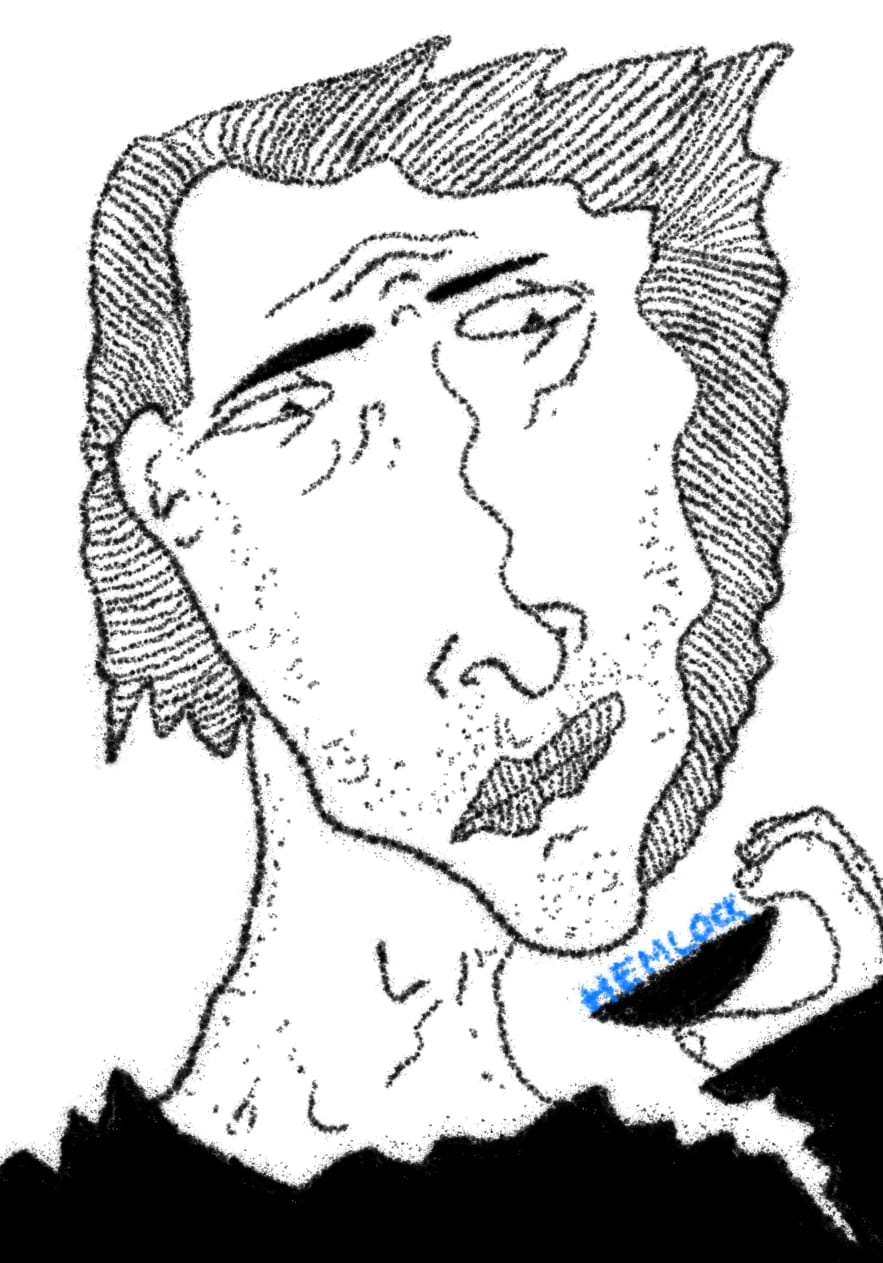
Athenian democracy, if the poor dead Greeks were watching, would probably be weeping into its hemlock.
I can already hear the objection: “But at least in America, the institutions fought back. Courts, media, checks and balances.” True—to a point. But even there, you got a pretty good show of how thin the ice is once enough people decide they prefer comforting lies to complicated truths. Democracy is not a preventive vaccine against stupidity; at best, it’s a fragile breathing apparatus that works only if the environment remains breathable. Once the air is full of manufactured rage and half-digested garbage information, the machine starts pumping toxins instead of oxygen.
Here in India, the air is particularly thick. Not just with PM2.5 and sulphur dioxide, though those are doing a brisk business; but with the dense smog of unexamined myths. Our political theatre thrives on them. We have mythologies about our glorious past, mythologies about our unique spirituality, mythologies about our scientific supremacies, mythologies about how the foreigners ruined our paradise, mythologies about how the next strongman will restore it. And perhaps the most dangerous mythology of all: that we, the people, are basically noble, and it is only the politicians who are evil.
It’s such a comforting fairy tale. We are good; they are bad. Replace them, and we will shine. One has to admire the ego. It’s like blaming only the tip of an iceberg for sinking the ship while refusing to admit that the submerged 90 percent—our prejudices, our casteism, our casual cruelty to anyone lower in the food chain—is the real mass.
I see it in the smallest encounters. The bhodrolok uncle at the para tea stall who rants against “corrupt netas” with flecks of biscuit on his lips, and then boasts about getting his son into an engineering college by “using influence.” The aunty who cries about women’s safety and then spies gleefully on the maid’s movements to see if she’s “stealing.” The same middle-class people who ostentatiously send money for flood relief while throwing domestic workers out of the building for using the main lift. And of course, the legion of NRIs—my old peers—who forward videos about “Indian values” from the safety of Californian suburbs they have no intention of ever leaving.
Which brings me to the other part of this unpleasant monologue: the seduction of “returning.” The fantasy of ghar-wapsi, not in the religious sense (the gods and I have long parted ways), but the narrative of the prodigal Indian techie who makes money abroad and then comes back to “give back,” to “build the nation,” to “use my skills where they are needed.” The video montages almost write themselves: violin music, aerial drone shots over fields, the hero stepping out of the airport in sunglasses, slow-motion hugs with parents, cut to a montage of him arguing with corrupt officials but ultimately triumphing.
Reality is less cinematic. If you are rich enough to return with capital, you do not become the hero of the village. You become the plump pigeon in a city of starving cats. Every contractor, broker, distant cousin, and friendly official will smell your lack of local cunning and your naive desire to “just do things properly” like sharks scenting blood in the water. You will be invited to a buffet of opportunities, almost all of which are carefully designed to separate you from your savings. You will discover, the hard way, the exact tensile strength of trust here: it stretches far enough to loop around your neck.
No one will say, “Welcome back, builder of the new India.” They will say, with their eyes, “Welcome, portable wallet on two legs; please place your gluteus maximus on this comfortable seat while we locate an appropriate knife for your back.” And when the knife arrives, it will not be a cinematic stabbing—no dramatic betrayal in a rainstorm. It will be hundreds of tiny incisions over years: the slightly inflated bill, the mysteriously missing documents, the land deal that never closes, the business partner who “unfortunately had to keep some money aside for the officials.” You’ll wake up one morning and realize you have been fiscally exsanguinated with surgical precision.
This is not because Indians are uniquely evil. Humans everywhere are opportunistic; you do not need to lecture me about Wall Street or Russian oligarchs or British colonial accountants. The difference is that in some places, systems exist that occasionally smack people on the wrist for this. Here, we mostly just admire it. We call it “chalaki,” “smartness,” “jugaad.” The person who gets away with the most is considered the genius. The idiot is the one who tries to follow rules. The moral vocabulary is inverted.
So when people abroad ask me, sometimes in shy emails, “Should I come back? I feel guilty making money here while India struggles,” I feel like a terrible older cousin who has to say the uncool thing. If you have built a stable, reasonably dignified life in a functioning system—say, Canada, or Germany, or even some well-run corner of the US—then unless you have a masochistic streak and an iron-clad mental health support network, do not hurry to throw yourself back into the furnace in the name of patriotism. You owe this country your honesty, not your gullibility.
This is not anti-Indian hatred. I am Indian down to my malfunctioning circulatory system and my fondness for over-salted jhal muri. I write this from the belly of the beast, in a room that overheats like an old CRT monitor, in a city that is my first and probably last mistake. I speak the language, I dream in it, I curse in it (internally; externally I now use politer anatomical Latin), and I have spent half a century watching my fellow citizens and myself bumble through our histories like drunk actors in a very long, very badly directed play.
I know the tenderness here. The neighbour who sends over fish curry when my mother is unwell. The autorickshaw driver who refuses extra money because “you are like my younger brother.” The quiet acts of kindness in hospitals, in exam halls, in train compartments. I do not deny those. But I refuse to let them anesthetize me to the more brutal facts: we are not, collectively, ready to be the enlightened republic we pretend to be. And no amount of leader-swapping will change that until we learn the unglamorous art of looking in the mirror without immediately blaming the lighting.
Part of my bleakness, I admit freely, is chemical. There are days when my brain is a well-lit library, and democracy is an interesting case study in game theory: strategic voting, public choice, incentive structures, all that. On those days, I can discuss how the median voter theorem interacts with identity politics while drinking tea and making self-mocking jokes. On other days, the same brain turns into a poorly ventilated dungeon where every news headline feels like a personal attack. My bipolarity is a treacherous lens; sometimes it magnifies reality to grotesque extremes, sometimes it flattens it into a grey smear.
When I write about “rabid stupidity” and “venomous asinine” citizens, I am also talking about the version of myself who doom-scrolls at 2 a.m., heart pounding, fantasizing about apocalyptic solutions—asteroids, pandemics, some neutral cosmic reset button. It is not a healthy fantasy, but it is honest. This is what happens when you spend decades trying to think clearly in a place that rewards loud certainty over quiet doubt. You start to feel like the defective unit in a factory that only produces slogans.
Overlay all this with climate change, and the picture becomes almost hilariously grim. This subcontinent is not just politically combustible; it is literally on the way to becoming a giant outdoor steam room. You read wet-bulb temperature projections, see maps where large chunks of India, Pakistan, Bangladesh turn some alarming colour by 2035, and then you step outside and watch people burn crackers, drive bigger SUVs, and talk about building more coal plants because “development.” The cognitive dissonance is so loud it has its own decibel level.
So yes, I can absolutely imagine the entire region lighting up—figuratively and literally—in the next decade or two. Not because of some cosmic curse or special wickedness, but because we are sitting on fault lines of history, climate, religion, and technology with the attention span of a goldfish and the ego of a superpower. Add a few billion smartphones, some demagogues with good lighting, and you have all the ingredients for a slow-motion conflagration.
Where does that leave someone like me, a slightly deranged, book-addled Bengali in his fifties, camping out in a room filled with damp walls, old books, and faintly ridiculous dreams? Not in any heroic place. I am not leading movements, I am not fixing systems, I am barely fixing my own circadian rhythm. I am, at best, keeping a kind of private chronicle of decay, in between boiling eggs and refilling my inhaler.
Democracy, as I see it now, is not the shining miracle the civics textbooks promised, nor the complete farce that my darkest moods insist it is. It is an elaborate mirror maze that shows us who we are, distorted but recognizable, and hands power to whichever group figures out how to weaponize those reflections first. Our current rulers are one such group. The ones before were another. The ones after will be yet another variation on the theme. The real plot, the one that matters, is not about which costume they wear, but about whether we can, one microscopic habit at a time, become slightly less comfortable with our own everyday fraudulence.
Do I think that will happen soon? No. Do I think it might happen eventually, given enough crises, enough technological shocks, enough collective near-death experiences? Possibly. Civilizations have been known to stumble into wisdom after exhausting all other options. Maybe after a few more pandemics, floods, and financial collapses, we will finally discover the radical act of not lying to ourselves about everything.
Until then, the fan will keep turning, the anchors will keep shouting, the WhatsApp forwards will keep arriving with their shiny little packets of nonsense, and I will keep doing the only small, stubborn thing I know: sitting in this room in North Calcutta, watching the circus, taking unkind notes about myself and the species, and occasionally, very quietly, turning off the TV and listening to the silence between slogans.