Rain, Power Cuts, and India Standing on Quicksand
Uses the speech voice supplied by your browser or device.

Yesterday it rained, and for a few hours Calcutta stopped behaving like a pressure cooker with a grudge.
The heat loosened its fingers from my neck. Not fully. Heat here never fully leaves. It just goes downstairs to buy bidi, tells the para boys, “I am coming back,” and returns after lunch with reinforcements. But yesterday evening the air softened. The walls stopped baking me from both sides like a badly made toast. I slept a little.
This may not sound like a national achievement.
But after a Calcutta May night, sleep is not a small thing. Sleep is foreign aid.
Then, naturally, the rain tripped something.
A wire, a transformer, a fuse, a small committee of ghosts inside the electricity board — who knows? The power went out and stayed out. The fan stopped. The room became still. The mosquitoes held an emergency cultural program near my ear. My phone battery began looking at me with the tired expression of a bank clerk five minutes before closing.
Then the current came back.
The fan started turning again, and I looked up at it with the gratitude normally reserved for surgeons, saints, and people who return borrowed money without being reminded.
This morning the sultry heat is already creeping back. The rain has gone, but the steam remains. That is the trick of this city. It washes you first, then cooks you gently. Wet lane, damp wall, sleepy dog, tea stall smoke, open drain, newspaper headline, and one middle-aged man sitting in the southern boondocks of Calcutta wondering if the country is also wired like this room.
A little rain.
A long failure.
A brief recovery.
Then more heat.
I keep thinking India is standing on quicksand while shouting slogans about mountain climbing.
This is our great talent now. Chest out, chin up, microphone on, facts hiding behind the sofa. We can shout about glory with astonishing lung power. Ancient civilization. New superpower. Historic moment. Strong reply. Global respect. World leader. The phrases come marching out like a brass band at a wedding where the groom’s shoes have already been stolen.
Meanwhile the common man wants boring things.
Electricity.
Clean water.
A road that does not turn into fish habitat after forty minutes of rain.
A school where a child learns to think, not only memorize like a nervous parrot.
A hospital where the family does not have to become part nurse, part accountant, part detective, and part beggar.
A police station where truth does not need a political sponsor.
A court that finishes a case before the plaintiff’s bones become educational material.
These are not luxurious demands. No one is asking for Switzerland with mustard oil. We are asking for the basic dignity of not having life feel like a permanent group project where only the common man submitted his part.
And this is where my head becomes complicated.
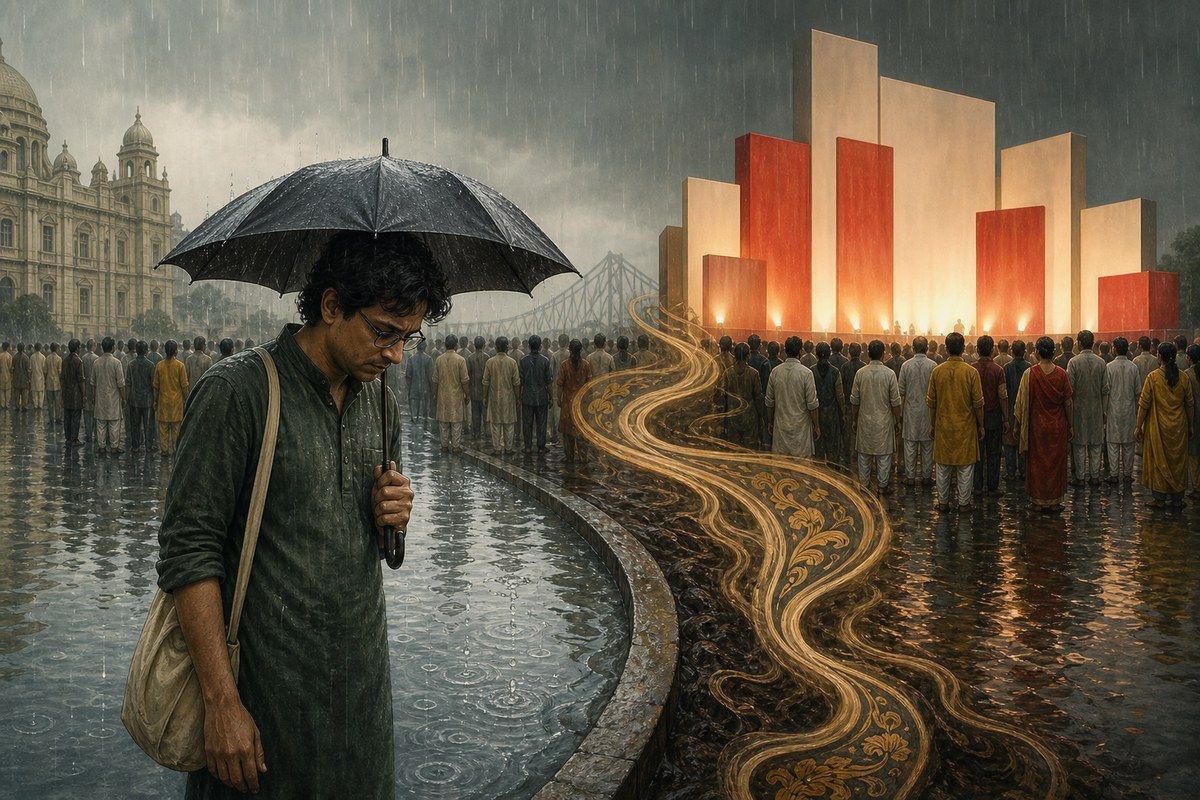
My father hoped. He lived his life inside India’s weather. He saw the shortages, the promises, the speeches, the files, the dust, the leaders with raised fingers, the clerks with lowered eyes, the slow grinding machine of everyday survival. He hoped anyway. Perhaps that was courage. Perhaps habit. Perhaps the only umbrella available.
I hope too.
But I also hopped continents. That ruins a man in a particular way.
Once you have lived in another country and seen ordinary systems work without daily melodrama, you cannot fully return to innocence. You notice wicked little things. A bus arriving when it said it would. A power cut treated as a problem, not a personality trait of the neighborhood. A library that looks as if books are welcome there. A public office where the chair is not the most powerful creature in the room.
It is not that America is paradise. Please. America can produce its own circus with elephants, lawsuits, medical bills, and people who think cheese sprayed from a can is civilization. But ordinary maintenance exists there with a seriousness we rarely respect here.
Maintenance.
What a dull word.
And what a revolutionary idea.
A country is not built by shouting. It is built by fixing the boring things before they become tragedies. Drains. Wires. Schools. Records. Courts. Hospitals. Food inspection. Local government. Bus routes. Transformer boxes. Public toilets. Garbage collection. The unglamorous plumbing of civilization.
But our political imagination loves fireworks more than plumbing.
Fireworks make sound. Plumbing prevents cholera. Naturally, the television prefers fireworks.
You think the villain is poverty. Not quite.
Poverty is a villain, yes, but it is not alone. It has cousins. Bad planning. Weak institutions. Corruption. Public laziness disguised as fatalism. Private greed disguised as ambition. Religious chest beating. Nationalist theatre. Educated cowardice. And that special Indian ability to adjust to anything until adjustment itself becomes a disease.
We adjust to heat.
We adjust to power cuts.
We adjust to bad roads.
We adjust to bribery.
We adjust to noise.
We adjust to being lied to.
Then one day we call this resilience and clap for ourselves.
Resilience is useful when a storm comes. It is not a substitute for repairing the roof.
That is the little sentence I wish we could print on government walls.
India has brilliance. No honest person can deny it. A boy in a one-room house cracks an exam that would make a European prince weep into his organic breakfast. A mechanic in a lane can revive a dead fan with wire, spit, and an insult. A nurse in a government hospital carries more human suffering in one shift than many television patriots carry in a lifetime. A girl studies beside a drain and still dreams in English, Bengali, Hindi, code, chemistry, or song.
There is genius here.
There is kindness too.
But genius and kindness are not infrastructure.
This is where the quicksand begins. The top shines. The bottom sinks. We produce engineers, doctors, writers, coders, cricket gods, billionaires, missile programs, space missions, payment apps, and speeches with enough voltage to light up Howrah Bridge. Yet an ordinary family can still be destroyed by one illness, one legal case, one lost job, one bad monsoon, one bureaucratic signature that refuses to move.
That is not greatness.
That is a chandelier hanging in a house with termites.
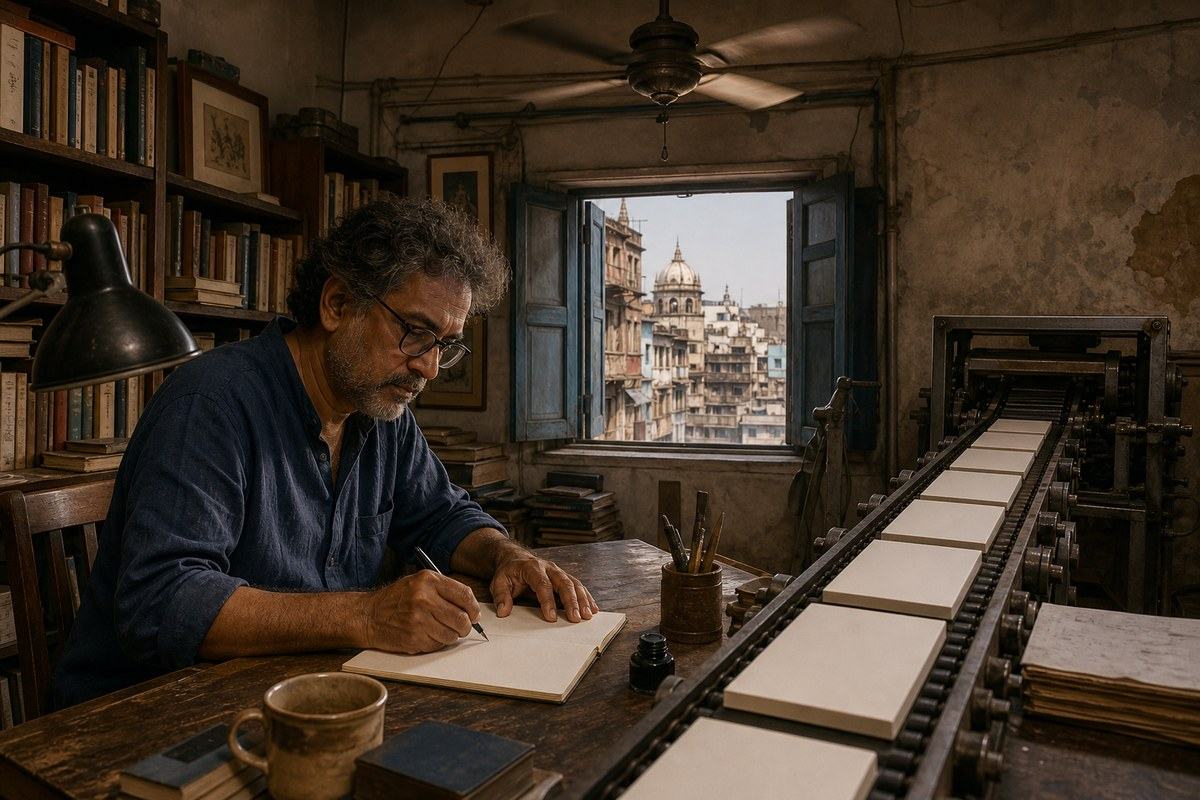
I am fifty-one now. Single. Not exactly flourishing like a motivational poster. Some days the mind itself feels like a local train at rush hour: overcrowded, late, noisy, and carrying too many people who refuse to get down. I make some living through consulting, not enough to walk around with heroic background music. Anxiety sits nearby. Depression knows the route to my house. I am not writing this from a balcony with imported coffee and a grant-funded view of society.
I am writing this from the fan zone.
The fan zone is where most truth in India lives.
From here, the country looks different. Less like a rising giant. More like a tired man carrying too many bags while someone on television tells him to feel proud of the airport.
And still, irritatingly, I love the place.
That is the trouble.
If I did not care, I could simply sneer. Sneering is easy. It requires no electricity. But love makes you angry in a more expensive way. You see what is possible, and then you see what we tolerate. You see the child. You see the drain. You see the flag. You see the speech. You see the mother checking the medicine price twice and quietly putting one strip back.
Then someone says, “Don’t criticize the country.”
What should one criticize then? The ceiling fan?
Criticism is not hatred. It is sometimes the last honest form of hope. Silence is what rot asks for. Silence is how a cracked wall becomes a collapsed house. Silence is how quicksand gets a patriotic paint job.
Maybe I will die hoping, like my father did. Maybe that is our family inheritance. Not land, not gold, not shares, but hope: slightly dented, badly serviced, still somehow running.
The power came back last night. The fan turned. The room breathed. For a few minutes I felt grateful in that small, almost embarrassing way the poor and lower middle class learn too well — grateful for the return of what should never have gone missing for so long.
That is the trap.
We are trained to celebrate restoration instead of demanding reliability.
So today the heat will rise again. The city will sweat. The news will shout. Someone important will say something large and polished. Somewhere a transformer will hum like an old man with secrets.
And the common man will look up at the fan, look down at the bill, look sideways at the country, and wonder the question nobody wants to answer.
How long can a nation keep calling itself strong when ordinary life still feels this fragile?
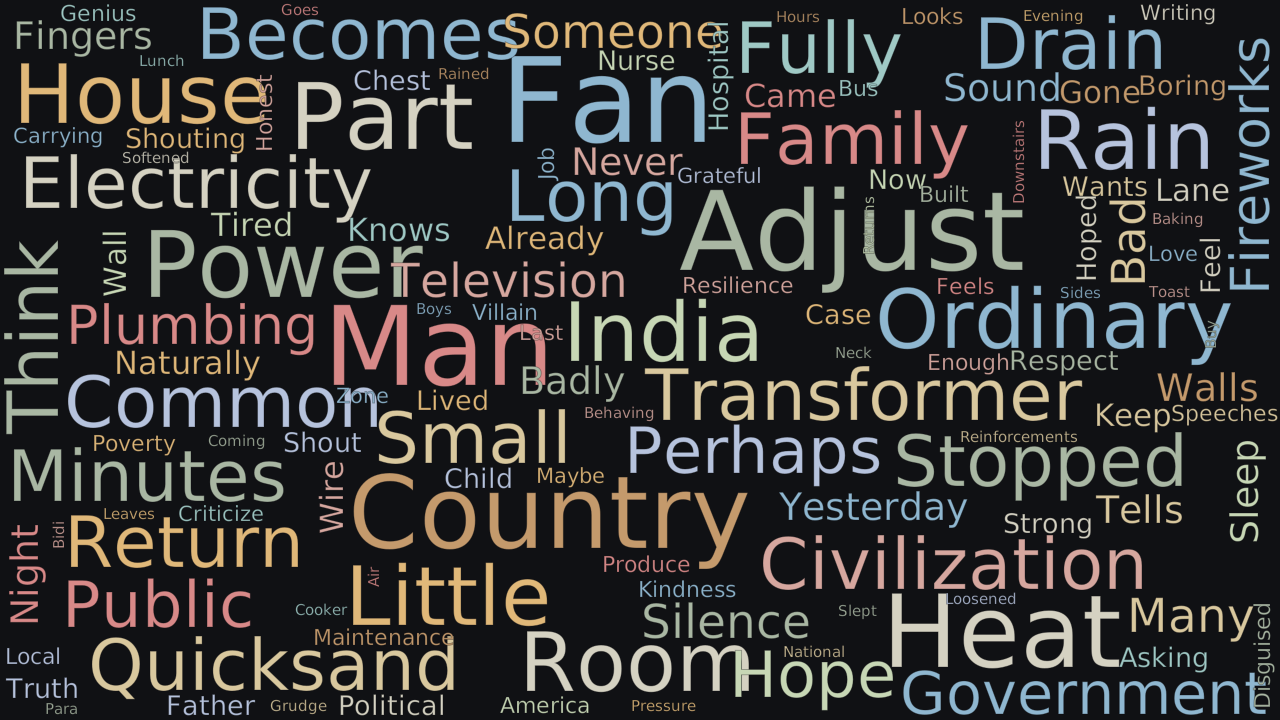
Word Cloud
Related reading
Selected by shared topics and section, with closer publication dates breaking ties.