Bengali Normalcy and the Borrowed Warmth of Nests
Uses the speech voice supplied by your browser or device.

Acronyms and notes: None used. A few Bengali words appear naturally: luchi is a fried flatbread, para is the neighborhood, and adda is that magnificent Bengali technology by which five people can waste three hours and call it civilization.
A Bengali family looks warm from a distance, the way a tea stall looks romantic from across the road. Come closer and you will notice the cracked bench, the chipped glass, the fly inspecting the biscuit, and the owner shouting at someone for taking credit since 2019.
Still, the tea is hot.
That is the problem.
I do not know whether the ordinary Bengali nest makes middle age bearable. I cannot say it with the confidence of a television uncle wearing a sweater in April. The picture is familiar enough. Wife, husband, child, schoolbag, fish curry, monthly bill, ceiling fan, one plastic chair that has lost its moral balance, and an old mother somewhere saying, “Eat before it gets cold,” as if history itself depends on the temperature of rice.
Nest, hen, eggs.
The full domestic poultry farm of respectability.
From outside it looks cozy. From inside, I suspect, it often smells of pressure, mustard oil, old compromise, and somebody’s hidden resentment quietly growing fungus behind the almirah.
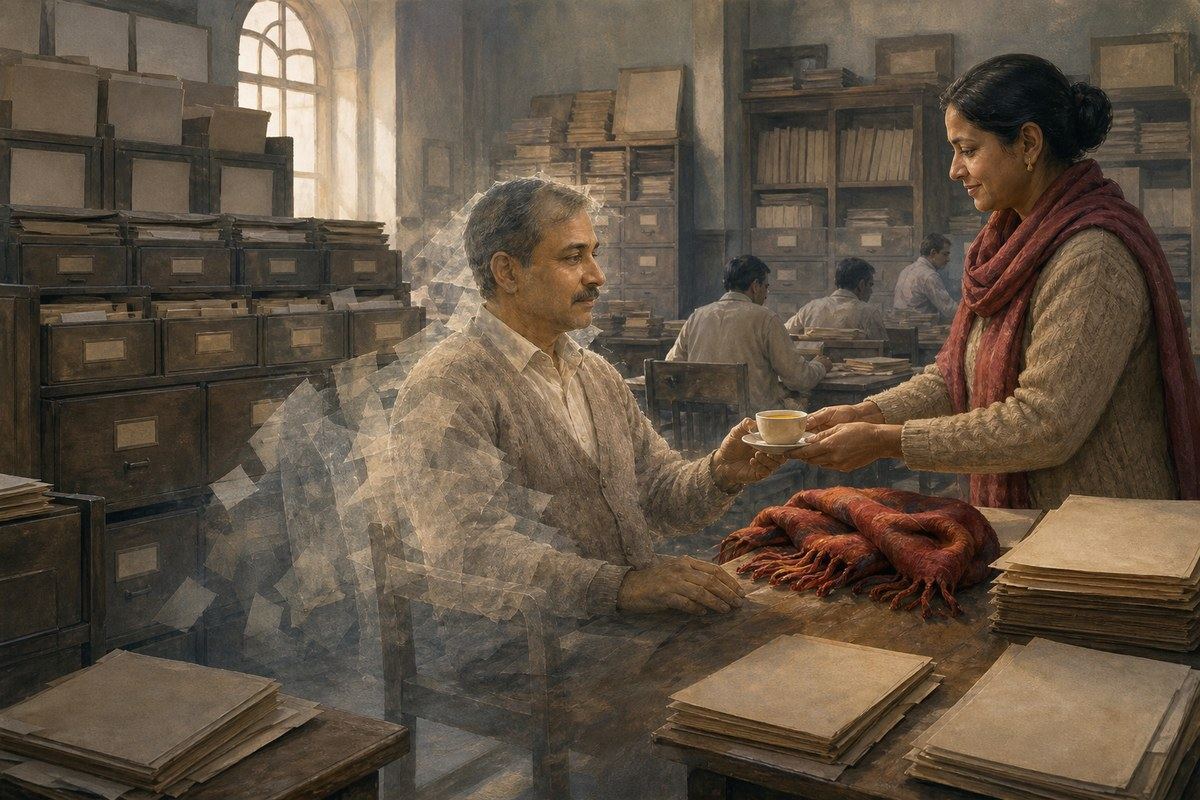
I saw my father. I saw my friends’ fathers. Many of them did not seem to be floating inside a golden cloud of family happiness. They were tired men. Harried men. Men with shirt collars darkened by tram, bus, office, sweat, boss, loan, ration, school fees, gas booking, and that special Bengali curse called “adjust kore nao,” which roughly means: the roof is falling, please treat it as interior design.
They shouted.
Not always because they were bad.
Sometimes because life had been shouting into them for thirty years and the echo had to come out somewhere.
That is the part we do not say loudly. The Bengali father, in old middle-class mythology, was supposed to be a banyan tree. Solid. Providing shade. Slightly terrifying. Full of roots. But many became less like trees and more like old cupboards: useful, overloaded, difficult to move, and making alarming noises when opened.
They had families.
They had nests.
They were not necessarily peaceful.
So when people say, “Family life makes a man complete,” I want to ask, complete like what? A meal? A form? A police file? A pressure cooker after the third whistle?
I am comparatively peaceful. I am not advertising myself as a saint. Please. Nobody should garland me unless the garland is refundable. But I am usually peaceful if left uncornered. Give me my little space, my tea, my laptop, my badly managed day, my privacy, and I will not trouble the republic.
But invade that privacy, push me into a corner, treat my quietness as weakness, and some old animal in me opens one eye.
This is not heroism. It is border control.
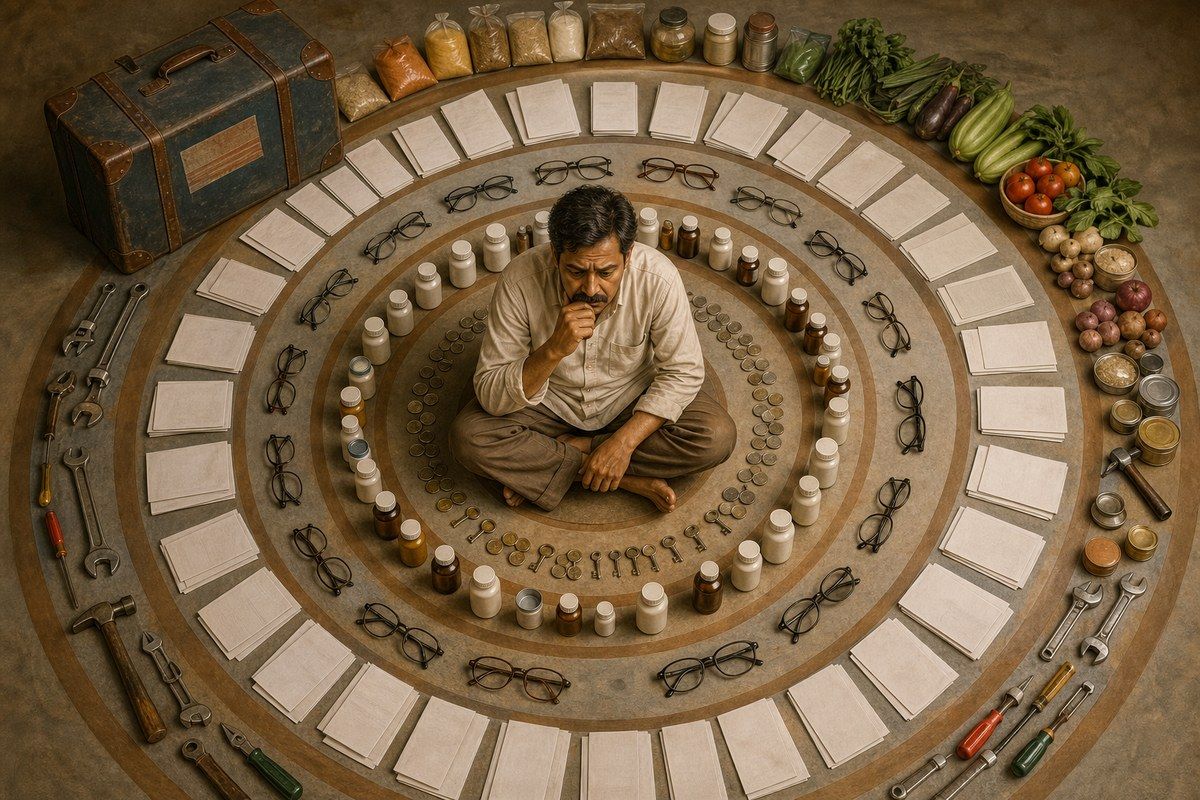
Every lonely man has a small border. Mine is not large. It may be the size of a cheap study table. One plastic chair. One charging cable. One fan. One window through which Calcutta dust enters with the confidence of a minister. But inside that border I am still myself. A damaged self, perhaps. Anxious. Moody. Economically uncertain. Fifty-one and not exactly marching toward success with trumpets.
But myself.
And yet.
Here the floor tilts.
Because the same privacy that protects me also hollows me out.
A room can be a shelter in the morning and a well by evening. In the morning, you say, “At least nobody is disturbing me.” By afternoon, nobody is still disturbing you. By night, nobody disturbing you has become the entire problem. The silence grows elbows. The walls come closer. The laptop stares. The cup is unwashed. The phone has become a small rectangle of insult, news, old photos, and people doing better.
Outside, the para continues without consulting you. A pressure cooker whistles in some other kitchen. A child cries as if personally betrayed by mathematics. A vegetable seller drags the names of vegetables down the lane like a tired opera singer. Somewhere a dog barks at nothing, which is more or less the job description of many news channels also.
And you sit.
No wife asks why you have not eaten.
No child demands money for a project involving chart paper, glue, and parental suffering.
No one says, “Get up.”
No one says, “Where are you going?”
No one says, “Come back early.”
Freedom, when overheated, becomes a desert.
That is the strange arithmetic of middle age. Family can irritate you into madness. Solitude can polish you into a ghost. There is no clean solution. There is only the daily bargain, made with insufficient information, like buying mangoes from a man who calls every mango “Himsagar” with the solemn dishonesty of empire.
Perhaps evolution did not design us for perfect family happiness. That sounds too tidy, like a motivational poster laminated in a coaching center. Evolution is not a poet. Evolution is a mechanic working in bad light. It does not care whether you are fulfilled. It cares whether the eggs survive, the child reaches adulthood, and someone remembers not to eat the poisonous berries.
But it did give us bodies that calm down near other bodies. Voices matter. Footsteps matter. Cooking sounds matter. The smell of onions frying can do what philosophy often cannot: remind the nervous system that life is still happening somewhere.
Maybe we do not all need the full nest.
Some of us cannot live inside that nest. Some of us have seen too many feathers, too much pecking, too many eggshells turned into family legend. Some of us need distance. Some of us are not built for the grand Bengali arrangement where three generations, two grudges, one television, and seven unsolicited opinions share the same oxygen.
But perhaps we need a nest nearby.
Not hen and eggs.
Maybe just neighboring nests.
A sound from another balcony. A plate being washed. Someone laughing too loudly. A family returning from the market with coriander sticking out of a bag like green optimism. Someone’s mother scolding someone’s father because he forgot the medicine. The ordinary clatter of people belonging to each other.
Not paradise.
Just evidence.
Evidence that human life has not entirely become passwords, bills, scrolling, and watching one’s own mood move across the day like a suspicious cloud.
This is where the screen enters, wearing chappals.
I watch channels sometimes. Ordinary homes. Ordinary families. Bengali kitchens. Small travel videos. People making luchi. Someone’s father being teased. Someone’s mother saying, “Don’t record me,” while clearly enjoying being recorded. A child wandering through the frame like a small unpaid actor. A man explaining a recipe with the confidence of a cabinet secretary. A family eating together. A room with bad lighting. A balcony. A cat. A festival. A birthday cake cut with a knife that has also probably cut onions.
Nothing big happens.
That is the attraction.
I know it is not real in the full sense. I know the camera is a polite liar. I know the couple may have fought before recording. I know the smiling uncle may be unbearable after dinner. I know the kitchen may contain debts, disappointments, gas-cylinder tension, and three generations of emotional archaeology. I know the video is edited. I know the warmth is arranged. I know the algorithm is not my cousin.
Still.
For a little while, the room changes temperature.
Not literally. The fan is still moving warm air around like a tired clerk pushing files. The money problem remains. The toothache remains. The future remains as unclear as the bottom of a municipal drain after rain. But something shifts. Other voices enter. Other plates clatter. Other people’s small domestic nonsense leaks into my room.
The vacuum loosens its grip.
Only a little.
Enough to breathe.
This is not foolishness. Or if it is foolishness, it is an ancient variety. People have always borrowed warmth from things that were not exactly present. Letters. Songs. Photographs. Cinema. Radio. A man once kept a photo in his wallet and survived a war by looking at it. A widow hears an old song and gets one evening back. A lonely student in a hostel listens to a cricket commentary and feels the country sit beside him. None of these are “real” in the strict legal sense, but the heart is not a magistrate. It accepts weak evidence.
The nervous system is even less strict. It hears laughter and relaxes. It sees food being served and remembers safety. It watches a family quarrel gently over who ate the last piece of fish and says, foolishly but understandably, “Ah, humans. Still continuing.”
That is enough on some days.
Of course there is danger here too. The screen can become a sugar substitute for life. Sweet on the tongue, thin in the blood. You can watch ten families eating dinner and still eat alone over the sink. You can watch other people’s children grow up and still not have one person who knows whether your fever came down. You can borrow warmth, but borrowed warmth has no address. It does not come knocking when you disappear.
So I do not want to make a temple out of the screen.
I am an atheist anyway. Also the screen does not deserve incense. It deserves a clean cloth and suspicion.
But neither do I want to mock it. Mockery is easy. Loneliness is not. Anyone who laughs at lonely people for finding comfort in ordinary videos has perhaps never sat through a long evening where the entire room seemed to have forgotten your name.
The truth is more awkward.
Family can wound.
Solitude can starve.
Privacy can save.
Isolation can shrink the soul until it fits inside a notification bar.
And normalcy, that famous Bengali normalcy of rice, dal, fish, quarrel, nap, gossip, tuition, doctor visit, electricity bill, and somebody shouting from the bathroom for a towel, may not be happiness. But it may be weather. Human weather. The kind we evolved under. The kind whose absence is felt only after the air becomes too clean, too still, too professionally silent.
Maybe that is what I miss. Not the full family drama. Not the heroic father role. Not the respectable cage. Not the permanent negotiation over money, mood, medicine, meals, and relatives who arrive like unpaid software updates.
I miss being near life.
Not trapped by it.
Near it.
There is a difference.
A nest can suffocate if you are inside the wrong one. But no nests anywhere, no rustling, no chirping, no ridiculous domestic movement nearby, and the world becomes a railway platform after the last train. Tube light. Dust. One tea cup. A dog sleeping under the bench. The announcement system dead.
So I sit in my corner of Calcutta, in the boondocks where the city arrives tired and slightly dusty. I guard my privacy like a man guarding the last good biscuit. I distrust the mythology of family because I have seen men become brittle inside it and women become invisible while keeping it alive. I do not pretend that nest, hen, and eggs automatically make a life bearable.
But sometimes I watch.
A kitchen.
A balcony.
A father laughing.
A mother pretending to be annoyed.
A child interrupting everything.
A plate of food placed before someone without ceremony.
And for a few minutes, the vacuum shifts.
Not into happiness.
Let us not be greedy.
Into bearable.
Word Cloud
Related reading
Selected by shared topics and section, with closer publication dates breaking ties.