The End of History, and Other Overconfident Announcements
Uses the speech voice supplied by your browser or device.

Acronyms and terms:
US: United States, the country where I studied and worked for many years.
Cold War: The long rivalry after World War II between the US-led capitalist democratic bloc and the Soviet communist bloc.
World War II: The global war from 1939 to 1945, after which Nazi Germany and Fascist Italy were militarily defeated, though fascist habits and ideas did not evaporate from human politics.
End of History: Francis Fukuyama’s phrase for the claim that liberal democracy and market capitalism may have become the final major ideological model for modern societies, not that events, wars, cruelty, stupidity, or politics would stop.
Liberal Democracy: A political system with elections, civil rights, rule of law, independent institutions, and limits on state power.
Market Capitalism: An economic system where production, trade, ownership, prices, and work are largely organized through markets and private enterprise.
Fascism: An authoritarian political tendency built around leader worship, militarized nationalism, contempt for pluralism, scapegoating, and the fantasy of national purification.
Recognition: A Hegelian idea meaning the human need to be seen, respected, and treated as a person with dignity.
Invisible Hand: Adam Smith’s metaphor for how individual self-interest in markets can sometimes produce wider social coordination without a central planner.
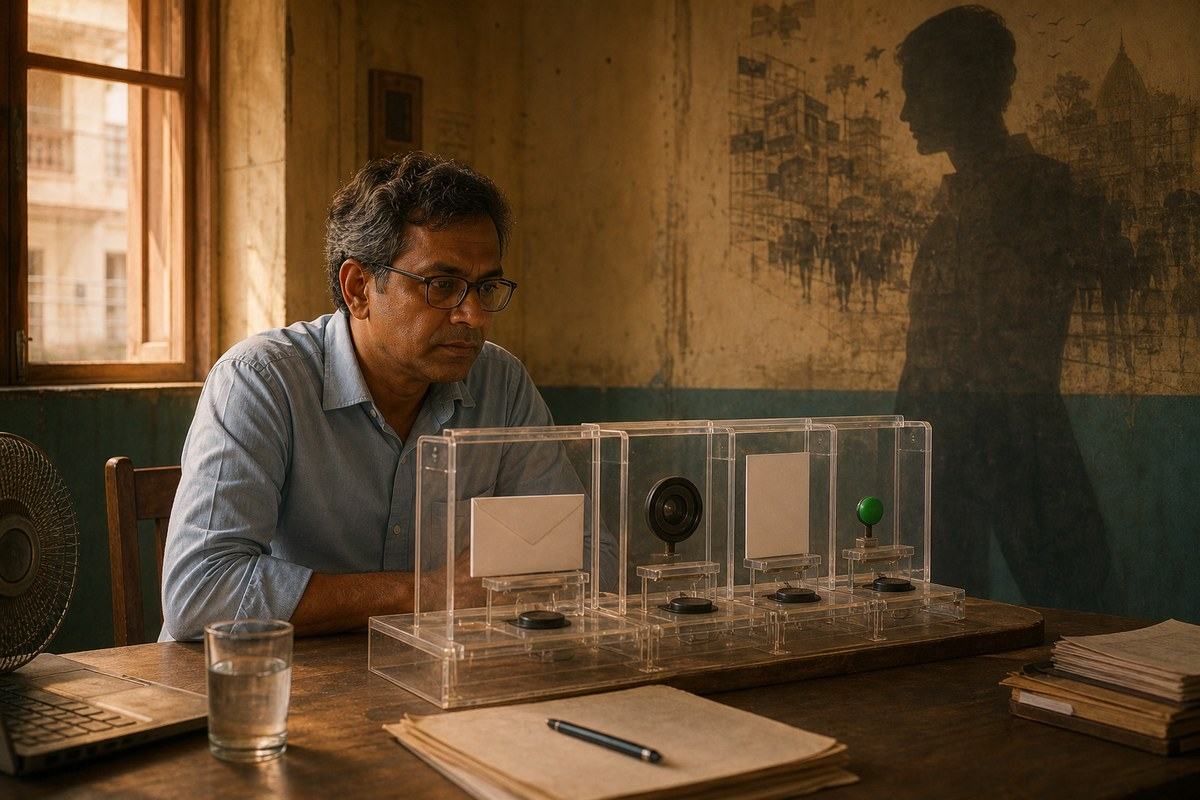
I am trying to stitch my life together alone with books, reading, and then writing about what I have read so that there is some traction, some small wheel turning in the mud. In spite of my bipolar depression, or probably because of it, I have a voracious appetite for ideas, except that sometimes I cannot read at all. Depression, angst, anxiety, tooth pain, headache, and the other small municipal disasters of the body arrive with their forms in triplicate, and I keep rereading the same paragraph over and over again like a man trying to unlock a door with a spoon. Writing short posts, watching documentaries, occasionally escaping into Netflix — yes, Superman brooding through Smallville is now available in India, because apparently even Kryptonians must eventually enter the subscription economy — is how I try to climb out of my worst doldrums.
Today I was reading about the End of History.
It is a grand phrase. Too grand perhaps. It enters the room wearing a velvet coat and expecting the furniture to applaud.
Francis Fukuyama’s argument was not stupid. Let me say that clearly, because skepticism is not the same thing as sneering. He was writing at the end of the Cold War, when the Soviet model was collapsing, when the Berlin Wall had fallen, when many people believed liberal democracy and market capitalism had won the great twentieth-century argument. Fascism had been beaten as a formal Axis regime. Soviet communism was staggering toward the exit. The mood of the time was: perhaps the big ideological war is over.
That was the claim.
But a reader is not a devotee. Reading does not mean kneeling. I can read Fukuyama and still say, from a small room in Calcutta, that fascism was not “defeated” in the deeper sense. Nazi Germany was defeated. Fascist Italy was defeated. Imperial Japan was defeated. But the impulse — leader worship, contempt for dissent, mythology of national greatness, hatred of minorities, fear of foreigners, use of the crowd as weapon, the old itch to make society march in one direction under one raised hand — that did not die. It merely changed shirts.
Sometimes it wears a suit.
Sometimes it wears religious language.
Sometimes it wears nationalism.
Sometimes it wears development.
Sometimes it wears the soft face of “culture.”
And sometimes it wins elections.
This is why the End of History idea is useful only if handled with tongs. Fukuyama was not saying that no bad thing would ever happen again. He was saying that liberal democracy plus capitalism had become the final aspirational model, the system even its enemies had to answer. But from where I sit, that claim now looks less like a conclusion and more like a weather report issued five minutes before a cyclone.
Look around. India is called a democracy, and yes, there are elections, queues, inked fingers, speeches, party flags, legal language, and the whole brass band of representation. But a democracy in form is not always a democracy in spirit. In daily life we know the difference. A shop can have “Pure Ghee Sweets” painted on the signboard and still sell something that tastes like candle wax and regret. A country can have democratic rituals and still develop authoritarian habits in the bones: fear of speaking, capture of institutions, majoritarian swagger, police pressure, media obedience, dynastic entitlement, and the familiar Indian disease of treating power as a family heirloom.
That is not democracy fully alive. That is democracy on paper, with a fever.
And this is not only India’s problem. Trump did not invent the assault on globalization or liberal norms, but he showed how easily a rich democracy could turn against its own postwar sermon. Tariffs, walls, suspicion of alliances, contempt for institutions, performative cruelty, the politics of resentment — all this made the old liberal story look less like destiny and more like a mood that had lasted longer than expected. Globalization, which was once sold as a smooth escalator to mutual prosperity, suddenly looked like a machine that had delivered cheap goods to some people, destroyed factory towns for others, enriched clever intermediaries, and left whole populations feeling cheated by men with charts.
So no, I do not buy the cheerful version of the End of History. Not from India. Not in 2026. Not after seeing how quickly democratic language can become a decorative shawl over authoritarian shoulders.
But the idea still matters.
It matters because Fukuyama was pointing to something real: modern people want two things at once. We want prosperity, and we want dignity. We want bread and recognition. We want a phone that works, a school that teaches, a court that is not a theatre, a job that pays, a vote that counts, and a society that does not treat us like insects with documents.
Hegel’s word for the deeper hunger was recognition. Human beings do not merely want to survive. A dog survives. A plant survives. A man standing in a government office for four hours while someone behind a desk ignores him is surviving, yes, but something is being scraped off him. His dignity is being sandpapered. He may go home with the form submitted, but he also goes home smaller.
That smallness accumulates. In people. In communities. In countries.
This is why politics never becomes merely economic. Give people cheap data, online shopping, food delivery, highways, and apps, and they may still feel insulted, unseen, pushed aside, mocked, ruled over, or culturally humiliated. Then they become available to dangerous stories. Someone comes and says: your suffering has an enemy. Your humiliation has a face. Your lost greatness can return. Follow me.
There, in three sentences, is the permanent employment scheme of fascism.
The mistake after 1989 was to imagine that once communism collapsed, liberal democracy had solved the human puzzle. But capitalism does not solve humiliation. Elections do not automatically solve fear. Constitutions do not automatically protect minorities. Courts do not automatically produce justice. A free press does not remain free by magic, like a pressure cooker whistle that never fails. Institutions must be maintained, defended, repaired, and sometimes rescued from the very people elected to run them.
History did not end.
The maintenance bill arrived.
The invisible hand of the market also deserves suspicion. Adam Smith’s metaphor is brilliant because markets really can coordinate human desire without a central planner. The baker wants profit, you want bread, and somehow morning toast appears. Lovely. But the invisible hand is not your auntie’s hand placing an extra luchi on your plate. It has no built-in conscience. It will sell you insulin, cigarettes, insurance, gambling apps, miracle creams, self-help courses, political rage, and ten thousand varieties of loneliness with a discount coupon.
Markets can produce abundance. They can also produce disposability.
That is why capitalism and democracy are awkward roommates. Democracy says every citizen has equal dignity. Capitalism says every customer has purchasing power, and if you have none, please stand aside. Democracy counts heads. Capitalism counts money. Sometimes they cooperate. Sometimes they glare at each other across the breakfast table.
The End of History thesis becomes interesting when we do not swallow it whole. Perhaps liberal democracy and capitalism did become the dominant vocabulary of modern politics. But vocabulary is not reality. A man may say “with due respect” just before insulting you thoroughly. A government may say “freedom” while narrowing the space in which freedom can breathe. A company may say “family” while preparing layoffs. A family may say “we only want your happiness” while quietly arranging your cage.
Words are not the system.
Practice is the system.
This is where the idea becomes useful for ordinary life. We should always ask: what does the thing call itself, and what does it actually do?
A workplace calls itself meritocratic. Who gets promoted?
A school calls itself child-centered. Who gets humiliated?
A family calls itself loving. Who is allowed to disagree?
A country calls itself democratic. Who is afraid to speak?
A market calls itself free. Who can afford to participate?
That is the practical test. Not the slogan. The lived machinery.
In India we know this instinctively. We have forms, offices, titles, seals, uniforms, ceremonies, rankings, exams, cutoffs, certificates, and every possible outer symbol of order. But the actual system often runs through phone calls, favors, fear, family, caste, class, party connection, local muscle, and the mysterious ability of certain people to enter rooms without waiting. The official map says one thing. The road says another.
This is why a theory written in the glow of Western triumph must be read from Calcutta with a raised eyebrow. Not rejected automatically. Not worshipped automatically. Read. Tested. Chewed. Digested if possible. Spat out where necessary.
I read because I want traction, not because I want commandments. A book is not a temple. It is a machine for thinking. Sometimes the machine works beautifully. Sometimes it jams. Sometimes it throws a screw across the room. But even then it may show you something.
Fukuyama showed us the arrogance of a moment when liberal democracy seemed inevitable. Our time shows us the danger of believing anything in politics is inevitable. Democracy can decay. Globalization can reverse. Fascism can return under new branding. Monarchy can survive as dynasty, personality cult, party inheritance, corporate empire, or family rule. The old king may lose his crown and reappear as chairman, supreme leader, party patriarch, media saint, or elected strongman.
History has a costume department.
And it is well funded.
So the better version of the End of History is not: liberal democracy has won forever.
The better version is: liberal democracy may be the best political answer we have, but it is fragile, hypocritical, unevenly practiced, vulnerable to capture, and permanently threatened by the human love of domination.
That is less triumphant.
It is also more true.
A mature reader does not need theories to flatter him. I do not need Fukuyama to pat my head and tell me the West solved history while the rest of us queue for civilization. I need him to give me a tool. And he does. The tool is this: look beneath events and ask which model of legitimacy people still desire. Do they want rights? Do they want prosperity? Do they want dignity? Do they want identity? Do they want revenge? Do they want order more than liberty? Do they want a leader or a law?
Those questions remain alive.
Painfully alive.
In my own little life, the End of History becomes almost comic. Here I am, a 51-year-old man in the shanty boondocks of Calcutta, trying to read political philosophy while tooth pain drills a private tunnel through my skull and depression sits nearby like a retired landlord. Liberal democracy may or may not be the final form of government, but the immediate regime in my room is anxiety. Its police force is insomnia. Its propaganda wing is self-criticism. Its finance ministry is unpaid consulting income.
Still I read.
Slowly.
Badly sometimes.
One paragraph three times. One page like pushing a stalled scooter through July humidity. But reading gives the mind a small handhold. Writing gives the handhold a nail. The essay becomes a little bamboo bridge over the day. Not a Howrah Bridge. Let us not exaggerate. More like something assembled by a nervous uncle with rope and hope. But it lets you cross a few feet.
That is enough for one afternoon.
The End of History is not the end of history. It is the beginning of a better suspicion. Whenever someone says the final system has arrived, check the kitchen. Check the servants’ entrance. Check the police station. Check the newsroom. Check the bank account. Check the minority neighborhood. Check the bored clerk with power over your file. Check the citizen who speaks softly because the walls have ears.
Then decide whether history has ended.
Most likely it has not.
Most likely it is sitting in the corner, changing its clothes, waiting for the next speech.
P.S. References: Francis Fukuyama, “The End of History?”
Word Cloud
Related reading
Selected by shared topics and section, with closer publication dates breaking ties.