The Antibiotic That Came Back With a Stick
Uses the speech voice supplied by your browser or device.

Acronyms and terms:
C. difficile: Clostridioides difficile, a bacterium that can overgrow in the colon after antibiotics disturb the normal gut population.
CDI: C. difficile infection, the illness caused when C. difficile produces toxins and inflames the colon.
AMR: Antimicrobial resistance, the process by which microbes become harder to kill because medicines are used badly, too often, or for the wrong reasons.
ICMR: Indian Council of Medical Research, India’s major public medical research body, which publishes guidance on antimicrobial use and resistance.
WHO: World Health Organization, the United Nations agency for global public health.
AWaRe: Access, Watch, Reserve, a WHO antibiotic classification system that groups antibiotics by how commonly they should be used and how carefully they should be protected.
OTC: Over the counter, meaning medicines obtained directly from a pharmacy or shop without a proper prescription.
EHR: Electronic Health Record, a digital clinical record system used to document patient care.
The trouble with a strong antibiotic is that it looks brave on paper.
There it sits on the prescription, wearing its little pharmacological helmet, promising to march into the body and sort things out. Fever? March. Tooth pain? March. Cough? March. A throat that looks angry because the patient has been shouting at relatives about property? March again. In India, this is often called “good treatment,” because doing less looks like laziness, and doing more looks like competence. We are a country where even cough syrup must arrive with drama.
But the body is not a dirty bathroom where you pour acid and congratulate yourself.
It is a crowded neighborhood.
The gut especially is not a pipe. It is Burrabazar before Puja, Sealdah platform at office time, a fish market after rain: noisy, dense, negotiated, alive. Billions of microbes live there, not because they are freeloaders, but because they do actual work. They help digest food, train immunity, compete with pests, and maintain a sort of local peace. Then an antibiotic arrives like a municipal demolition squad with no map and too much confidence.
Some demolition is necessary. If there is a real bacterial infection, a good antibiotic can save a life. Let us not become fashionable fools. Antibiotics are among the great triumphs of medicine. Before them, a scratch could turn into a funeral announcement. Pneumonia could carry off a healthy adult. Childbirth, surgery, dental abscess, infected wounds—everything had a sharper edge.
But a good knife in the hand of a sleepy cook still cuts the finger.
That is the point.
In India, strong antibiotics are too often prescribed without asking the most basic questions. Is this bacterial? Which bacteria are likely? Is there pus that needs drainage instead of tablets? Is the patient getting better? How long should this continue? What warning signs should bring the patient back? Is this drug necessary, or is it being used as a medical firecracker to impress the family?
We are very fond of firecrackers.
The obvious danger is AMR. Everyone has heard the phrase now, at least vaguely. Antibiotics get misused, bacteria learn to survive, and later the same drugs fail when they are truly needed. This is the slow disaster, like damp in a wall. One day the wall looks fine. Then the plaster falls on your head while you are eating muri.
But there is another danger, less grand, less discussed, and often more immediate.
The antibiotic may hurt the patient directly.
This is where C. difficile enters, like a small villain in a serious film who turns out to own the whole plot.
C. difficile can survive in harsh conditions. It forms spores. Spores are the bacterial version of those elderly relatives who can survive power cuts, bad roads, watery dal, two governments, and your entire philosophy of life. Many antibiotics do not easily remove them. So when an antibiotic kills off the normal gut bacteria, C. difficile may find the empty space and begin expanding. Some strains produce toxins. The colon becomes inflamed. The patient develops diarrhea, sometimes mild, sometimes severe, sometimes catastrophic.
You think the antibiotic story ended when the strip of tablets ended.
Not always.
Sometimes the bill comes later.
A person gets a broad-spectrum antibiotic for a dental issue, throat pain, sinus complaint, urinary suspicion, skin swelling, or a fever that may have been viral all along. A week later, or two weeks later, loose motion begins. Then weakness. Then dehydration. Then abdominal pain. Maybe blood. Maybe fever. Maybe a hospital bed. Maybe kidney injury. Maybe sepsis. In severe cases, the colon can become dangerously inflamed. Some patients need intensive care. Some need surgery. Some die.
And here is the nastiest trick: the original prescriber may never see the damage.
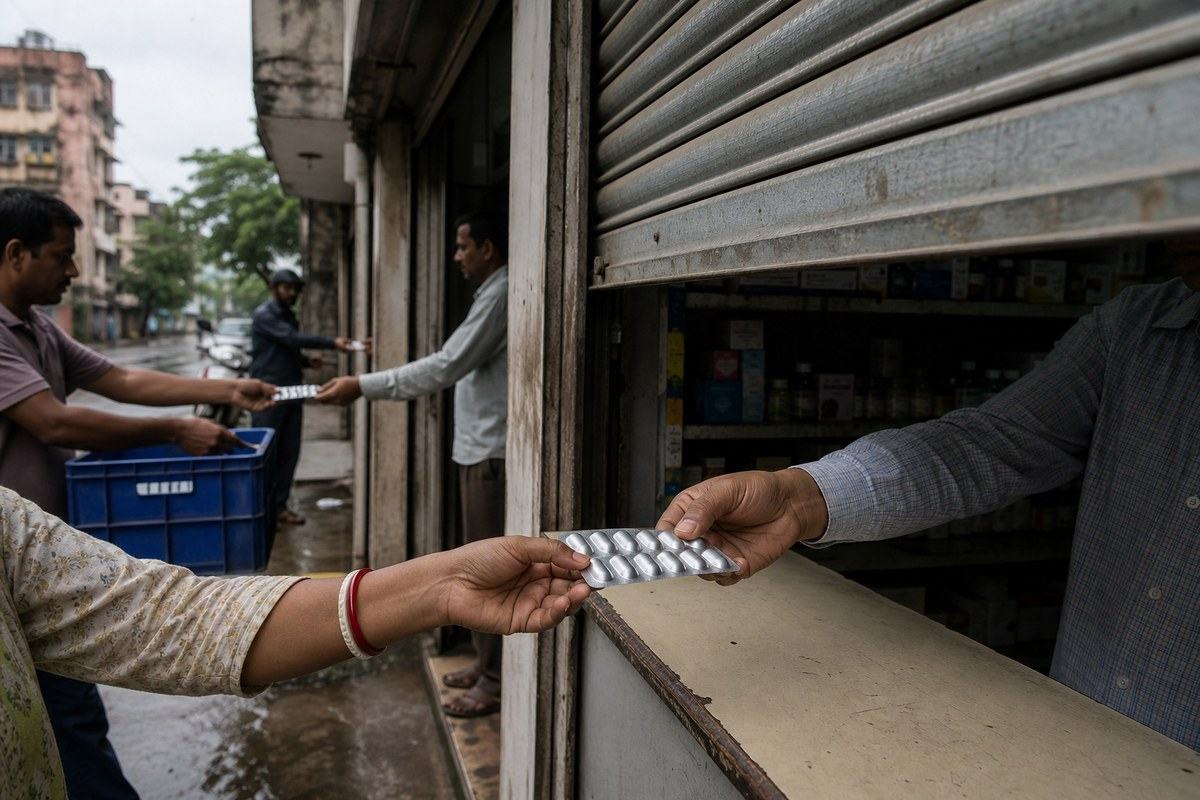
The patient goes somewhere else. A second doctor sees diarrhea and calls it food poisoning. A third doctor says stomach infection. A pharmacist offers another antibiotic, because in the great Indian orchestra of medical improvisation, the pharmacist often plays tabla, harmonium, and emergency surgeon all at once. The family says, “Maybe it was the biryani.” The patient says, “Maybe my digestion is weak.” The first antibiotic quietly leaves the crime scene.
This is why antibiotic harm is undercounted. Not always because people are dishonest. Often because the story is broken into pieces.
One clinic has the prescription. Another clinic sees the diarrhea. A third place sells the next medicine. The laboratory test is not ordered, not available, too costly, or delayed. The patient has no single medical record. The paper prescription is now in a shirt pocket, then under a tea cup, then gone forever. The harm becomes a ghost.
And ghosts do not appear in statistics unless someone is trained to look for them.
Clindamycin deserves a special mention here, though it is not the only culprit. It can be a useful drug in selected situations. That is exactly why it should not be handed out casually. A medicine can be useful and risky at the same time. A pressure cooker is useful. You still do not give it to a child and say, “Experiment.”
Later-generation cephalosporins, fluoroquinolones, broad combinations, and unnecessary multiple antibiotics can also raise risk in the wrong setting. Again, the point is not that these medicines are evil. Medicines are not villains with curled moustaches. The villain is mismatch. Wrong patient. Wrong reason. Wrong duration. Wrong confidence.
A dental example makes the matter plain.
A tooth abscess often needs drainage, root canal treatment, extraction, or some other form of source control. Antibiotics may help if infection is spreading, if there is fever, if the patient is immunocompromised, or if there are systemic signs. But an antibiotic cannot remove dead tissue. It cannot clean a root canal. It cannot negotiate with pus. Pus is not impressed by brand names. It has seen worse.
Giving a powerful antibiotic when the real job is drainage is like sending a lawyer to fix a leaking tap. It may create paperwork. The floor remains wet.
Patients also need to stop judging treatment by the size of the tablet. A doctor who refuses an antibiotic for a viral fever is not weak. He may be the only adult in the room. Many coughs, colds, sore throats, and fevers are viral. Antibiotics do nothing to viruses. Nothing. The virus does not even read the prescription. It continues its little picnic while your gut bacteria are being evicted.
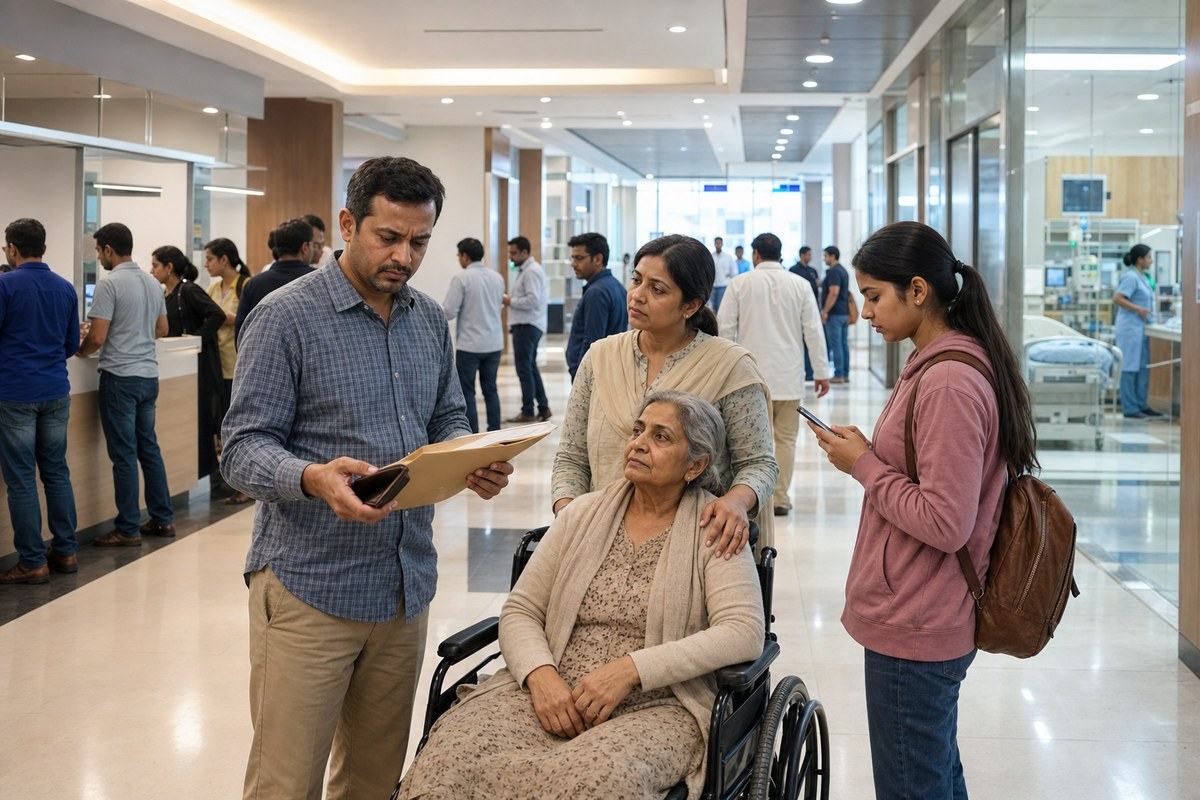
This is where the Indian clinic becomes a theater of pressure.
The patient has paid consultation money and wants a visible return. The family wants quick relief because tomorrow there is office, school, exam, train, ration queue, EMI, and one elderly uncle who has already diagnosed typhoid from the sofa. The doctor has seven minutes, a crowded waiting room, and a very real fear of missing a serious infection. The pharmacist knows what sells. The medicine company has printed literature. Everyone is tired.
I say this not to excuse bad prescribing, but to locate it.
Bad systems produce bad habits and then blame individuals for having them.
Still, some things are not complicated.
If a doctor prescribes a high-risk antibiotic, the patient should be told what danger to watch for. Severe watery diarrhea during or after antibiotics is not automatically “heat,” “gas,” “food poisoning,” or “weak stomach.” It needs attention. The patient should not casually add another antibiotic. The patient should not blindly suppress diarrhea with whatever is lying in the drawer. The patient should tell the next doctor, clearly: “I recently took antibiotics.”
That one sentence can change the whole case.
The prescription itself should also carry more meaning. Not just the drug name, not just “one tablet twice daily,” not just a signature that resembles a dying mosquito. It should say why the antibiotic was given and for how long. Fever with suspected bacterial pneumonia is one story. Viral cold is another. Dental abscess awaiting drainage is another. Post-procedure prophylaxis is another. These are not clerical decorations. They are the difference between medicine and guesswork.
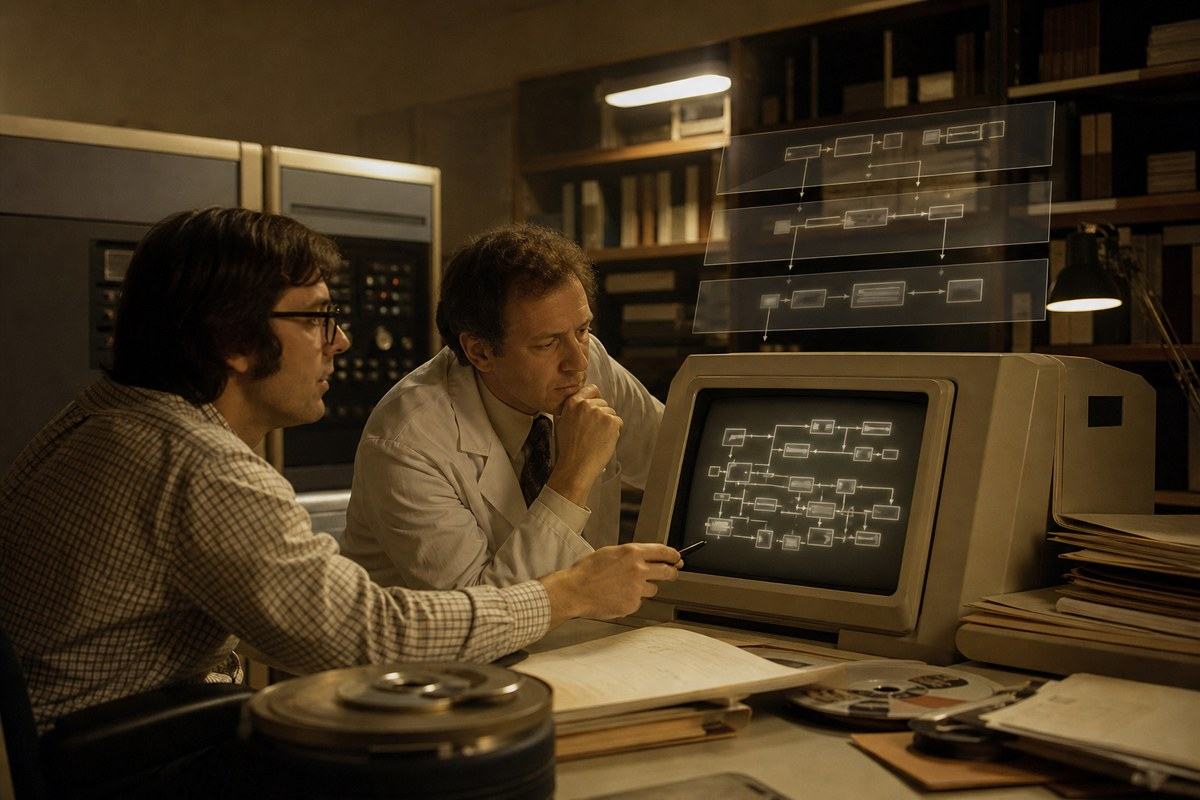
In my old healthcare IT life in America, we had endless arguments about records, interfaces, codes, systems, databases, alerts, and the majestic art of making one hospital computer misunderstand another hospital computer at industrial scale. But one lesson stayed with me: data is not meaning.
A prescription record can say an antibiotic was given.
It may not say whether it should have been given.
A pharmacy sale can show a drug left the shelf.
It may not show that the patient later landed in a bed with CDI.
A hospital discharge summary can say diarrhea.
It may not connect the diarrhea to the earlier antibiotic.
So people call it “poor data quality.” That is not quite right. Sometimes the data is accurate. It is just thin. Like tea made by someone who has only heard rumors of tea leaves.
India does not need a perfect digital dream before improving this. We are not waiting for a glowing dashboard descended from the clouds. Small changes can help. Write the diagnosis. Write the duration. Avoid antibiotics for obvious viral illnesses. Stop using broad-spectrum drugs as default comfort blankets. Do not prescribe antibiotic cocktails as if the intestine is a cricket team needing all-rounders. Drain what needs drainage. Test when the result will change management. Review and stop antibiotics when they are no longer needed.
Hospitals should track CDI properly. Doctors should ask about recent antibiotic use when patients present with diarrhea. Pharmacies should not behave like vending machines for serious drugs. Dental and outpatient prescribing need special attention because that is where a lot of casual harm begins with a confident flourish of the pen.
There is also a public responsibility. Do not demand antibiotics like a refund. Do not keep leftovers. Do not pressure the doctor with, “Last time this worked.” Last time many things worked. I once repaired a table fan by slapping it. This does not make slapping an electrical engineering principle.
The clean solution is hard because India’s healthcare is not one tidy machine. It is a bazaar, a railway timetable, a family argument, a private market, a public shortage, a hope, a hustle, and sometimes a miracle in a sweaty waiting room. Many patients cannot afford repeated visits. Many cannot afford tests. Many doctors work under real pressure. Many clinics survive by volume. Many small towns do not have infectious disease specialists sitting nearby like helpful owls.
So we should not pretend this is easy.
But we should also not pretend it is harmless.
The next time a strong antibiotic is prescribed for a doubtful infection, imagine the gut as a crowded para where everyone is doing some small useful job. The antibiotic may remove the troublemaker. Good. But it may also remove the milkman, the electrician, the schoolteacher, the vegetable seller, and the old man who knows where the water pipe is buried. Then, into the empty lane, comes C. difficile with a toolbox and bad intentions.
That is the hidden story.
The tablet is swallowed in five seconds.
The damage may take weeks to introduce itself.
P.S. References: CDC, “About C. diff”
Word Cloud
Related reading
Selected by shared topics and section, with closer publication dates breaking ties.