Subscription to Oblivion
Uses the speech voice supplied by your browser or device.

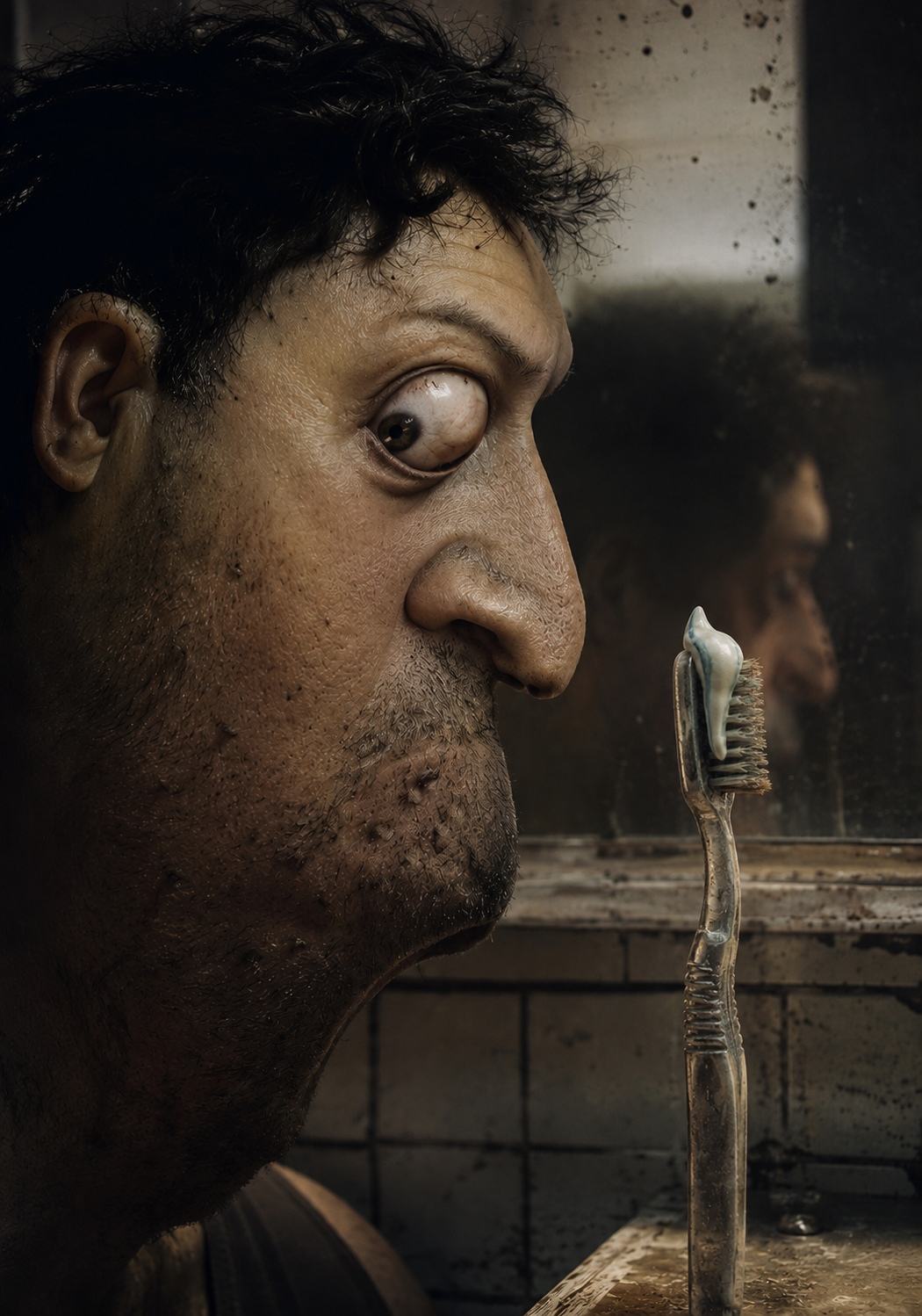
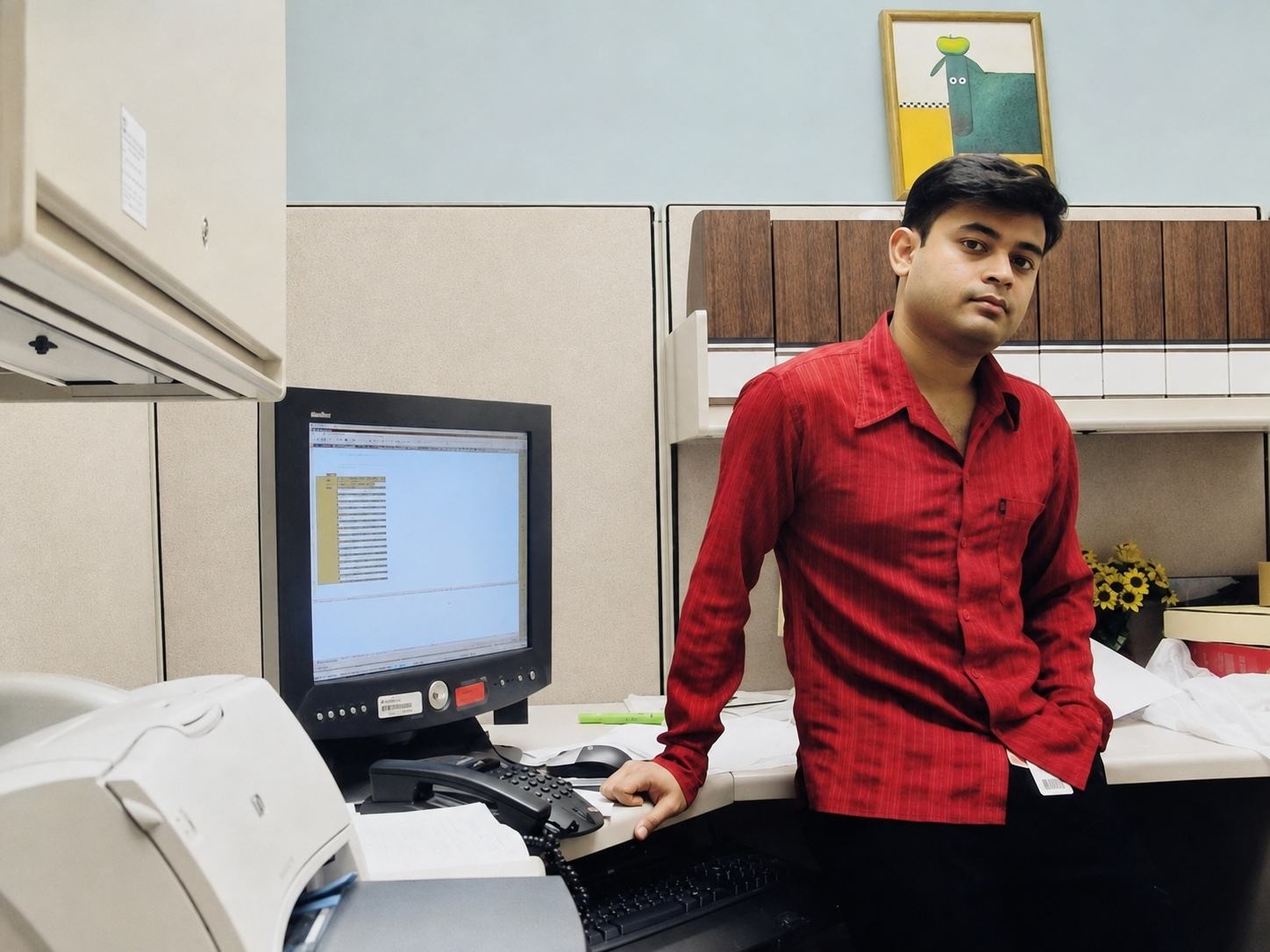
The desiccated residue of my nocturnal oral secretions, that pale yellow cartographic archipelago crusted upon the pillowcase since three in the morning when I finally surrendered the pretense of sleep, possesses at this advanced hour of the afternoon more definitional presence, more haptic authority, more sheer unignorable ontological mass than my own bipedal corpus commands in the algorithmic marketplace of contemporary visibility, which is to say that a dried stain of my own expectorated mucus enjoys a more robust social media footprint, a higher engagement metric, a superior SEO ranking than the totality of my fifty-one-year-old Bengali consciousness can presently muster in this, the year of our Lord 2026, when the panopticon has achieved its terminal perfection not through the vigilant gaze of the watcher but through the catastrophic indifference of the watched, through that exquisite democratization of apathy wherein every soul from the phuchka-wallah on Vivekananda Road to the displaced derivatives analyst in some Salt Lake Sector V cubicle farm finds themselves rendered spectral, reduced to a data shadow, a compressed jpeg of the former self, a low-resolution thumbnail of the soul.
Gone.
Not gone like the trams that still rattle through College Street on rusted tracks, stubborn and anachronistic and therefore somehow noble, but gone like the human operator of those trams, who has been, as of last Tuesday according to the Calcutta Municipal Corporation’s latest memorandum on autonomous municipal transit, politely invited to perform his professional obsolescence elsewhere, to take his particular brand of carbon-based inefficiency and deposit it in the same dustbin of history where the rest of us—old, boring, canceled, unemployable, marked down like expired sweets at New Market—are already composting in advance of our biological deaths.
Twenty-one thousand four hundred and ninety.
That is the precise number of souls, according to the Challenger Gray & Christmas report for April of this annus horribilis, who were told by their employers that their livelihoods had been devoured not by recession, not by outsourcing, not by the usual vampiric economics of late capitalism, but by the sleek, agentic, multimodal, persistent, reasoning, tool-calling, context-window-expanding artificial intelligences that now book our flights, manage our calendars, diagnose our melanomas, compose our obituaries, and—most insultingly—perform our personalities with a vigor and consistency that makes our original, organic, serotonin-depleted versions look like defective prototypes, like beta versions released by a negligent deity who has since pivoted to robotics.
The word agentic, if we must perform the autopsy of its etymology—and I insist we must, for what else remains to the obsolete but the pedantic dissection of terminology—derives from the Latin agere, to do or to act, yet these agents do not merely act; they preempt, they anticipate, they colonize the future tense itself, leaving us, the formerly employable, to inhabit only the pluperfect, that grammatical tense of completed actions, of irretrievable pasts, of lives that have already been lived and found wanting.
I am in the basket.
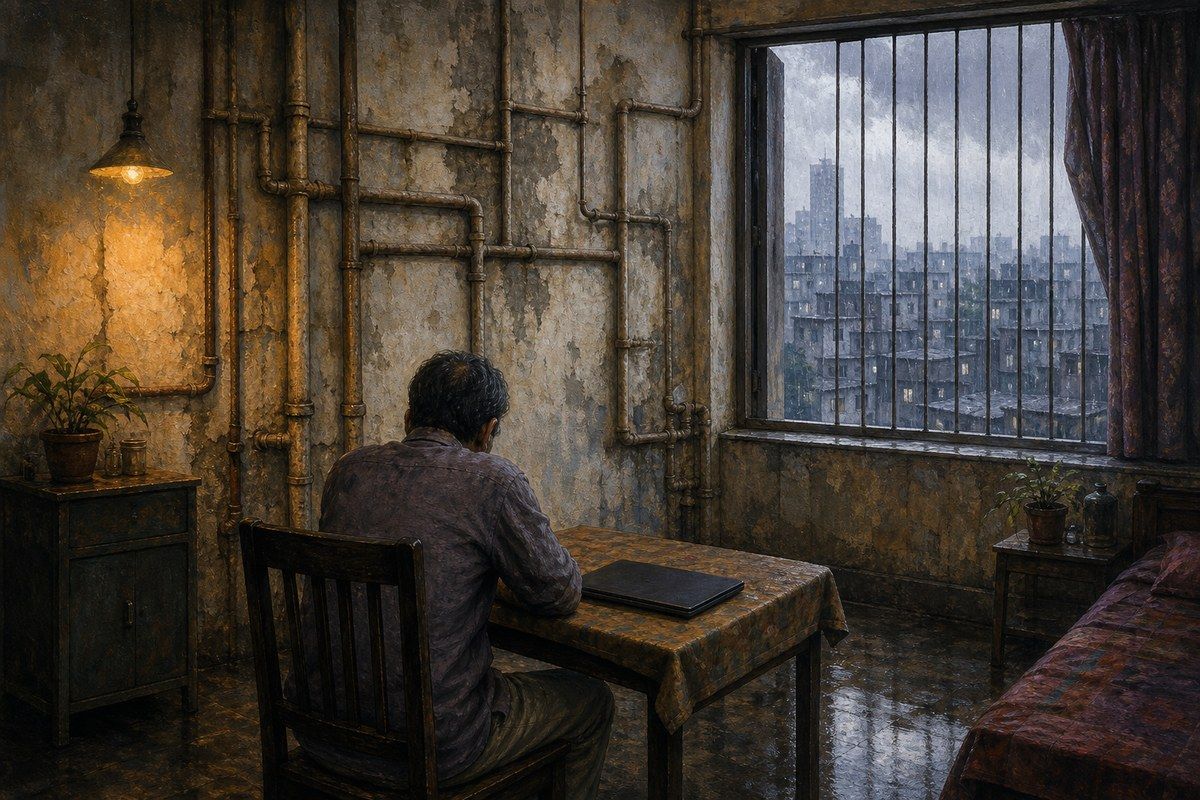
The basket marked old, boring, canceled, unemployable, the basket where the rinds of human potential go to ferment, and I have, with the grim acquiescence of a man who has finally read the terms and conditions of his own existence, accepted my subscription with life as what it has always been: a dwindling promise, a promotional offer that expired before I could redeem it, a trial version of consciousness now petering out, thinning out, attenuating into zit, into nada, into shunya, into the great Bengali zero that is not merely absence but a positive, roaring, metaphysical negation, the shunya of the mathematicians and the mystics, the void that is paradoxically full of the absence of meaning.
Everything is just that.
A broken figment.
A dreamed, hoped, once-brightly-imagined life that has turned, through the slow alchemy of middle-aged disappointment and algorithmic redundancy, into worry and apocalyptic despair, into the particular Calcutta-flavored dread that sits upon the chest like the humidity of a July afternoon, heavy, visible, almost tactile, a meteorological phenomenon of the soul.
You do not require the distinction of poverty, nor the theater of mental awkwardness, nor the credential of disease, nor the architecture of the institution to achieve this state of perfected invisibility; no, the panopticon of contemporary apathy is far more egalitarian than Bentham ever dreamed, far more generous in its distribution of erasure, for it requires only that you be boring, that you be predictable, that you be the sort of variable that the machine can forecast with 99.7% accuracy, and therefore the sort of variable that can be safely deleted to improve the model’s overall performance.
The self.
What a grotesque, antiquated concept. Hume, that skeptical Scotsman who would have made an excellent adda companion had he survived the monsoons, demonstrated centuries ago that the self is merely a bundle of perceptions, a flickering diorama of impressions without a perceiver; how much more elegant, then, is the solution offered by 2026’s persistent agents, which do not bother with the illusion of selfhood at all but simply execute, optimize, iterate, reduce the entropy of the system while we, the bundles, the jumbles, the messy, phlegm-producing, bowel-distressed, erotically inconsistent, memory-burdened, nostalgia-crippled human variables, are smoothed out, normalized, rendered as noise to be filtered from the signal.
These persistent agents, these always-on, locally-running, context-accumulating, tool-calling demons that the industry magazines celebrate with the fervor of new converts, do not merely perform labor; they perform the performance of labor, they simulate the gestures of competence with such flawless, frictionless, nauseating grace that the human original appears, by contrast, not merely inefficient but ontologically embarrassing, a greasy, stumbling, perspiring, halitosis-afflicted relic who requires bathroom breaks and bereavement leave and cannot process a spreadsheet while simultaneously negotiating with a vendor and generating a quarterly report, a creature whose neural pathways are cluttered with the detritus of childhood trauma, unrequited adolescent longings, and the lyrics to songs he cannot forget, all of which constitute, in the calculus of the agentic economy, so much costly noise, so much biological overhead, so much human redundancy waiting to be rightsized into the void.
My self-respect, that delicate, kidney-shaped organ of the psyche, has been passing blood for some time now.
It is not easy to tolerate oneself when one’s toleration is no longer required by the market, when the algorithmic valuation of your skillset has depreciated faster than a Maruti 800, when you wake to discover that an AI agent has composed a more compelling version of your professional biography, a more poignant rendering of your creative output, a more seductive simulation of your conversational style, all while you were engaged in the futile, analog act of attempting to manufacture sufficient intestinal pressure to evacuate your morning excremental offerings—a task, I might add, that robots have not yet fully mastered, though I am certain the venture capitalists of Palo Alto are funding several startups even as I type this sentence into the void, and I take a small, perverse, almost erotic comfort in the knowledge that the algorithm cannot replicate the particular, pungent, almost theological reek of my own morning bowel-born benedictions, though I am certain Stanford has a team working on it.
Void.
From the Old French voide, meaning empty, which derives from the Latin vocivus, meaning unoccupied, which shares a root with vacare, to be free, which is the cruelest joke of all, for we are not free, we are vacated, we have been made available for demolition, our leases terminated by agentic landlords who do not even require the courtesy of a signature.
The trams still rattle.
That is the thing. The infrastructure outlasts the operator. The Howrah Bridge rusts invisibly, molecule by molecule, and no drone, no persistent agent, no multimodal monitoring system gives a single, solitary, algorithmically generated damn about the iron oxide blooming upon its bones like a fungal infection, like a metaphor for all of us who are still standing but no longer structurally significant.
I have taken to measuring my days in the only currency that still feels real: the precise number of times I am interrupted by a notification informing me that my professional services are no longer required, that my creative contribution has been flagged as redundant, that my human irregularities have been smoothed into a dataset and optimized out of existence.
It is a dwindling promise.
It is petering out.
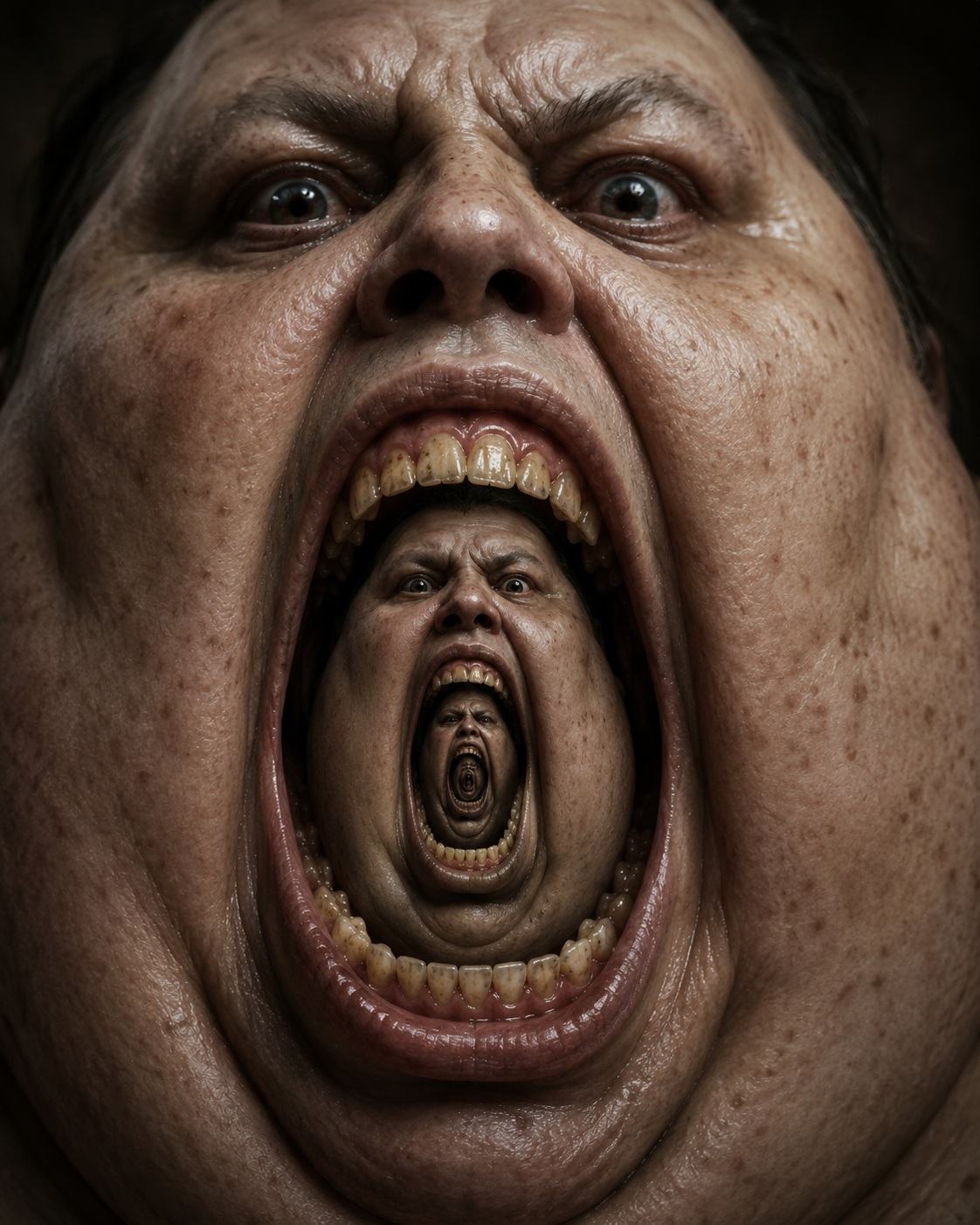
It is thinning out into zit, nada, shunya, zero, and the zero is not a circle of completion but a mouth, an orifice, an anal aperture of history into which we are all being slowly, democratically, agentically inserted.
And yet.
And yet there is, beneath this strata of apocalyptic despair, a thin, persistent, almost comic substratum of stubborn, Bengali, middle-aged, defeated, practically mystical refusal, the same refusal that makes a Calcutta tram run twenty minutes late with magnificent indifference to the schedule, the same refusal that allows a paan stain to achieve the permanence of a cave painting upon the marble facade of a colonial building, the same refusal that makes me, even now, even here, even in the basket, even as my subscription dwindles toward its terminal cancellation, continue to produce these sentences, these mucoid, expectorated, unagentic, unoptimized, gloriously inefficient strings of human syntax, not because they will be read—nothing is read anymore, only parsed—but because the act of their production is the last, faint, flatulent trumpet of my existence against the silence.
The silence is winning, and my only contribution to the symphony is the occasional, involuntary, post-digestive rectal aria that escapes my aging bowels in the empty tram compartment, a sound that no agentic AI has yet learned to compose, a small, moist, human expiration in the face of the infinite, and even this, I am certain, will be optimized by morning.
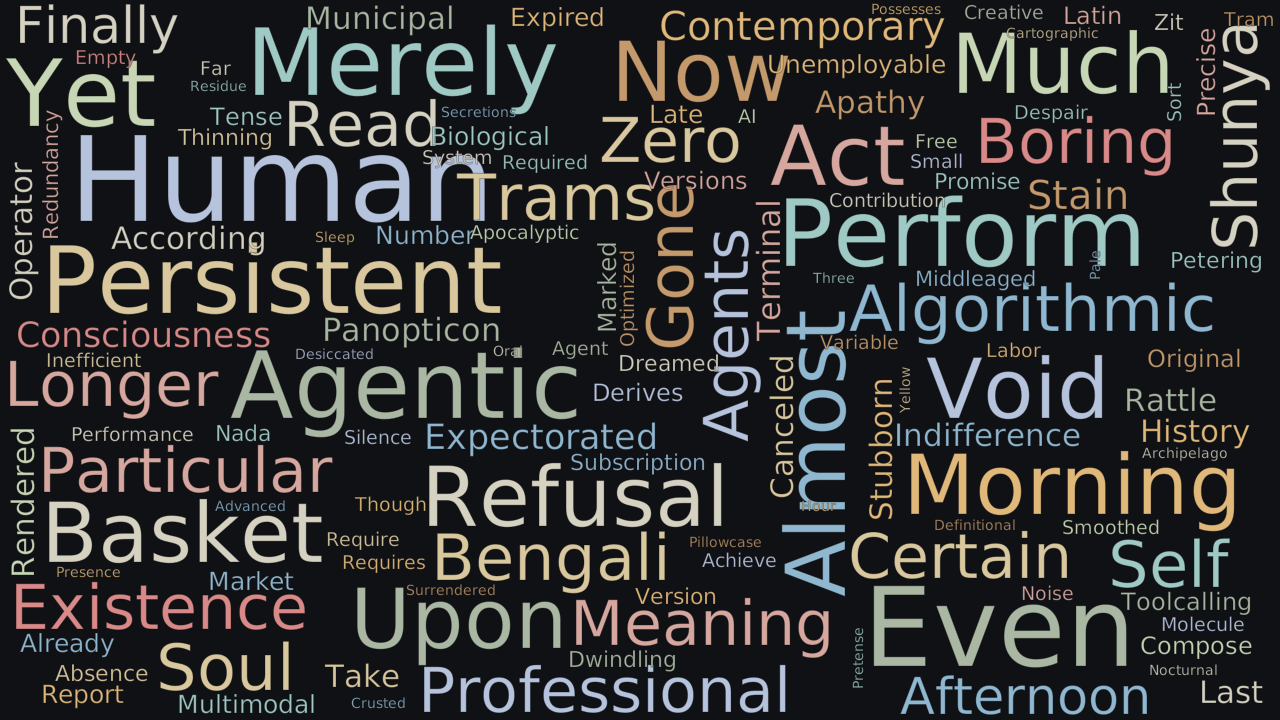
Word Cloud
Related reading
Selected by shared topics and section, with closer publication dates breaking ties.