The Thermodynamics of Envy
Uses the speech voice supplied by your browser or device.

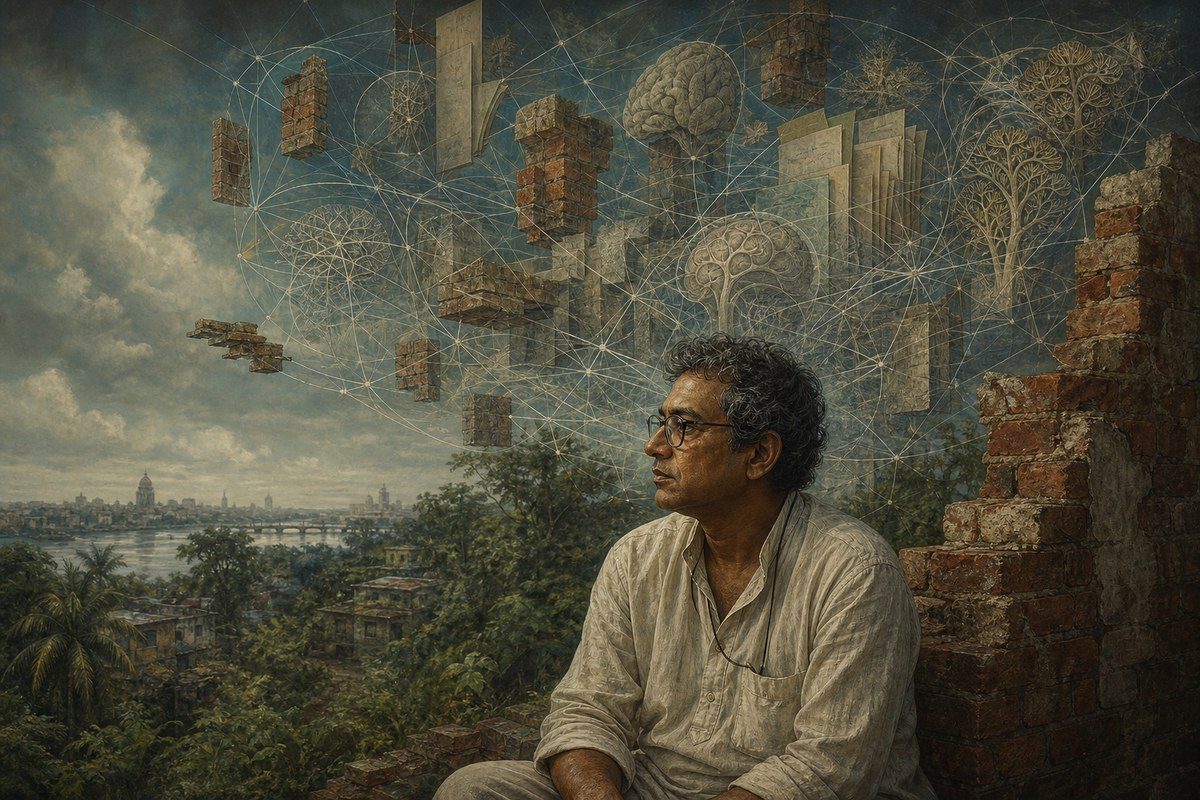
The heat does not merely sit upon Calcutta; it incubates, it festers, it performs a kind of grotesque osmosis through the skin until you are not sweating but rather secreting the city itself, and this morning, stepping over a rivulet of human effluvium that had achieved a viscosity suggesting sentience—perhaps even political ambition—I recalled, with the involuntary precision of a seizure, that in America they have now engineered a toilet so intelligent it will text your relatives if you fail to defecate within an eight-hour window, a porcelain panopticon of familial surveillance that reduces the most ancient and democratic of human functions to a data point, a notification, a beep, and I thought, standing there in the alley where the stench performed a duet with the humidity, that perhaps this is the true measure of civilizational divergence: not in the rockets we launch toward Mars—which Perseverance now drives across with the bored persistence of a marathon runner, having clocked twenty-six point two miles of red dust in five years, a feat that would impress me more if the planet were not simply a future graveyard for billionaires—but in our relationship to the fundamental substrates of biology, the ordure and the obloquy and the heat that cooks them both into a kind of moral soup.
The majority, I must insist, are essentially benign.
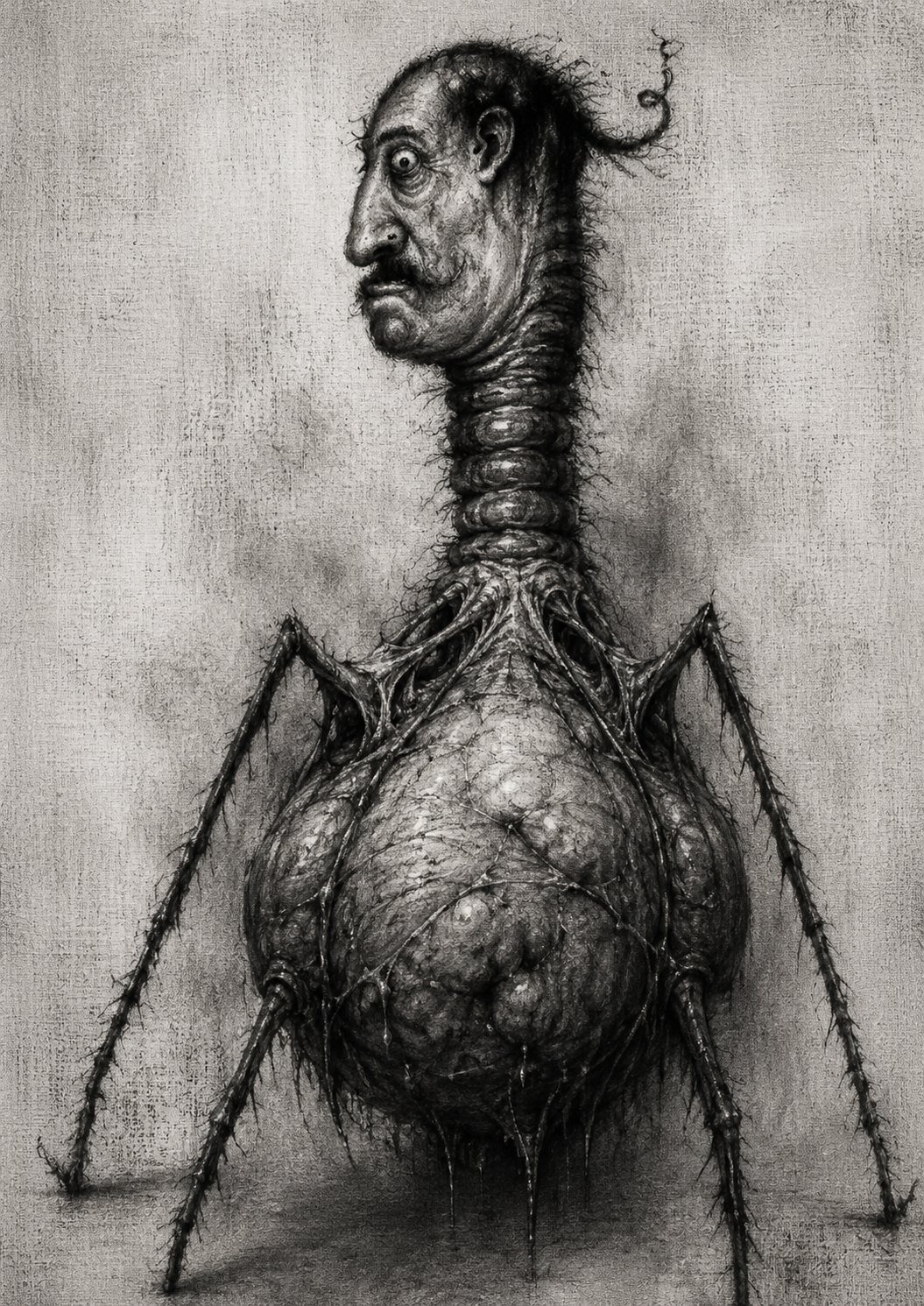
They are cornered animals in a greenhouse, panting, patient, waiting for the next administrative cruelty or meteorological insult with the resigned dignity of ruminants, and I do not begrudge them this innocence because innocence in this climate is itself a species of heroism, a daily martyrdom performed in the key of sweat and postponed aspiration; but returning from the United States—where I had spent many years marinating in the antiseptic delusion that technology might salve what geography had ruptured—I found myself, like some malfunctioning particle detector called PLATON, suddenly hypersensitive to the four distinct species of fauna that spice this daily innocence with the particular savor of existential nausea, and let me tell you about them, though I warn you now there will be no redemption arc, no TED-talk conclusion, no moment where the clouds part and a koala—which, by the way, suffered a population collapse one hundred thousand years ago, long before humans arrived to blame, a fact that comforts me in the same way a dead man’s lottery ticket comforts his widow—offers wisdom from a eucalyptus branch.
First, the cretins.
They are dense as depleted uranium, though I have always found the comparison deficient because uranium, at least, has the decency to be radioactive and therefore interesting, whereas these specimens broadcast their stupidity with the evangelical fervor of street preachers, clogging the arteries of discourse with conspiracy theories so elaborately stupid they require a kind of inverted genius to produce, and I watch them, these gleeful predators—no, wait, they are separate, I must be precise, precision being the last virtue of the defeated—I watch the cretins first, the ones who believe that nanoplastics in drinking water are a government plot rather than what they actually are, which is a biofilm-strengthening gift to harmful bacteria, a scientific fact I mention not to educate anyone, God forbid, but to illustrate the exquisite irony that the same plastics we invented to outlast our shame are now conspiring with microbes to outlast us, and yet these cretins, these magnificent dolts, will argue with you about vaccines while standing ankle-deep in the empirical evidence of their own gastrointestinal distress, their arguments unfolding with the logic of a dream, or perhaps of quantum mechanics, which researchers now claim can make time run backward, a discovery that explains nothing and everything, particularly the sensation of watching a civilization unlearn itself in real-time.
Then there are the mirthful marauders.
They dance.
This is not metaphor; I have seen them, at parties, in boardrooms, in the comments sections of LinkedIn, performing a choreography of destruction so elegant it would make a praying mantis—which, by the way, has now invaded Europe in two striking Asian species, climate-boosted and urban-hungry, preying on native insects with the same enthusiasm these people bring to preying on their colleagues’ peace of mind—blush with predatory recognition, and they are always, I mean always, in the middle of a perpetual waltz of selecting which soul to dismantle next, not out of necessity, not even out of malice exactly, but out of a kind of aesthetic commitment to chaos, a belief that the universe is improved by the strategic application of suffering, and they are happy, these people, genuinely, radiantly happy in the way that only the utterly unburdened by conscience can be, and I have studied them with the clinical detachment of a man watching bacteria digest self-destructing plastic, which now, thanks to engineered microbes, can degrade in six days, a timespan that feels almost optimistic when compared to the persistence of human cruelty.
Outside Bengal, the saccharine saints proliferate.
They are a different order of grotesque, these monks of the motivational poster, these evangelists of the gratitude journal, and they move through the world with the serene entitlement of men who have never once questioned whether their goodness might be a form of violence, whether their piety might be a species of pollution more insidious than the fireworks debris that now contaminates both air and water, or the streetlights that trap woodlice in mesmerizing circular death spirals—a phenomenon, I note, that suggests even insects have developed a taste for self-annihilation under artificial illumination, which is more than I can say for most humans, who require considerably more prompting—and these saccharine saints, they speak of mindfulness and the universe providing, and I want to ask them, I want to shake them by their sustainably sourced lapels and ask whether they have noticed that the Black Sea is currently glowing turquoise from a phytoplankton bloom visible from space, whether they understand that this beauty is also a symptom, a fever, a body reacting to imbalance, but I do not ask, because the saccharine saints do not traffic in questions, only in answers, and their answers are always, invariably, about your attitude, never about the architecture of the trap.
But Bengal, my Bengal, breeds the glee merchants of calamity.
They are jaundiced.
Not with hepatic failure—that would be too merciful, too medically explicable—but with the particular sallow hue of jealousy so concentrated it has achieved a kind of spiritual density, and they spend their days, their nights, their fevered insomniac hours, hating whoever has made them covetous with the dedication of a man trying to solve a physics mystery using silly sprinklers, which mathematicians recently did, solving a decades-old puzzle with whimsical rotating water devices, and I think of these glee merchants whenever I read about such discoveries, because they too are rotating, always rotating, spraying their calculated calumnies in every direction, hoping to moisten the reputation of whoever dared to succeed, and they are the reason, I suspect, the reason beneath the reason, why most people remain merely ordinary and unassuming, because the glee merchants have established, through centuries of practice, that to rise above the median is to invite a kind of social sepsis, a gangrene of the name, and so the unassuming ones stay low, stay quiet, stay cornered in the heat, and the glee merchants circle them like vultures who have convinced themselves they are performing a public health service.
It is an enduring assortment, this ecosystem.
I have tried to understand it through science, through the lens of the AI tool that recently uncovered two hundred fifty thousand potentially fraudulent cancer research papers, a statistic that comforted me more than it should have, because if science itself can be faked on such an industrial scale, then my own failures of comprehension seem almost noble, almost quaint, and I have tried to understand it through philosophy, through the etymology of schadenfreude, which the Germans gave us because no other language could bear the weight of so precise a shame, from Schaden meaning damage and Freude meaning joy, a compound word that performs exactly what it describes, damaging the language even as it celebrates the damage, and I have tried to understand it through the simple metaphor of the Calcutta bus, which does not stop so much as it relents, allowing passengers to hurl themselves aboard with the desperate faith of men leaping onto a moving allegory, and which, like this city, like this country, like this life, is always already overcapacity, always already on the verge of combustion, and yet it moves, it somehow moves, not forward exactly, but in a direction that resembles forward if you squint and hold your breath.
The heat has not broken.
I am fifty-one years old and I have the emotional metabolism of a man who has been eating his own liver for three decades, and I know that Ozempic now slows biological aging markers in adults with HIV, and I know that researchers have recreated the physics of extracting energy from a spinning black hole using a stationary device, and I know that an ancient sea worm may hold the secret to a whole new category of natural materials, and I know all of this, I have absorbed it all, the quantum discoveries and the optical skyrmions and the sugar-coated nanoparticles ferrying genetic instructions across the blood-brain barrier, and none of it helps, none of it salves, because the fundamental equation remains unchanged: most people are harmless, cornered, waiting, while four distinct species of spiritual vermin perform their dances upon the substrate of ordinary decency, and the heat cooks everything into a stew of resentment so thick you could spread it on toast, if you had toast, if you had the appetite, if you had anything left but the recursive, manic-depressive certainty that tomorrow will be exactly like today except slightly more humid.
I saw a man this morning, on my way back from the market, standing in the middle of the road, perfectly still, while a dog—ribcane visible, tongue a collapsed flag of exhaustion—licked his bare ankle with the solemnity of a priest administering last rites, and the man did not move, did not shoo the beast away, but stood there with the patience of a saint or a corpse, and I watched them, this tableau of mutual defeat, and I thought: this is the true religion, this is the only communion that has not been corrupted, the shared endurance of heat and hunger and the slow, bacterial degradation of hope, and then the bus came, and the man got on, and the dog remained, and I remained, and the heat remained, and somewhere a smart toilet beeped, notifying a family that their patriarch had survived another eight hours, and I laughed, or perhaps I only imagined laughing, because at a certain temperature the distinction between action and intention dissolves, and you are left with nothing but the viscosity of your own secretions, the weight of your own unwritten notifications, the certainty that you are, at this very moment, being texted by the universe itself, and the message reads: still alive, unfortunately, still alive.
P.S. References only if needed: the scientific and technological observations herein are stitched from the fabric of July 2026, a month in which we learned that bacteria can be engineered to digest our plastics in six days but not our sins, that AI can detect fraudulent research but not fraudulent souls, and that the Poisson spot—a two-hundred-year-old optical effect—can still surprise us, which is more than I can say for most people.
Word Cloud
Related reading
Selected by shared topics and section, with closer publication dates breaking ties.