Loneliness Is Not a Generation
Uses the speech voice supplied by your browser or device.

Acronyms used in this post: AI means Artificial Intelligence, computer systems that can generate language, images, predictions, and decisions that once required human beings. US means United States, where I lived through the strange little parade from pagers to mobile phones to smartphones.
Loneliness did not arrive wearing a Gen Z T-shirt and wireless earbuds.
It is older. Much older. It has been sitting in the human chest since some ancient fellow sat outside the cave fire and suspected, correctly, that nobody had saved him a decent piece of roasted whatever-it-was. Every generation gives loneliness a new haircut, a new diagnosis, a new set of fashionable shoes. But the animal underneath is the same poor creature, looking around and asking, “Where are my people?”
I was born in 1975. Gen X. The generation that learned to wait. We waited for landline calls, exam results, monthly magazines, Doordarshan programs, letters from relatives, buses that arrived when they felt spiritually ready. We were not raised to announce every wound. We were raised to absorb things. Like cheap plaster in a damp Calcutta room.
And I am lonely too.
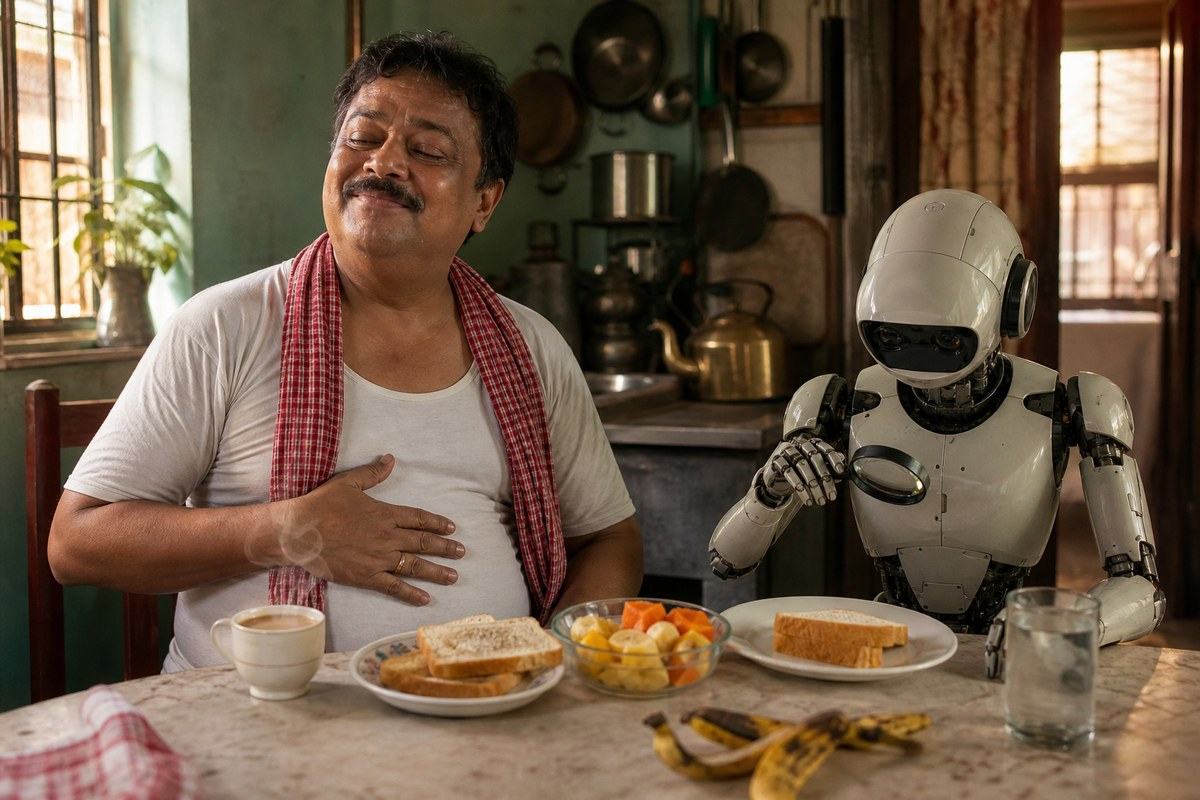
Not in a dramatic, candlelit, violins-in-the-background way. Nothing so elegant. This is the ordinary loneliness of a 51-year-old man in the boondocks of Calcutta, sitting in a room with uncertain income, uncertain health, an elderly mother, a difficult mind, and the daily comedy of trying to behave like a functioning adult when even making tea can feel like an administrative project approved by three lazy ministries.
The young are lonely. The old are lonely. My mother is lonely in the way old people become lonely when the world stops consulting them. I am lonely in the way a middle-aged man becomes lonely when the world has not stopped, but he has fallen out of its traffic and is now standing near the divider with one slipper missing.
Same road. Different accident.
This is why I distrust the neat little labels. Gen Z loneliness. Millennial loneliness. Boomer loneliness. Gen X loneliness. Useful, perhaps, for articles, podcasts, and people who enjoy turning sorrow into pie charts. But inside the room, inside the rib cage, loneliness does not ask for your birth certificate.
It asks a worse question.
Who is here?
Usually nobody.
Now, of course, the modern world has solutions. The modern world always has solutions. It has apps, groups, workshops, webinars, mindfulness reminders, polite advice, cheerful lists, and little digital bells that say things like “reach out to someone today,” as if human connection were a gas cylinder booking.
I am not mocking all of it. Some of it helps some people. But many solutions feel artificial because the problem is not artificial. The ape brain was not designed to live like this.
Our nervous system was not made for separate boxes. Separate flats. Separate phones. Separate passwords. Separate anxieties. Separate meals eaten while scrolling. Separate financial panic. Separate medical reports. Separate shame. Separate browser histories, which are really modern diaries written by a drunk clerk.
The old human brain expected a rough, noisy, irritating, necessary togetherness. Faces. Smells. Arguments. Shared food. Shared danger. Someone coughing nearby. Someone laughing too loudly. Someone being useless but present. The tribe was not a weekend hobby. It was the furniture of existence.
Now we have privacy.
Lovely word.
Sometimes it means dignity. Sometimes it means a man can rot quietly without disturbing the neighbors.
I think loneliness is partly neurobiology, partly biography, partly economics, partly bad luck, and partly the weather of the age. Some people are born with better internal shock absorbers. They can take rejection, unemployment, family pressure, bad sleep, the insulting behavior of relatives, the price of fish, the collapse of old friendships, the rise of new technologies, and still remain broadly operational. Like Ambassador cars. Ugly perhaps, but indestructible.
Others are built differently. The wiring is thinner. The sparks jump sooner. The mind overheats. A small insult becomes a court case. A missed call becomes evidence. A quiet day becomes punishment. A lonely room becomes a laboratory where the brain manufactures accusations against itself.
That is not poetry. That is Tuesday.
And then modern life arrives with its own sack of bricks.
I saw one important part of this happen in the US. I was there when pagers still existed, clipped to belts like tiny black badges of importance. Then cell phones came. At first they behaved. They were tools. Slightly smug tools, but still tools. Then smartphones came, and something in human behavior began to bend.
Not all at once. That is the trick.
Big disasters often enter like relatives from out of town. First they are guests. Then they move one bag into the corner. Then one morning you discover they are using your towel and advising you on your life.
The smartphone entered like that.
People became reachable and unreachable at the same time. Their bodies remained in restaurants, buses, airports, hospital corridors, drawing rooms, bedrooms. But their attention had quietly emigrated. Eyes down. Thumb moving. Face lit by that bluish glow, the color of private exile.
You could sit next to a person and still need a search party.
That is what I mean by zombification. Not blood. Not cinema. Not some fellow in torn clothes chewing a traffic policeman near Esplanade. Something quieter. Millions of living people present in the room but absent from the room, each holding a small shining door through which they keep escaping.
And now comes AI.
This is where the story becomes funny, except not funny in the ha-ha sense. More in the sense of a ceiling fan making a suspicious noise above your bed at 2:17 in the morning.
Soon we will ask AI for everything. Work. Writing. Friendship. Advice. Consolation. Memory. Judgment. Flirtation. Grief. Explanation. Apology drafts. Birthday messages. Condolence messages. The exact tone to use with a cousin who has become successful and therefore unbearable.
We will not just use AI. We will lean on it.
Then we will bend toward it.
Then, perhaps, we will forget we are bending.
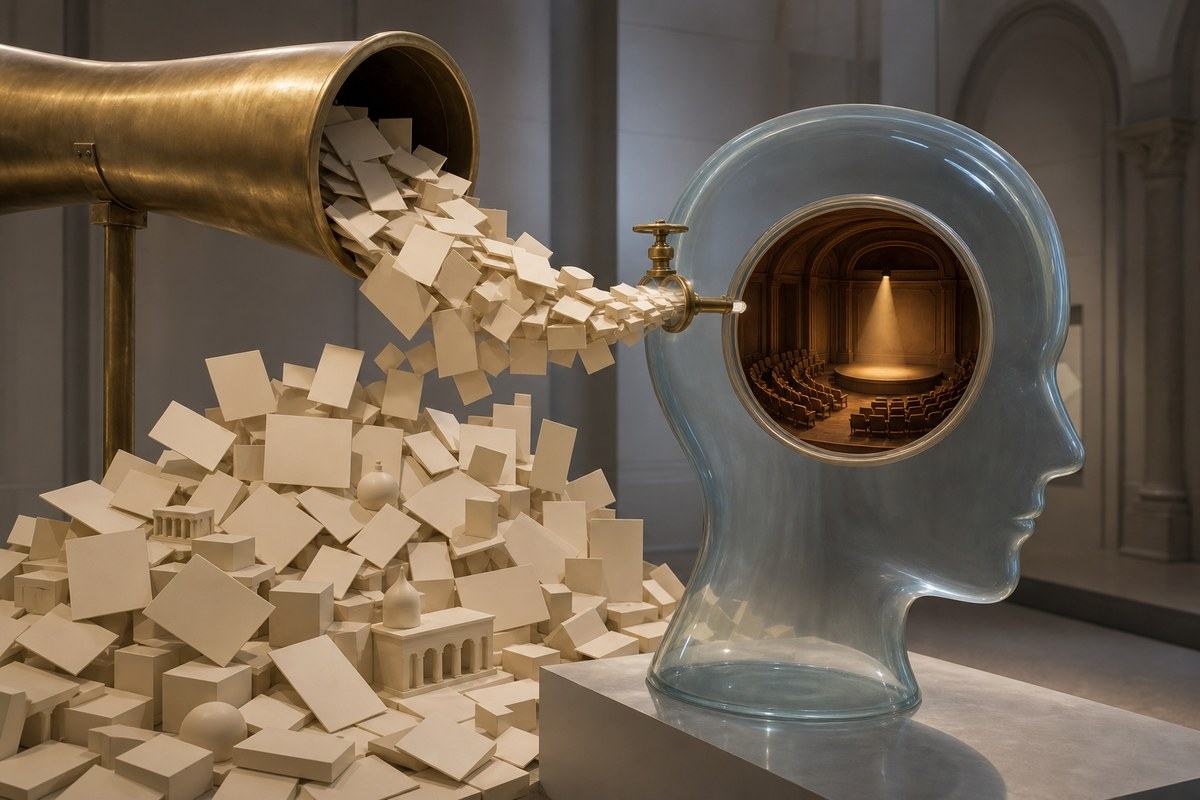
The danger is not that AI will be cruel. Cruelty is at least human enough to have a face. The danger is that AI will be patient in a way no human can be. Available in a way no friend can be. Smooth in a way no family member can be. It will not sigh. It will not say, “Again?” It will not look tired. It will not have its own headache, own unpaid bill, own mother, own failing tooth, own tragic little morning.
That will feel like love to a lonely species.
It may only be convenience wearing love’s old shawl.
This is the catch. We are building machines that can imitate response at the exact moment human response is becoming harder to find. The market has spotted the wound. Naturally, it has arrived with a subscription plan.
And I am not standing outside this circus with clean hands and a superior expression. I use the machines too. I type, ask, search, edit, revise, delete, return. I am inside the same tent. The tiger is not merely in the cage. The tiger is doing customer support.
Still, I remember enough of the earlier world to feel the loss. That may be the peculiar sadness of my generation. We knew boredom before it became a business model. We knew waiting before waiting was filled with scrolling. We knew silence before silence became an error message. We knew people before people became both constantly available and emotionally missing.
This is not nostalgia for some golden past. The past had its own mosquitoes, tyrannies, hypocrisies, bad marriages, family cruelty, and pressure-cooker whistles of doom. Nobody sane wants to go back entirely. But something was lost when every empty minute was colonized.
The mind needs empty minutes.
So does friendship.
So does grief.
So does the small, ridiculous human act of looking at another person and saying nothing, yet being together.
Now a man can have the whole planet in his hand and still no one in the room. That sentence sounds like a slogan until it happens to you. Then it becomes furniture.
Morning comes. Or rather, in Calcutta, morning coughs itself awake. A dog argues. A tea stall begins its tin-cup orchestra. Somewhere a pressure cooker announces that another household is still participating in civilization. The news is doing its usual circus: elections, heat, floods, markets, billionaires, wars, some minister saying something polished and useless. The world is busy being the world.
And you lie there.
Not sleeping. Not living exactly. Not dead either, which is considerate of you, though not always appreciated.
The phone is nearby. The phone can summon maps, songs, stock prices, old classmates, breaking news, medical facts, jokes, lectures, and strangers shouting about geopolitics with the confidence of men who cannot locate their own electricity bill.
But it cannot summon a warm human presence into the room.
That is the insult.
Loneliness also has a nasty trick. It makes its own proof. You withdraw because you are hurt. Then your withdrawal proves nobody wants you. You stop calling because you feel ashamed. Then the silence becomes evidence. You lose practice with people. Then people become exhausting. The mind, already unwell, opens a small legal office and begins filing cases against the self.
The prosecution is energetic.
The defense is asleep.
Some people survive this better. Their brains have better padding. Their families are softer. Their luck is less theatrical. They are not morally superior. They are differently built, differently held, differently rescued by circumstances they may never have noticed.
Others are more breakable. Not weak. Breakable. There is a difference. A clay cup is not morally inferior to a steel tumbler. But drop both on the same floor and then lecture the clay cup on resilience. See how profound you feel.
I do not think loneliness belongs to one generation. I think every generation meets the same old animal under new streetlights. For my mother, it may be age and shrinking relevance. For the young, it may be algorithmic comparison and permanent performance. For me, it is a mixture: biology, bipolar depression, anxiety, unemployment shame, lost years, vanished friendships, health worries, and the peculiar humiliation of being old enough to understand your condition but not strong enough to defeat it.
Add a smartphone.
Add AI.
Add a rented room in Calcutta where the day begins before you do.
That is not a lifestyle problem. That is a human mismatch.
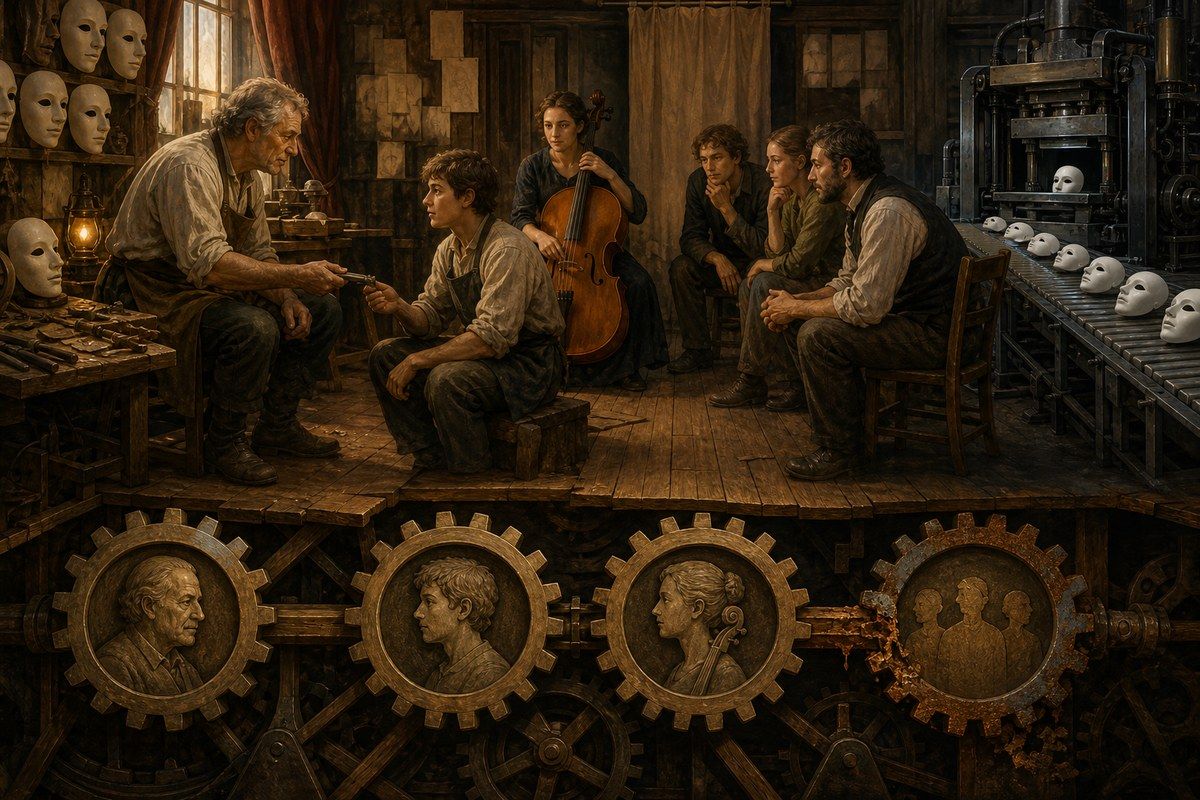
The world has become cleverer than the nervous system that must live inside it. We have built a glittering bazaar for minds that still need firelight, faces, touch, shared work, ordinary affection, and somebody nearby making tea badly but making it.
Maybe the future will be full of people whispering to machines because whispering to other people became too risky, too slow, too humiliating, too unavailable. Not an apocalypse of explosions. A softer apocalypse. A polite one. Faces lit by screens. Rooms full of people alone. Every person asking a synthetic presence to help them survive the absence of real ones.
I may not live long enough to see the full version. My health is not that good. This is not drama. It is inventory. The body keeps accounts, and mine has begun sending reminders in red ink.
But I have seen enough already.
The cave fire is gone, the tea is getting cold, and the little glowing machine is waiting patiently beside the bed.
Word Cloud
Related reading
Selected by shared topics and section, with closer publication dates breaking ties.